



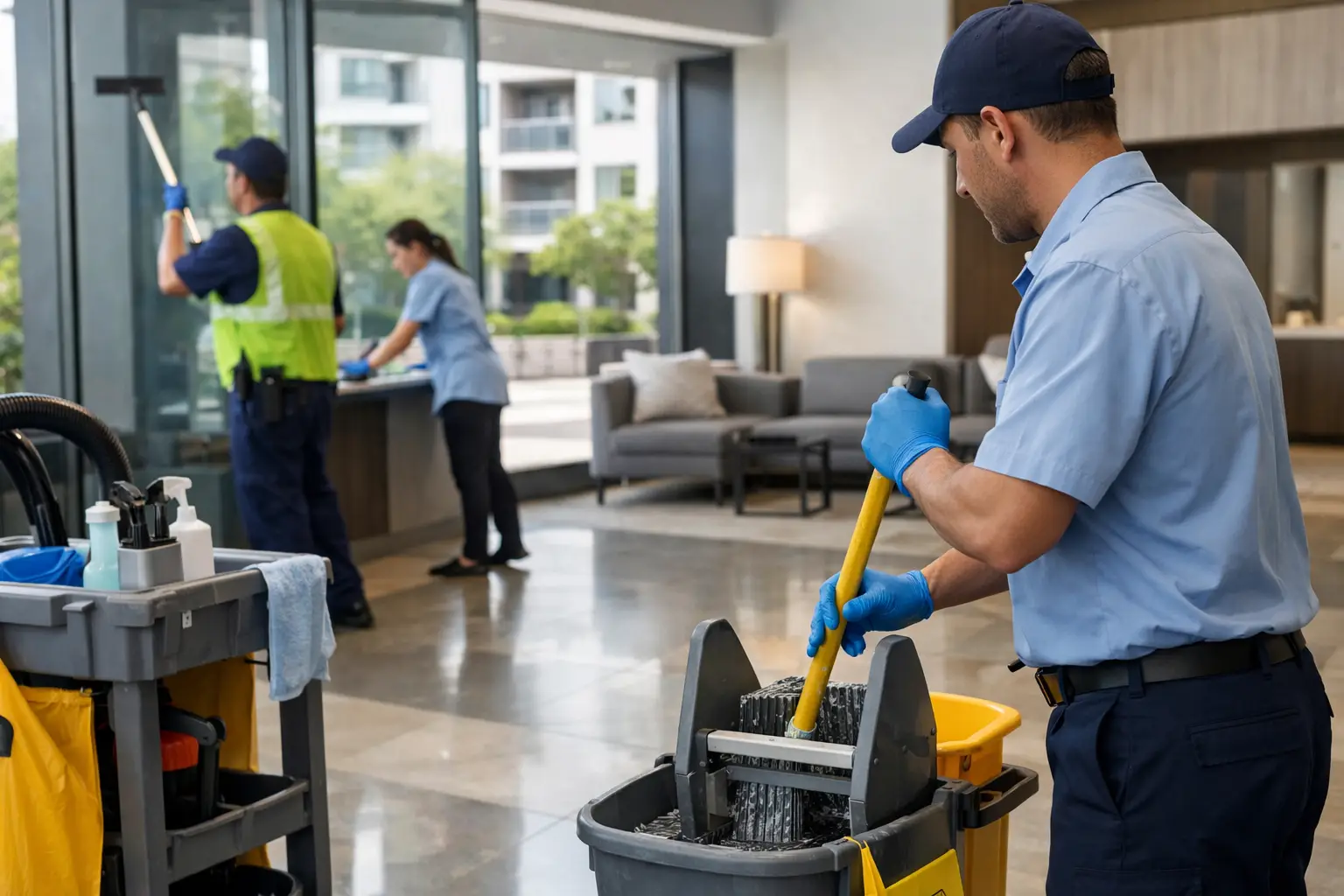
A spotless lobby on Monday can look neglected by Wednesday if foot traffic, weather, and daily use are not part of the plan. Building cleaning frequency is not a one-size-fits-all number. For property managers, office managers, and HOA teams, the right schedule protects the appearance of the property while helping residents, employees, visitors, and vendors feel that the space is being cared for.
The goal is not to clean every inch of a building every day. It is to assign the right level of attention to the areas that people notice and use most. A practical schedule keeps cleaning consistent, prevents small problems from becoming visible issues, and gives your team a clear standard to manage.
What Determines Building Cleaning Frequency?
The most useful cleaning plan begins with how the building actually operates. A quiet professional office with a small staff needs a different schedule than a busy medical-adjacent office suite, a multifamily community with shared elevators, or a clubhouse used for frequent resident events.
Start with traffic. Entrances, restrooms, elevators, break rooms, mail areas, and shared corridors collect dirt faster because they are touched and used throughout the day. These spaces usually need daily service or attention several times per week, even when the rest of the property can be cleaned less often.
Next, consider the type of activity happening in the building. Food and beverage use creates crumbs, spills, and odors. Rainy days bring in moisture and debris. A community room that hosts meetings or celebrations may need cleaning immediately after an event, regardless of the normal schedule. Seasonal conditions also matter. In San Diego County, dry weather can still mean tracked-in dust, while coastal properties may see more sand and moisture at entry points.
The condition and finish of surfaces should also guide the plan. Glass doors, polished floors, dark countertops, and stainless steel often show fingerprints and smudges quickly. These details may not require a full building clean, but they do benefit from frequent touch-up service.
A Building Cleaning Frequency Framework for Shared Spaces
Rather than choosing a single frequency for the entire property, divide the building into zones. This makes the plan easier to budget, easier to manage, and more effective for the people using the space.
Daily or high-frequency areas
High-traffic touchpoints deserve the most regular attention. In many office, HOA, and multifamily properties, this includes main entrances, lobbies, restroom fixtures, elevator buttons, mailrooms, break rooms, and trash collection points. Floors at entrances may need vacuuming, sweeping, or mopping daily, especially during wet weather or at properties with frequent visitors.
Daily service is often the right fit for a busy office, a large shared facility, or a building where first impressions directly affect tenants, clients, or prospective residents. For a smaller property, three to five visits per week may provide the same visible results when traffic is predictable and occupants take reasonable care of common spaces.
Two to three times per week
Common corridors, stairwells, shared kitchens, conference rooms, fitness-adjacent areas, and smaller restrooms may not need full daily cleaning if they have moderate traffic. A two- or three-times-weekly schedule can keep these spaces presentable while controlling costs.
This frequency works best when daily users are limited, trash does not accumulate quickly, and the property has a clear process for reporting spills or unexpected messes. If the condition begins to decline between visits, that is useful feedback. It may mean one zone needs more frequent attention, not that the entire building needs a larger contract.
Weekly cleaning
Weekly cleaning is often appropriate for lower-traffic offices, administrative spaces, vacant meeting rooms, and hallways that receive limited use. Service may include dusting accessible surfaces, vacuuming or mopping floors, removing trash, cleaning interior glass, and refreshing restrooms.
Weekly service can be a strong starting point for smaller offices, but it has limits. If employees eat at their desks, customers visit regularly, or the office includes a frequently used kitchen, weekly cleaning alone may leave visible buildup before the next appointment. A targeted midweek touch-up can be more practical than moving every task to a daily schedule.
Monthly and periodic work
Some tasks should be planned separately from routine janitorial cleaning. Floor maintenance, carpet cleaning, pressure washing, detailed baseboard cleaning, high dusting, and deep cleaning of less-used areas are usually periodic services. Their schedule depends on surface type, use, and the desired appearance standard.
A building can look clean on the surface while grime slowly collects in corners, around door frames, or on floors. Periodic detail work protects the results of recurring service and helps prevent the property from reaching the point where it needs a major reset.
Signs Your Current Schedule Is Falling Short
Cleaning frequency should be reviewed when the property changes, not only when a contract term ends. A new tenant, increased occupancy, more events, or a change in building access can quickly shift cleaning needs.
Look for recurring signs between service visits. Overflowing trash, dull floors, streaked entrance glass, restroom complaints, lingering odors, and visible debris in stairwells are all indicators that a specific task or zone may need more attention. The same is true when on-site staff spend too much time handling basic cleanup that should be part of a professional cleaning plan.
It is also possible to schedule too much cleaning in the wrong places. If low-use rooms receive extensive service while entryways and restrooms are repeatedly overlooked, the issue is not necessarily the number of visits. It is the allocation of time. A customized scope can shift effort toward the areas that shape the daily experience of the property.
Build a Schedule Around Real Building Use
An effective plan does more than state that cleaning happens weekly or nightly. It identifies which areas are serviced, what tasks are completed, and when the work takes place. This level of clarity helps property teams know what to expect and helps cleaning providers respond when conditions change.
For example, an HOA clubhouse may need routine weekly cleaning when it is lightly used, plus an added service after scheduled events. An apartment community may need frequent cleaning for its leasing office, lobby, mail area, and shared hallways, while a seldom-used conference room can remain on a weekly rotation. A multi-location business may benefit from one consistent standard with location-specific adjustments based on traffic and layout.
Timing matters as much as frequency. Cleaning during business hours can be useful for visible touch-ups, restroom checks, and spill response. After-hours cleaning may be better for detailed floor care, trash removal, and work that could interrupt employees or visitors. Many properties need a combination of both.
Make Quality Checks Part of the Routine
A schedule works best when it can be checked in real conditions. Property managers and facility teams should periodically walk the building at the times when traffic is highest, not only after cleaning has been completed. This shows whether entryways stay clean through the day, whether restrooms remain presentable, and whether trash service matches actual volume.
Keep communication practical and specific. Instead of saying that a lobby looks “messy,” identify the concern: fingerprints on entry glass, debris near mats, full trash bins, or floors that need attention after a rainstorm. Specific observations make it easier to adjust the cleaning scope without guessing.
Call The Helper LLC works with commercial properties, offices, HOAs, and shared facilities to create cleaning plans that reflect the way each space is used. The right plan can include recurring janitorial support, common-area cleaning, floor care, post-construction cleanup, or periodic detail services when the property needs them.
A building should not have to look neglected before its cleaning schedule is reconsidered. Pay attention to the spaces people see first, the rooms they use most, and the moments when your property is under the most pressure. A cleaning frequency built around those realities keeps the property ready for the next person who walks through the door.


Comments are closed