



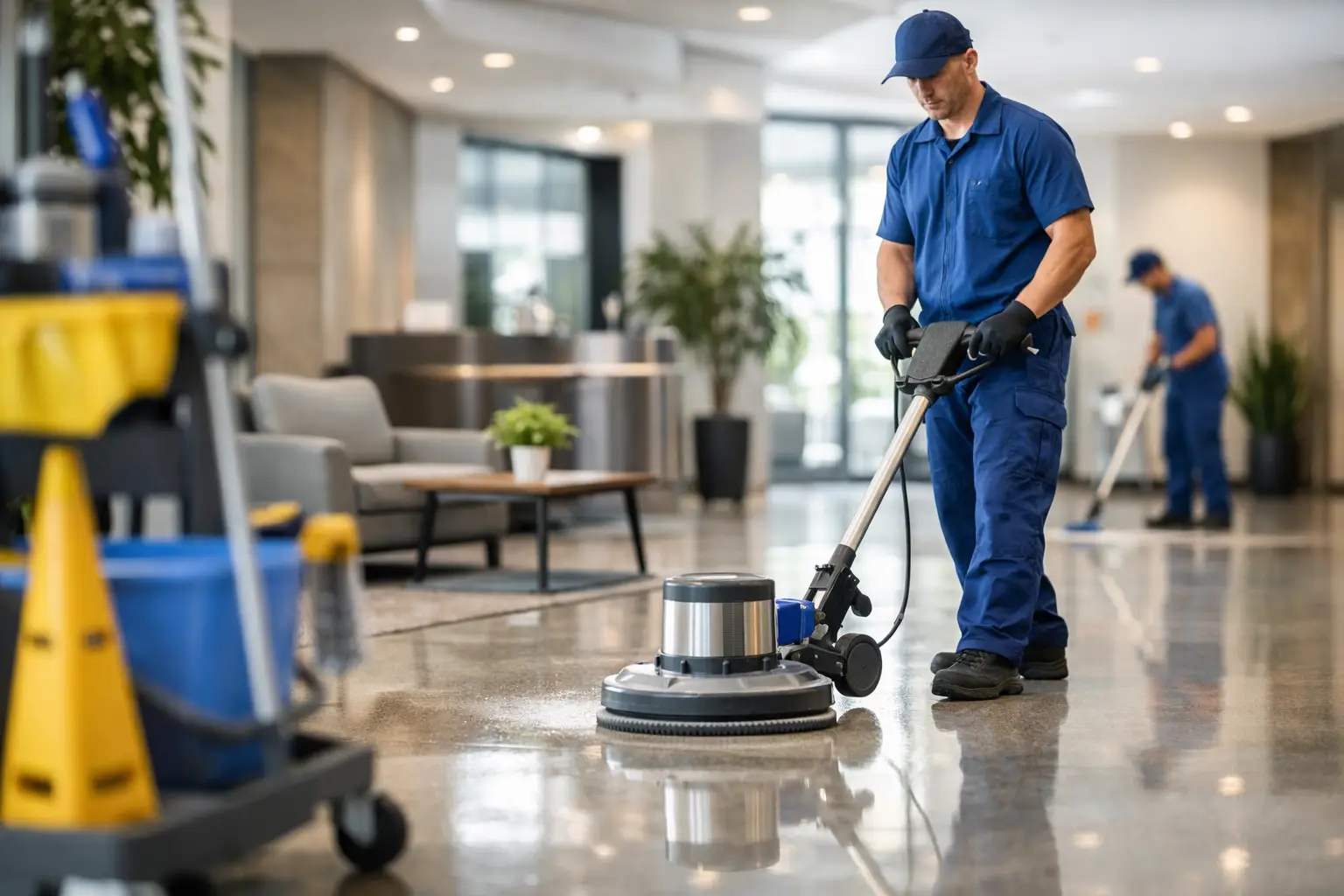
A floor can look clean at a glance and still hold the evidence of a busy week: tracked-in grit near entryways, sticky residue in break rooms, dull traffic lanes in hallways, and corners that regular mopping never quite reaches. Professional floor cleaning services address the work beneath that first impression, helping homes and shared properties feel cared for from the ground up.
For homeowners, property managers, office teams, and HOA communities, floor care is not one-size-fits-all. The right approach depends on the surface, how the space is used, and how much disruption the cleaning schedule can reasonably allow. A thoughtful plan protects the appearance of the space while focusing attention where dirt and wear actually build up.
Why floors need more than routine mopping
Routine sweeping and mopping are useful for everyday upkeep. They remove loose debris, handle small spills, and keep a room presentable between more detailed cleanings. But they are not always enough for the soil that settles into textured tile, collects along baseboards, or gets pressed into carpet fibers by steady foot traffic.
Hard flooring can develop a cloudy or streaked appearance when residue from products is left behind. Grout can darken in kitchens, bathrooms, and common areas where moisture and daily use are constant. Carpet may look flattened around desks, beds, doors, and seating areas long before the entire room appears dirty. These are practical signs that the floor needs focused care rather than another quick pass with a mop.
There is also a property-care reason to stay ahead of buildup. Sand, small stones, and abrasive debris can act like sandpaper under shoes, chairs, and rolling equipment. In San Diego County, dry outdoor conditions can make this especially noticeable near entrances, patios, and high-use common areas. Consistent cleaning helps reduce the amount of grit that gets carried across interior surfaces.
Floor cleaning services should match the surface
The best cleaning method starts with identifying what is underfoot. Treating every floor the same can leave poor results, and in some cases, it can create avoidable wear. A customized plan gives each material the attention it needs.
Tile, grout, and hard surfaces
Tile is durable, but it is not maintenance-free. Textured finishes and grout lines hold onto dirt that a standard mop may glide over. Kitchens, restrooms, lobbies, clubhouses, and entryways often need extra attention because spills, moisture, and foot traffic meet in the same place.
Detailed hard-surface cleaning focuses on visible soil along edges, in grout lines, and around fixtures or furniture. The goal is a clean, even-looking floor without leaving behind a heavy film. For property-managed facilities, scheduling this work around low-traffic periods can help keep residents, visitors, and staff moving comfortably through the space.
Vinyl, laminate, and other resilient flooring
Vinyl and laminate are popular because they can create a polished look while standing up to daily activity. Still, they need the right level of moisture and appropriate products. Too much water, overly aggressive scrubbing, or unsuitable cleaners can affect seams, edges, and surface finish.
A professional cleaner should account for the manufacturer’s care guidance and the floor’s current condition. In an office or community room, for example, the priority may be reducing scuffs and keeping walking paths clean without interrupting normal operations. In a home, the focus may be kitchens, dining areas, and entry zones where daily life leaves the most visible marks.
Carpeted areas
Carpet cleaning is often most effective when it is planned around use, not just appearance. A private office, a busy hallway, a rental turnover, and a clubhouse lounge all place different demands on carpet. High-traffic paths may need attention before the rest of the room does, while an upcoming move-out or property showing may call for a more complete refresh.
Vacuuming is essential, but it cannot always remove embedded soil or revive compressed fibers. Professional carpet care can help improve the look of worn traffic areas and remove the dust and debris that routine vacuuming leaves behind. Drying time and access to the room matter, so this work should be coordinated with the household, tenant, office schedule, or property manager’s needs.
Where a tailored floor-care plan makes the biggest difference
Floor cleaning is most valuable when it supports the way people use a property. A cleaning plan for a single-family home may center on the kitchen, bathrooms, main living areas, and entryways. A commercial plan may prioritize the lobby, break room, restrooms, hallways, and work areas that shape employees’ and visitors’ first impressions.
For HOA boards and property managers, common areas demand consistency. Clubhouses, community rooms, shared corridors, elevators, leasing spaces, and fitness-adjacent areas can see many users in a short period. Floors in these spaces need to look presentable, but the work also has to fit around meetings, events, resident access, and regular maintenance activity.
Move-in, move-out, and post-construction situations deserve their own approach. These properties can have fine dust, adhesive residue, debris near baseboards, or concentrated dirt left behind after furniture is removed. A detailed floor service helps prepare the space for a new resident, owner, tenant, or project handoff without treating the job like a standard weekly visit.
What to discuss before scheduling floor cleaning services
A useful conversation before service begins can prevent mismatched expectations. Start with the surface type and the rooms that concern you most. Let the cleaning team know whether the issue is dullness, tracked-in dirt, pet hair, stains, grout discoloration, construction dust, or simply a floor that no longer looks as fresh as the rest of the space.
It also helps to discuss access. In a home, this may mean working around pets, family schedules, or furniture. In an office or HOA setting, it may involve keys, building access, security procedures, event calendars, or a preferred service window. Clear communication allows the work to be planned around the property instead of asking the property to adapt to the cleaning.
For larger facilities and multi-location properties, consistency matters as much as the individual cleaning visit. A written scope can identify priority areas, recurring tasks, periodic deep-cleaning needs, and the person responsible for approving changes. That structure makes it easier to maintain the same standard across common areas, offices, and facilities with different levels of traffic.
Keep floors looking better between professional visits
Professional service works best alongside simple daily habits. Entry mats reduce the amount of dirt carried indoors, especially near front doors and side entrances. Prompt attention to spills helps prevent sticky buildup and keeps residue from being spread farther through the room.
For commercial and shared spaces, small operational choices can also help. Encourage staff and residents to report spills, place protective pads beneath furniture when appropriate, and avoid using an assortment of untested cleaning products on the same surface. When every product leaves a different residue, even a clean floor can begin to look uneven.
Most importantly, do not wait until the floor looks neglected to arrange care. The longer soil remains in grout, carpet, or high-traffic paths, the more labor may be needed to restore a consistent appearance. Regular attention is usually easier to schedule and easier on the surface than an emergency clean before an inspection, event, tenant turnover, or client visit.
A cleaner floor supports a better experience
Floors quietly shape how a space feels. A clean entryway welcomes visitors. Fresh carpets make a room feel more ready for work or relaxation. Well-maintained common areas show residents and guests that details are being handled.
Call The Helper LLC can tailor floor cleaning to the needs of homes, offices, facilities, and shared properties throughout San Diego County. Start with the rooms people notice most, the surfaces that need extra care, and a schedule that works for the way your property operates. A well-kept floor is not just a finishing touch – it is part of making the whole space feel ready.


Comments are closed