



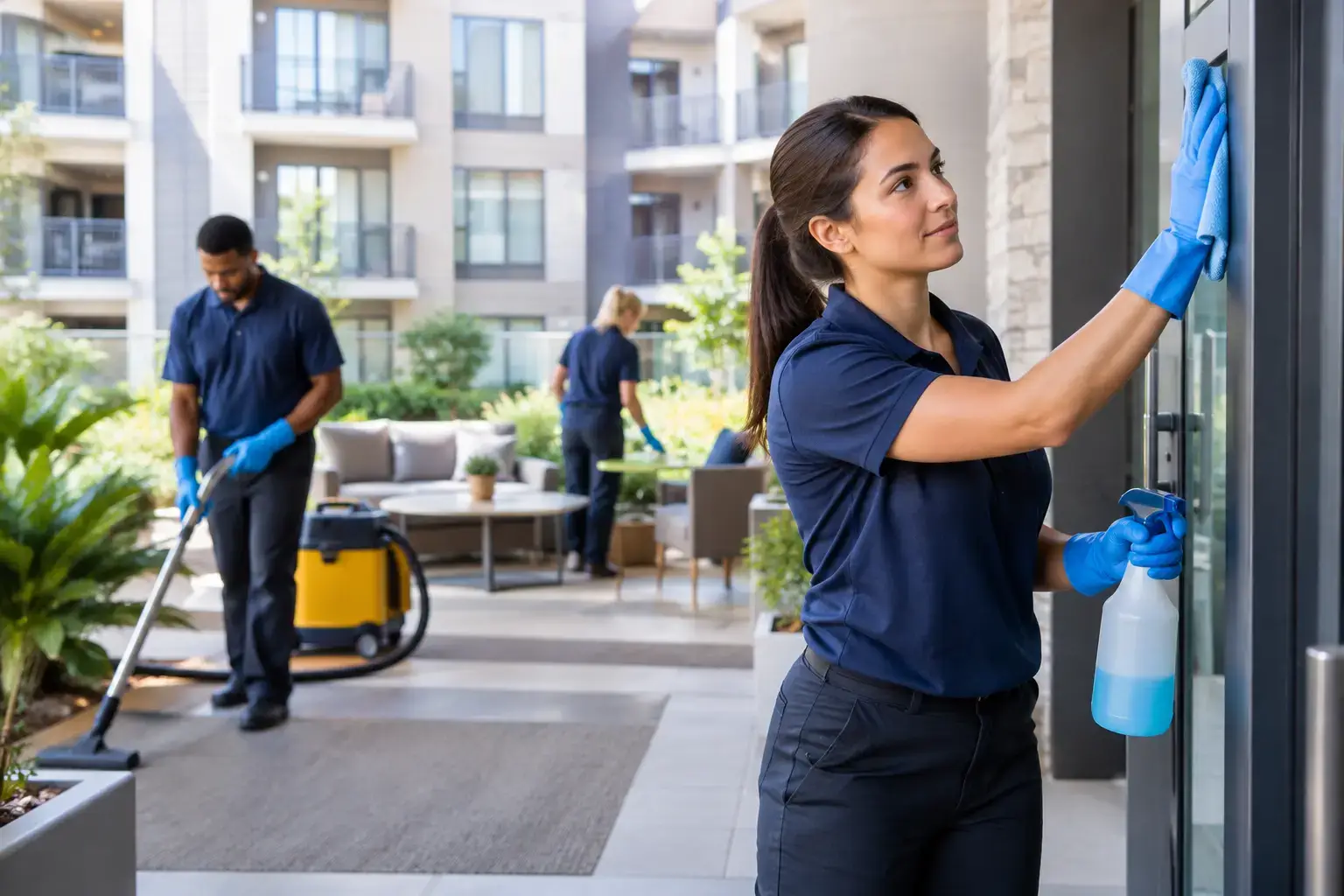
A resident notices a smudged elevator mirror. A prospective renter walks through a lobby after a rainy morning. A clubhouse is booked for an evening event. These are small moments, but together they shape how a community feels to residents, guests, and ownership. This multifamily cleaning operations guide helps property and HOA managers build a cleaning program that stays organized when occupancy, weather, maintenance work, and move-outs compete for attention.
Multifamily cleaning is not simply office cleaning applied to an apartment building. Traffic patterns change by the hour, common spaces serve different purposes, and cleaning teams often work around residents rather than after everyone has left for the day. The best operations plans make those realities visible before they become service issues.
Start With a Property-Specific Cleaning Scope
A useful scope begins with the actual property, not a generic checklist. Walk the community at the times it is busiest and identify what residents, visitors, leasing staff, and maintenance teams use most. A polished lobby may be the priority at one property, while breezeways, elevator cabs, trash areas, or clubhouse restrooms need more attention at another.
Break the scope into zones: entry and lobby areas, hallways and stairwells, elevators, mailrooms, restrooms, amenities, leasing offices, fitness areas, community rooms, exterior walkways, and trash-related spaces. Each zone should have a clear list of tasks, an expected frequency, and a practical service window.
Frequency matters as much as the task itself. Entry glass may need attention multiple times each week, while high ledges or detailed wall washing may fit into a monthly rotation. Over-scheduling every task increases cost and can create unnecessary disruption. Under-scheduling visible areas creates the opposite problem: the building looks neglected even if deeper cleaning happens occasionally.
Define What “Clean” Looks Like
Terms such as “maintain lobby” or “clean common areas” leave too much room for interpretation. A better scope describes observable results. For example, lobby service may include vacuuming or mopping flooring as appropriate, removing fingerprints from entry glass, wiping seating surfaces, straightening visible areas, and emptying receptacles.
This level of detail helps managers evaluate service consistently without turning every visit into an inspection debate. It also gives the cleaning provider enough context to staff and schedule the work appropriately.
Build a Schedule Around Resident Activity
A cleaning schedule should support the way the property operates. Morning service can refresh high-visibility areas before office traffic or tours begin. Midday work may be practical for clubhouses or leasing offices. Evening service may reduce interruption in offices or community rooms, but it can be less effective for areas that need to look their best early in the day.
There is no universal “best” shift. It depends on the property’s layout, resident routines, onsite staff coverage, and security procedures. A mid-rise community with one busy lobby has different needs than a garden-style property with multiple stairwells and exterior corridors.
Plan for seasonal changes as well. Rain can increase tracked-in dirt near entrances and elevators. Summer pool or amenity use can increase restroom and clubhouse needs. Move-in seasons may create more dust, cardboard, and wear in shared areas. A static schedule can work for stable properties, but a flexible plan usually performs better across the year.
Give Turnovers Their Own Workflow
Vacant-unit cleaning and recurring common-area service should be coordinated, but they should not be treated as the same operation. Turnovers are deadline-driven and often depend on maintenance completion, vendor access, flooring work, painting, or inspections. Without a clear handoff process, cleaning teams may arrive too early, wait on unfinished work, or have too little time before a move-in date.
Set a simple communication process that identifies the unit number, access instructions, target completion date, unit condition, and any requested add-on work. The property team should also clarify when the unit is ready for cleaning rather than merely scheduled for maintenance.
A standard turnover scope commonly addresses kitchens, bathrooms, floors, interior surfaces, fixtures, cabinets, and appliance exteriors and interiors when requested. The right level of detail depends on the unit condition and lease requirements. A light refresh after a short vacancy is different from a unit that needs a deeper move-out cleaning after extensive use.
For larger properties, a weekly forecast is more useful than last-minute requests. Sharing anticipated turnovers lets a cleaning partner plan labor and respond more effectively when dates shift.
Make Inspections Part of the Operation
Cleaning quality is easier to manage when inspections are routine, focused, and documented. The goal is not to catch minor faults for their own sake. It is to spot patterns early: an entryway that gets dirty faster than expected, a supply issue in a restroom, recurring trash overflow, or a stairwell that needs a different service frequency.
Use a short inspection format tied to the property’s highest-priority areas. Check the conditions residents see first, then inspect the areas most likely to generate complaints or maintenance concerns. Photos can be helpful for documenting unusual conditions, post-construction dust, vandalism, spills, or work that falls outside the recurring scope.
Managers should distinguish between cleaning needs and maintenance needs. A stain that will not lift, a damaged baseboard, a leaking dispenser, or worn flooring may look like a cleaning issue at first. Clear reporting prevents the cleaning crew from being held responsible for repairs and helps the property team route concerns to the right vendor.
Create a Reliable Communication Rhythm
Most cleaning disruptions are communication failures before they are cleaning failures. Access codes change, event schedules move, elevators go out of service, contractors block corridors, and residents report issues after regular service has ended. A defined communication path keeps these changes from getting lost in scattered texts or verbal requests.
Establish who can approve extra work, who reports urgent conditions, and how routine feedback is shared. Property managers may prefer a weekly status update, while an onsite team may need same-day communication for active concerns. The format can be simple, but it should be consistent.
For community rooms and clubhouses, event coordination deserves special attention. Cleaning before and after a reservation may be necessary, but managers should confirm the room condition, access timing, and whether the requested work is part of regular service or an additional event cleaning. Clear expectations protect the schedule and help keep shared amenities ready for the next user.
Plan for Supplies, Waste, and High-Touch Areas
A well-run operation accounts for the practical details that can interrupt service. Supply storage should be accessible, secure, and close enough to avoid wasting time transporting materials across a large community. Managers should decide who provides consumables such as restroom paper products and hand soap, how low inventory is reported, and who authorizes replenishment.
Waste areas also need a defined plan. Cleaning crews can keep surrounding surfaces tidy and address loose debris within scope, but bulky-item removal, overflowing dumpsters, illegal dumping, and vendor pickup delays may require property management action. Assigning ownership upfront prevents recurring frustration.
High-touch areas deserve consistent attention, particularly elevator buttons, door handles, shared tables, mailroom surfaces, restroom fixtures, and amenity equipment. The appropriate frequency depends on usage. A quiet community room does not need the same cadence as an active fitness center or leasing lobby.
Review the Plan When Conditions Change
A cleaning plan should not be set once and forgotten. Review it after a new amenity opens, occupancy changes, a renovation begins, resident feedback identifies a repeated issue, or the property changes its operating hours. Small adjustments can make a meaningful difference, such as moving a task to a better time of day or increasing attention to a single high-traffic entrance.
For San Diego County property managers, Call The Helper LLC can help tailor recurring common-area, clubhouse, office, and turnover cleaning around the needs of each community. A productive working relationship starts with a walkthrough, a clear scope, and responsive communication when property conditions change.
The most effective cleaning operation is the one residents rarely have to think about: common areas look cared for, onsite teams know who to contact, and the service plan keeps pace with the community instead of falling behind it.


Comments are closed