



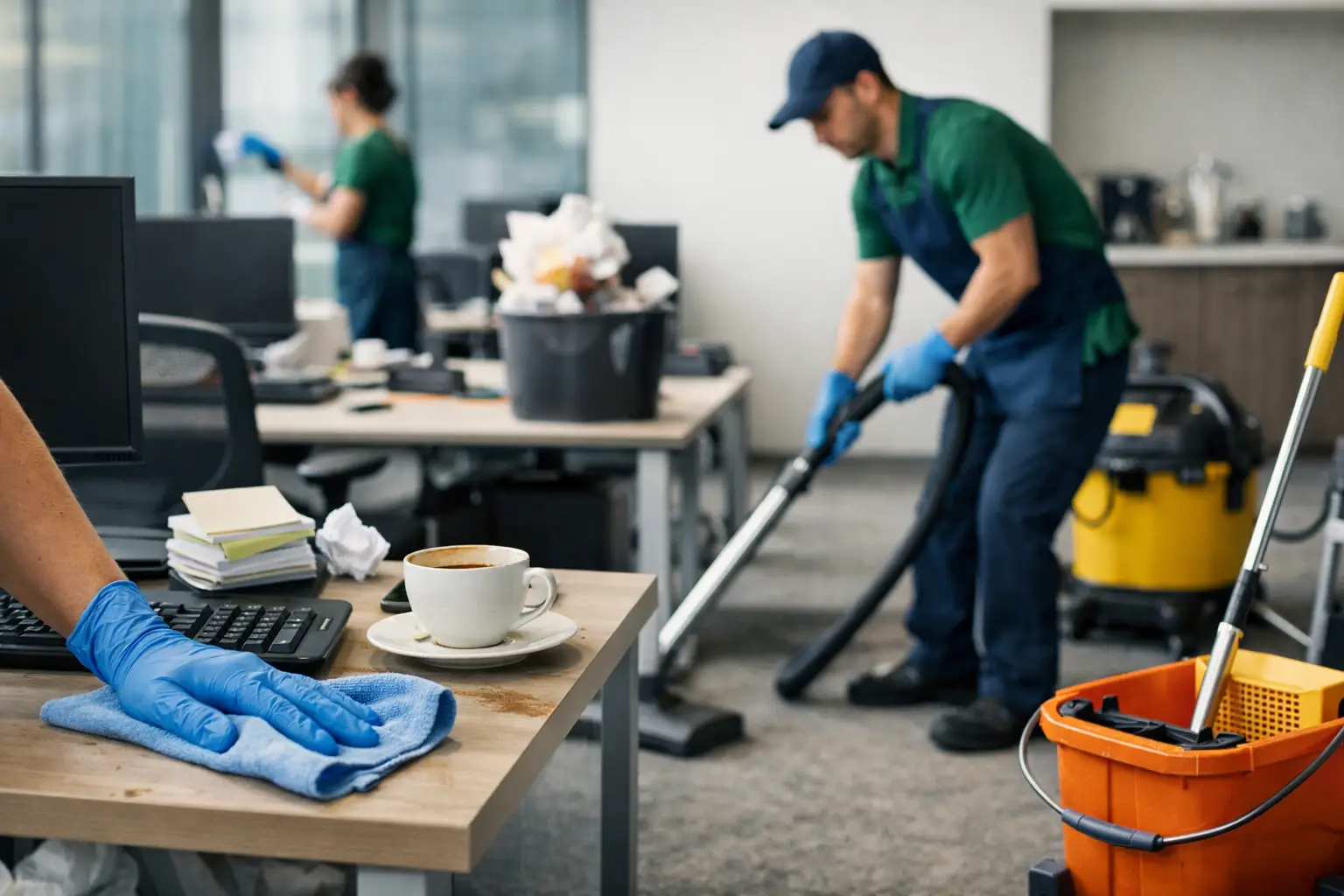
A workspace can look acceptable at a glance while still carrying weeks of buildup in the places people use most. Knowing when offices need deep cleaning helps office managers, property managers, and business owners address those details before they affect the appearance, comfort, and day-to-day function of the space.
Routine janitorial service keeps an office presentable between visits. Deep cleaning goes further, focusing on the overlooked surfaces, hard-to-reach areas, floors, fixtures, and shared spaces that do not receive detailed attention during a standard cleaning. The right timing depends on foot traffic, office layout, building use, and the condition of the workplace – not simply a date on the calendar.
Deep Cleaning Is More Than Routine Office Cleaning
Regular office cleaning typically centers on recurring needs: emptying trash, cleaning restrooms, wiping visible surfaces, vacuuming, and maintaining common areas. Those tasks matter because they keep the workplace orderly every day or every week.
A deep cleaning service is more detailed and targeted. It may include careful work along baseboards and corners, dust removal from vents and blinds, detailed restroom fixtures, breakroom cabinets and appliances, floor care, door frames, light switches, and areas behind or beneath furniture when accessible. It is designed to reset the space after normal maintenance has stopped being enough.
That does not mean every office needs the same scope. A small, low-traffic professional office may need occasional detailed service in addition to routine cleaning. A busy shared workplace, medical-adjacent office, retail back office, or property management facility may need more frequent attention in high-use areas. A customized plan prevents the work from becoming either too light or unnecessarily disruptive.
When Offices Need Deep Cleaning Most
The office has a lingering odor
A persistent odor is often one of the clearest signals that surface-level cleaning is no longer addressing the source. Trash areas, refrigerator spills, carpeted sections, upholstered seating, restroom corners, and breakroom drains can all hold odors over time.
Covering the smell with air freshener does not solve the problem. A detailed cleaning plan should identify the affected area and focus on the surfaces, fixtures, or flooring that need more attention. If the source is a building maintenance issue, such as a plumbing or HVAC concern, it should be addressed separately rather than treated as a cleaning-only problem.
Floors look dull, stained, or worn before their time
Office floors carry more than visible dirt. Entryways collect grit and moisture, chair paths become discolored, and breakroom floors can develop sticky buildup that routine mopping may not fully remove. Carpets can also hold tracked-in debris that makes the whole office feel less cared for.
Deep floor cleaning can make a noticeable difference in how a workplace presents to employees, visitors, and prospective clients. The best approach depends on the flooring material, the condition of the surface, and the amount of traffic it receives. Aggressive methods are not right for every floor, so the service should match the material rather than follow a one-size-fits-all checklist.
Restrooms need attention beyond daily upkeep
Restrooms are cleaned frequently in most workplaces, but they also show buildup quickly. Grout lines, partitions, floor edges, dispenser areas, fixtures, and the base of toilets may need detailed work that falls outside a routine visit.
When a restroom looks clean from the doorway but still feels neglected up close, it is time for a deeper reset. This is especially relevant in offices with shared restrooms, client-facing facilities, community spaces, and buildings with high daily occupancy. A well-maintained restroom sends a practical message: the property is managed with care.
Dust is gathering in overlooked areas
Dust on desks is easy to spot. Dust on vents, blinds, ceiling edges, baseboards, chair legs, window tracks, and the tops of cabinets is easier to miss until it becomes obvious. These areas can make an otherwise tidy office look dated or poorly maintained.
A deep cleaning visit gives staff the time to work through those neglected details. It is particularly useful before a major meeting, property tour, seasonal reset, or office reorganization, when the condition of the entire space is more visible.
The breakroom is no longer pleasant to use
Breakrooms receive steady use and inconsistent cleanup. Coffee drips, microwave splatters, fingerprints on cabinets, crumbs in drawers, refrigerator spills, and buildup around sinks can turn a shared amenity into a source of frustration.
A deep cleaning can restore the breakroom without requiring your employees to spend their workday handling accumulated messes. Detailed attention to appliance exteriors, counters, cabinet fronts, tables, chair legs, and floor edges helps the room feel welcoming again. If employees are responsible for certain daily tasks, a clear internal routine can help maintain the results after the service is complete.
Your office is preparing for an important moment
Some deep cleans are driven by condition. Others are driven by timing. An office may benefit from detailed cleaning before a client event, a leadership visit, a new tenant move-in, a post-construction handoff, a lease transition, or a company-wide meeting.
For property managers and office administrators, this kind of preparation is about more than appearances. A clean, organized common area and workplace reduce last-minute distractions and help visitors focus on the purpose of their visit. Scheduling early also gives the cleaning team room to coordinate around access, occupied areas, and building requirements.
Routine cleaning is no longer producing visible results
The most practical sign is simple: the office is being cleaned, but it no longer looks freshly cleaned. Fingerprints reappear quickly, corners look dark, floors stay dull, and shared spaces feel tired even after a routine service.
This does not always mean the recurring plan is wrong. It may mean the space needs a one-time reset before regular cleaning can be effective again. Once the buildup is removed, a recurring service schedule can be adjusted to focus on the areas that matter most to your team and visitors.
How to Plan an Office Deep Cleaning Without Disrupting Work
Start by walking the office as a visitor would. Enter through the main door, use the restroom, pass through the breakroom, and look closely at meeting rooms, reception areas, floor edges, and touchpoints. This often reveals priorities that are easy to overlook during a busy workweek.
Next, separate must-address items from nice-to-have items. For example, a client-facing lobby, heavily used restroom, stained entry flooring, and breakroom may need immediate attention, while storage areas can be scheduled for a later visit. This approach helps keep the service focused on visible results and operational needs.
Timing matters as well. Deep cleaning is often easiest after business hours, on weekends, or during a slower period, especially when detailed floor care or work around desks is involved. However, a large after-hours service is not always necessary. A flexible plan can divide the work by zone so essential areas are refreshed with minimal interruption.
Before service begins, confirm access instructions, security procedures, furniture limitations, and any areas that require special handling. Clear communication makes the visit more efficient and helps prevent avoidable delays.
Set a Schedule That Fits the Way Your Office Operates
There is no universal rule for how often an office needs deep cleaning. High-traffic spaces may benefit from quarterly detailed service, while smaller or lightly used offices may only need it seasonally or before major events. In San Diego County, offices near beaches, construction activity, or busy commercial corridors may also see faster buildup from tracked-in dust and debris.
The useful question is not, “How often should every office deep clean?” It is, “Which parts of our office stop looking their best first?” Tracking those areas for a few weeks can reveal whether the need is primarily floors, restrooms, breakrooms, reception spaces, or dust-prone details.
Call The Helper LLC can build a cleaning plan around your office schedule, building use, and priority areas, whether you need a detailed one-time service or recurring janitorial support after the reset. Let the condition of your workplace guide the plan, and give the details enough attention to make the whole office feel ready for the work ahead.


Comments are closed