




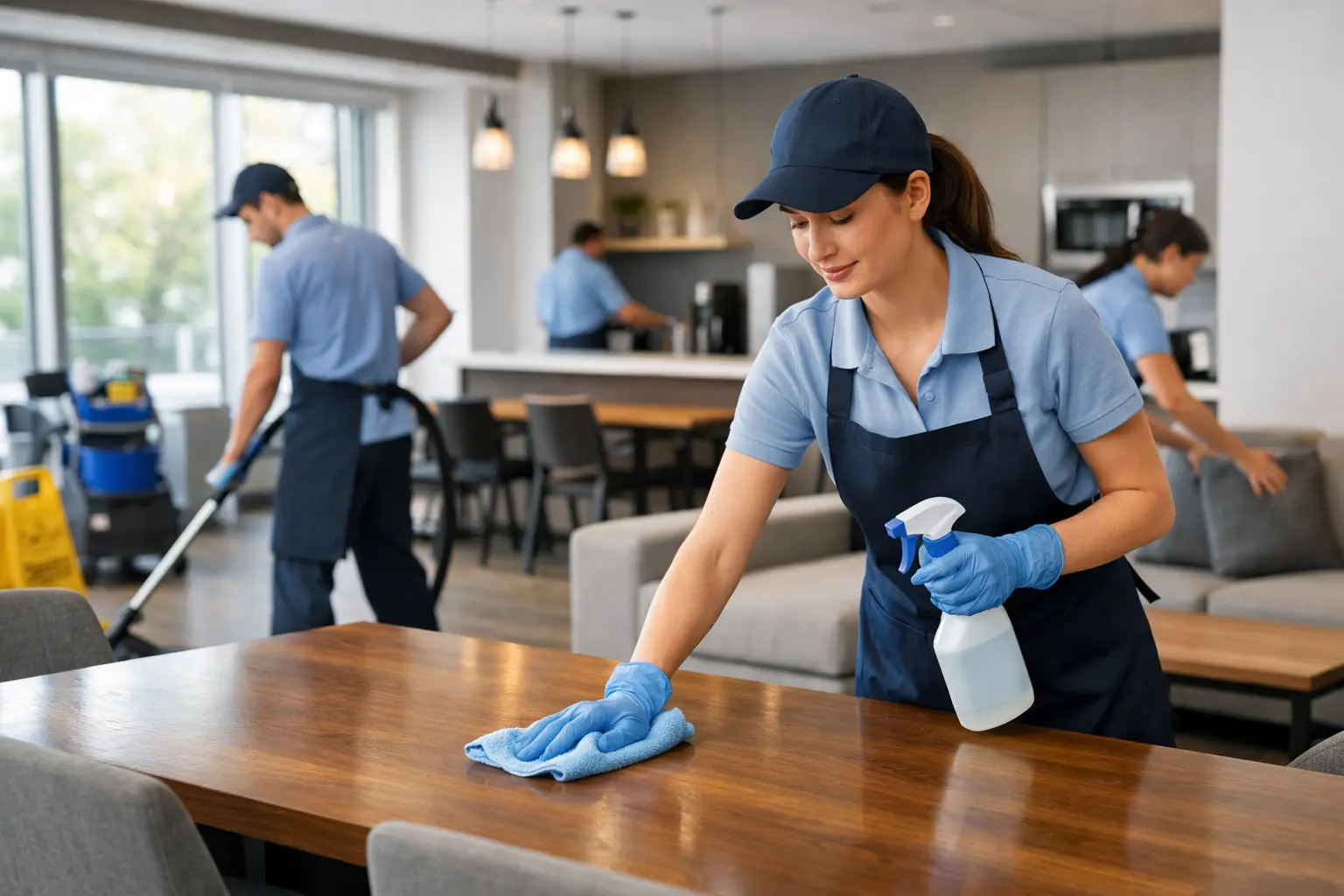
A community room can go from a quiet board meeting to a packed birthday party in a single afternoon. By the next morning, property managers and HOA boards need it to look welcoming again – not like the previous event is still happening. Reliable community room cleaning services make that reset easier, protecting the appearance of a shared amenity while giving residents a space they feel comfortable reserving and using.
For managed communities, cleaning a community room is not simply a matter of emptying trash and vacuuming the floor. The room is often one of the most visible parts of the property. Its condition affects resident impressions, event readiness, and the daily workload of the management team.
Why Community Rooms Need a Different Cleaning Plan
Community rooms have more wear than a typical office or hallway. They may include tables and chairs that are moved frequently, kitchens or serving counters, restrooms, upholstered seating, hard-surface floors, windows, and high-touch entry points. The cleaning needs also change from week to week depending on reservations, meetings, holidays, and resident events.
A one-size-fits-all checklist can miss the details that make the room feel truly ready. For example, a room used mostly for quiet meetings may need consistent dusting, floor care, restroom cleaning, and touchpoint attention. A room that hosts frequent celebrations may need more focused post-event cleaning, including waste removal, spot cleaning, table and chair wipe-downs, and kitchen-area care.
The right plan depends on how the amenity is used. A property with occasional reservations may benefit from scheduled recurring service plus cleaning after larger events. A busy clubhouse or multipurpose space may need more frequent attention to stay presentable between uses.
What Community Room Cleaning Services Should Cover
A professional cleaning plan should focus on the surfaces residents notice first as well as the areas that receive the most daily use. Before service begins, the property manager or HOA board should identify the room’s layout, available amenities, expected traffic, and any areas requiring special attention.
Entryways, Main Areas, and High-Touch Surfaces
The entrance sets the tone for the entire room. Cleaning should address glass doors, handles, visible smudges, floors near the entry, and surfaces around sign-in areas or posted notices. Inside the room, tables, chairs, counters, shelving, ledges, and other hard surfaces should be wiped down according to the property’s needs.
High-touch areas deserve particular attention, especially in spaces used by many different residents and guests. Door handles, light switches, cabinet pulls, elevator buttons nearby, and shared equipment can quickly show fingerprints and grime. Consistent care helps the room look maintained rather than merely cleaned after it becomes visibly dirty.
Floors That Match the Space and Traffic Level
Floor care has an outsized effect on the appearance of a community room. A clean table can be overlooked if the floor is dull, littered, sticky, or marked with scuffs. Carpeting may require vacuuming and periodic spot treatment, while tile, vinyl, laminate, or other hard surfaces need appropriate sweeping and mopping.
There is a practical trade-off here. Daily or frequent floor service is useful in high-traffic rooms, but deeper floor cleaning can be scheduled around resident use and event calendars. Property managers should discuss the type of flooring and the room’s activity level so the service plan supports both appearance and long-term upkeep.
Restrooms and Kitchen Areas
If the community room includes restrooms, they should be part of the routine cleaning scope rather than an afterthought. Clean fixtures, mirrors, counters, floors, and waste bins help residents feel that the entire amenity is being cared for, not just the visible event space.
Kitchenettes and serving areas also need clear expectations. Depending on the room setup, service may include cleaning counters, sinks, exterior cabinet surfaces, appliance exteriors, and floors. Management should define what residents are expected to remove after an event and what the cleaning team will handle. That distinction prevents confusion when food, decorations, or personal items are left behind.
Waste Removal and Event Reset Details
Full trash bins can make an otherwise clean room feel neglected. Regular waste removal, liner replacement, and attention to bins in restrooms or kitchen areas are essential for shared facilities. After events, the room may also need a more thorough reset so the next resident walks into a neutral, orderly space.
That can include returning furniture to an agreed arrangement, removing visible debris, wiping tables and counters, straightening chairs, and addressing spills or marks while they are still manageable. If a property hosts many private events, setting a post-event cleaning process is often more effective than relying solely on routine weekly service.
How to Build the Right Schedule
The best schedule is based on usage, not assumptions. Start with the room’s reservation calendar and look at when messes are most likely to occur. A space used every weekend may need service after peak activity, while a room used for occasional meetings may only require regular upkeep and a flexible option for special events.
Property managers should also consider the timing of cleaning. Daytime service may be convenient for access, but early morning, evening, or other lower-traffic windows may be better for resident-facing spaces. The goal is to keep the room ready without interfering with meetings, classes, or reserved functions.
A customized plan can combine recurring visits with additional service when needed. This approach gives the property a dependable baseline while recognizing that community spaces do not operate on a perfectly predictable schedule.
Set Clear Expectations With Residents and Vendors
Even excellent cleaning support works best when the community has clear room-use expectations. Reservation rules can explain how residents should leave the space, where trash belongs, whether furniture must be returned to its original layout, and what happens to personal decorations or event supplies.
These expectations are not meant to shift responsibility away from the cleaning team. They make it easier for cleaners to focus on restoring the room instead of sorting through items that should have been removed. They also help property managers address repeat concerns consistently.
It is useful to keep a simple communication process between the management team and cleaning provider. Let the provider know about large events, maintenance work, furniture changes, or periods of unusually high use. Likewise, cleaners should have a clear point of contact when they notice recurring spills, damage, supply issues, or conditions that need management attention.
What to Look for in a Cleaning Partner
For HOA boards and property managers, reliability matters as much as the cleaning itself. Shared amenities run on schedules, reservations, and resident expectations. A missed visit or unclear communication can create immediate problems for the next planned activity.
Look for a provider willing to understand the property instead of forcing the room into a generic package. The cleaning scope should reflect the room’s actual surfaces, usage patterns, access procedures, and priorities. Professional communication, consistent scheduling, and responsiveness when needs change are especially valuable for busy managed communities.
Call The Helper LLC works with HOA and property-management clients to create practical cleaning plans for community rooms, clubhouses, shared facilities, and common areas. The focus is straightforward: help keep the spaces residents share clean, presentable, and ready for their next use.
A Clean Room Supports a Better Community Experience
A well-maintained community room gives residents more confidence in the property and makes daily management easier. It supports everything from a small committee meeting to a family celebration without placing every cleaning concern on the HOA board or onsite staff.
The most effective plan is one that fits the room, the calendar, and the community’s standards. When those details are handled consistently, the space is ready when residents need it – and the property team can spend less time chasing cleaning issues after the fact.


Comments are closed