




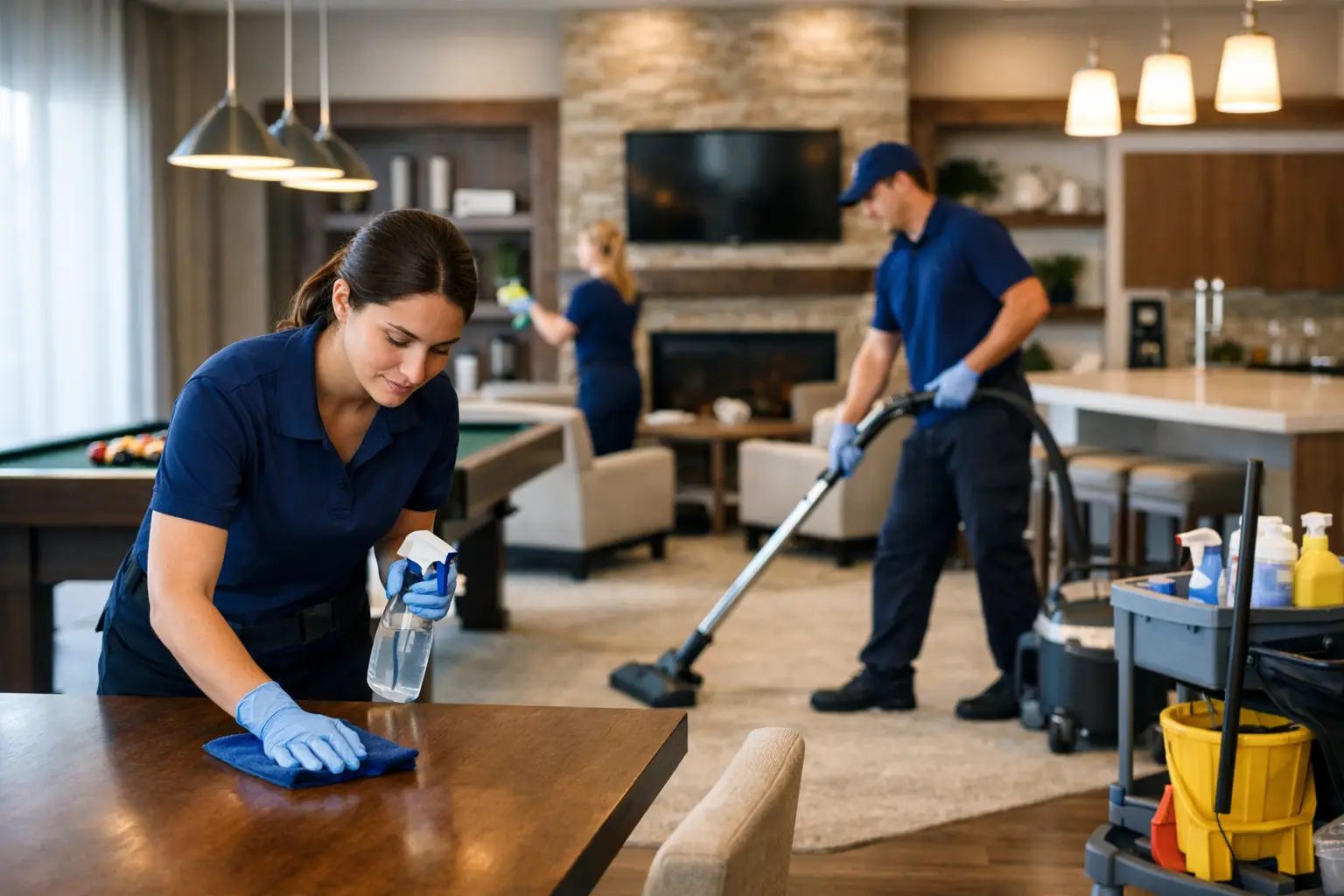
A clubhouse can look tidy at 9 a.m. and feel neglected by noon. A resident meeting, fitness class, private gathering, or busy pool day can quickly leave behind fingerprints, crumbs, spills, and overflowing trash. Clubhouse cleaning services give HOA boards and property managers a dependable way to keep these shared spaces presentable without asking onsite staff to constantly put out fires.
For a managed community, cleaning is more than a checklist. It affects how residents experience the property, how confidently managers prepare for events, and how well high-use amenities hold up over time. The right plan accounts for the actual rhythms of the community, not just a generic weekly visit.
What Clubhouse Cleaning Services Should Cover
A clubhouse often includes several rooms with very different cleaning needs. The entrance and lobby set the first impression. Community rooms may host meetings, celebrations, and classes. Kitchens and restrooms require closer attention because they are high-touch, high-use areas. Fitness rooms, pool-adjacent spaces, hallways, and outdoor entry points each add another layer to the schedule.
A practical cleaning plan typically addresses visible surfaces, floors, trash, restrooms, touchpoints, and the details that make a room feel ready to use. That can include wiping tables and counters, cleaning sinks and fixtures, refreshing restroom supplies provided by the property, vacuuming or mopping floors, removing trash, and cleaning glass at entry doors. In common areas, dust on ledges, marks on walls, and smudges on doors can matter just as much as the floor.
The scope should be customized to the property. A small community room used once or twice a week may need a different cadence than a large clubhouse with daily fitness traffic and frequent reservations. Cleaning every space to the same level on every visit can waste effort in low-use rooms while leaving busy areas short on attention.
High-touch areas need consistent attention
Residents may not consciously notice every cleaned surface, but they notice when common spaces feel cared for. Door handles, light switches, elevator buttons, railings, tables, appliance handles, restroom fixtures, and shared equipment accumulate use quickly.
These areas benefit from routine cleaning during each service visit, particularly in active clubhouses. The goal is not simply to make surfaces shine. It is to maintain a consistently orderly environment where residents feel comfortable using the amenity.
Restrooms can shape the entire impression
A clean clubhouse restroom signals that the property is being managed attentively. Conversely, a restroom with an empty dispenser, streaked mirror, unpleasant odor, or full trash bin can overshadow an otherwise well-maintained facility.
Restroom service should include thorough cleaning of toilets, sinks, counters, mirrors, and floors, along with trash removal and attention to dispensers. The frequency depends on resident traffic, event schedules, and whether the restroom serves a pool, gym, or other heavily used amenity. A quiet clubhouse may be fine with scheduled service, while a space with weekend events may require an extra visit or post-event cleanup.
Build the Schedule Around How Residents Use the Space
The best cleaning schedule starts with observation. Property managers and HOA boards should consider when rooms are open, when they are busiest, and which areas create the most complaints or last-minute work. A clubhouse that hosts evening meetings may need cleaning the following morning. A fitness room with steady daily use may need more frequent floor and touchpoint care than the reservable event room next door.
There is a trade-off between a fixed schedule and a flexible one. Fixed recurring service makes budgeting and planning easier. Flexible service is useful when the community has seasonal events, higher pool traffic, construction nearby, or a packed reservation calendar. Many properties benefit from a regular baseline schedule with the option to add service before or after larger gatherings.
Timing matters, too. Cleaning during a quiet window helps avoid interrupting residents and gives the crew access to the full space. Early-morning, daytime, or evening service may each make sense depending on the property. Clear communication about access, alarm procedures, reservation calendars, and priority areas helps prevent avoidable disruptions.
The Details That Make a Clubhouse Feel Managed
Residents expect shared amenities to be clean, but they also expect them to be usable. That means attention to the small conditions that can make a room feel unfinished: debris at the entrance, streaks on glass, food residue in a microwave, dust on window sills, or bins that need to be emptied before an event.
Floors deserve a tailored approach. Carpeted meeting rooms may need regular vacuuming and periodic carpet cleaning based on traffic and spills. Hard-surface floors need routine care that keeps them free of visible dirt and scuffs. Entryways may require more frequent attention during rainy weather, landscaping activity, or periods of heavy foot traffic.
Kitchen areas need clearly defined expectations. If residents use a kitchenette during reservations, the cleaning team and property manager should agree on what is included in routine service and what requires post-event attention. This avoids confusion when a room has been used heavily or left in poor condition by a renter.
Outdoor-adjacent spaces can also affect the clubhouse experience. Pool decks, patios, entry steps, and exterior seating areas often bring dirt and debris inside. Depending on the property, common-area cleaning may need to coordinate indoor clubhouse service with outdoor upkeep, pressure washing, or trash bin cleaning as needed.
Why a Customized Checklist Works Better Than a Generic One
A generic cleaning list can be useful as a starting point, but it rarely reflects how a particular community operates. An HOA may have a locked storage room that does not need service, a children’s play area that needs regular detail work, or a clubhouse kitchen that is only opened for scheduled events. The cleaning plan should account for those realities.
A customized checklist creates clarity for everyone involved. Property managers know what to expect on each visit. HOA boards can verify that the plan reflects resident priorities. Cleaning professionals have a clear sequence for the property rather than relying on assumptions.
The checklist should also distinguish between recurring tasks and periodic tasks. Recurring work may include restrooms, trash, floors, touchpoints, and visible surfaces. Periodic work may include deeper floor care, detailed wall spot cleaning, interior glass, carpet cleaning, pressure washing, or post-construction cleaning after a facility project. Separating these tasks helps the property plan ahead instead of waiting until the space looks overdue.
Communication Is Part of the Service
Clubhouse cleaning can become complicated when event schedules change, access codes are updated, or a board member needs a room prepared for an inspection. A responsive cleaning partner makes those moments easier by communicating clearly and confirming the work plan.
For property managers, it helps to establish one point of contact, a simple process for requests, and a way to report priority issues. If a spill occurs before a community event or a room needs extra attention after a reservation, the request should not get lost in a long chain of messages.
It is also helpful to set realistic boundaries. Routine cleaning maintains the space over time, but a heavily soiled room after a large event may require additional service. Clear expectations protect the property, the cleaning team, and the quality of the finished result.
Choosing a Cleaning Partner for Your HOA Clubhouse
When evaluating clubhouse cleaning services, look beyond whether a provider can empty trash and mop a floor. The better question is whether they can work within your community’s schedule, communicate professionally, and adapt the scope as the property’s needs change.
Ask how the provider handles recurring service, special requests, access instructions, and quality concerns. Discuss the rooms that receive the most use, the times when residents need quiet access, and the specific details your board cares about. A provider should be willing to build the plan around the property rather than force the property into a one-size-fits-all package.
For HOA communities in San Diego County, Call The Helper LLC can create a cleaning plan for clubhouses, community rooms, shared facilities, and common areas that reflects the way residents actually use the space. Whether your property needs recurring upkeep, event-related attention, or periodic deeper cleaning, a clear plan helps keep the work consistent.
A well-kept clubhouse makes it easier for residents to gather, exercise, celebrate, and enjoy the amenities they help support. Let the cleaning schedule do its quiet work in the background, so the space is ready when the community needs it.


Comments are closed