



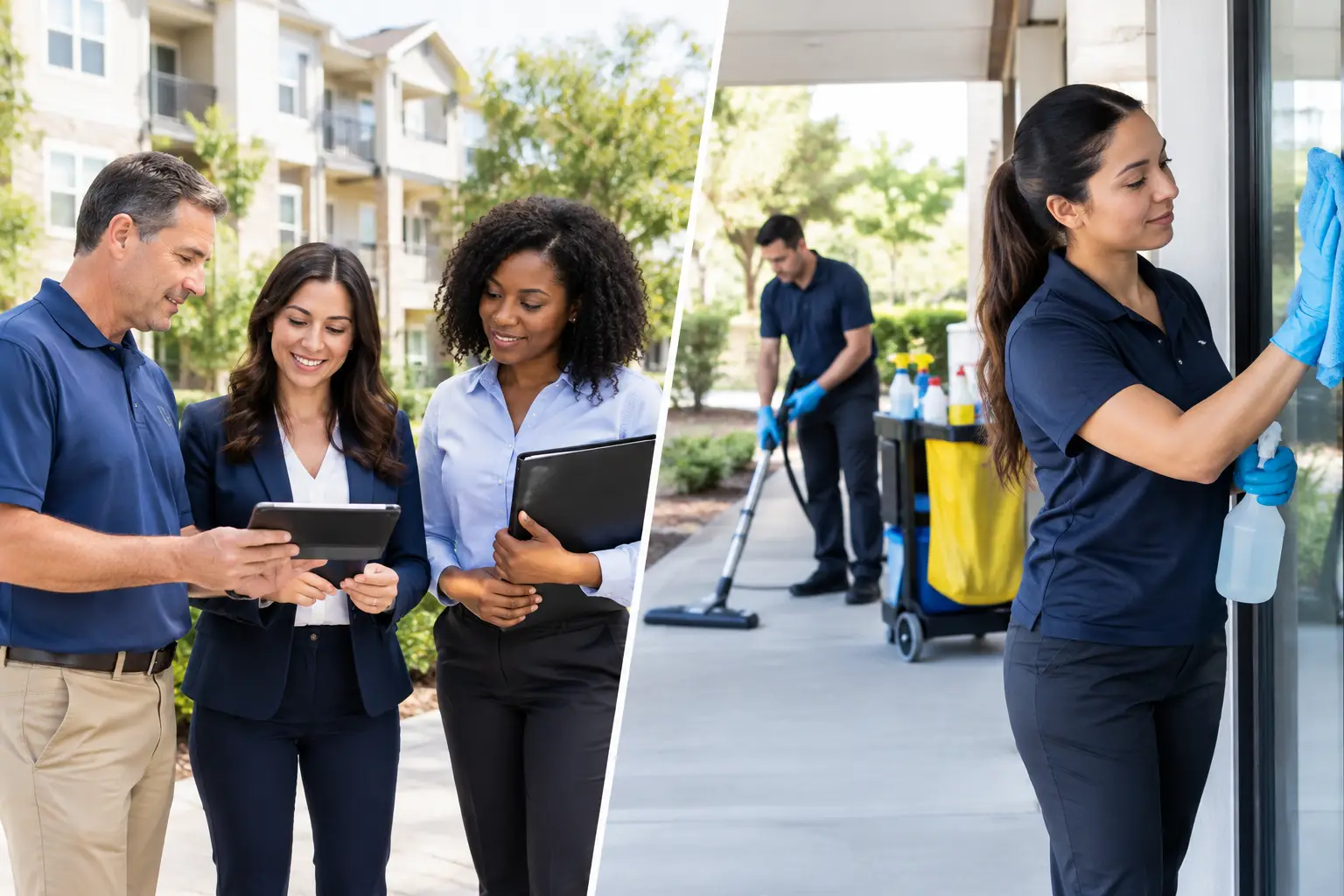
A missed trash-room cleanup, fingerprints on a clubhouse entrance, or an unprepared community room can become a management issue quickly. When comparing HOA staff versus cleaning contractors, the question is not simply who can clean. It is which arrangement gives your community reliable coverage, clear accountability, and a plan that matches the way residents actually use shared spaces.
For some associations, an in-house approach makes sense. For others, a professional cleaning partner is the more practical fit. The strongest decision comes from looking beyond hourly labor and considering scheduling, oversight, equipment, changing property needs, and the resident experience.
What HOA Cleaning Really Requires
HOA cleaning is rarely one single task. A property may need recurring attention in lobbies, elevators, hallways, mail areas, clubhouses, fitness rooms, restrooms, pool-adjacent facilities, leasing or management offices, and community rooms. The schedule may change around board meetings, private events, move-ins, vendor work, seasonal use, or higher resident traffic.
That variety is why cleaning decisions deserve more thought than simply assigning someone to wipe surfaces or empty bins. Common areas are highly visible. Residents and visitors often form an opinion of the community based on what they see at the entrance, in shared restrooms, or around amenities.
A useful cleaning plan defines which areas are cleaned, how often they are serviced, what level of detail is expected, and who receives communication when priorities change. Whether the work is done by staff or contractors, that clarity prevents inconsistent results.
HOA Staff Versus Cleaning Contractors: The Core Difference
In-house staff are employees assigned directly to the association or management operation. They may handle cleaning along with maintenance support, resident requests, setup work, inspections, or other property responsibilities. Cleaning contractors are an outside team engaged to perform agreed-upon services on a recurring or as-needed schedule.
Neither model is automatically better. The right choice depends on the size of the property, the number of amenities, how predictable cleaning needs are, and how much day-to-day oversight the management team can reasonably provide.
When in-house HOA staff can work well
An in-house staff model can be practical when a community has a consistent workload and a dedicated on-site team. A staff member already present at the property may be able to respond quickly to a spill, reset a room after an event, or handle a small cleaning task before it becomes a larger issue.
This arrangement can also suit properties where cleaning is only one part of a broader facilities role. For example, a maintenance employee may notice a light repair, access issue, or minor concern while completing routine common-area work. Direct familiarity with the property can be valuable.
The trade-off is that cleaning may compete with other responsibilities. A maintenance request, vendor appointment, resident issue, or urgent repair can easily take priority over routine cleaning. If the same person is expected to cover everything, detail work may be delayed even when the employee is working hard.
Management should also consider coverage. Vacation, sick time, turnover, shifting workloads, and off-site duties can create gaps. The question is not whether in-house staff can clean effectively. It is whether the property has a dependable backup plan when that person is unavailable or needed elsewhere.
When cleaning contractors are a stronger fit
Cleaning contractors are often a practical choice for associations that need consistent recurring service without assigning daily cleaning supervision to property staff. A contractor can work from a customized scope that identifies priority areas, service frequencies, access procedures, event-related needs, and communication expectations.
This is especially useful for communities with multiple common areas or amenities that need attention at different times. A clubhouse may need scheduled cleaning before a weekend reservation, while a lobby, restroom, or hallway needs regular service regardless of events. Contractors can be scheduled around those patterns rather than pulled away by unrelated maintenance duties.
A cleaning provider may also be easier to scale when needs change. An HOA can adjust the scope for a deep clean, floor care, pressure washing, post-construction cleanup, or extra attention after a heavily used community event. That flexibility matters for boards and managers trying to keep spaces presentable without permanently expanding internal duties.
Contractors still require communication. The best results do not come from handing over a key and hoping for the best. They come from a clear checklist, reliable access arrangements, a designated point of contact, and a process for reporting issues or updating priorities.
Look Beyond the Hourly Cost
A common mistake is to compare only a staff wage with a contractor invoice. That does not show the full operational picture.
An in-house approach involves more than the time spent cleaning. Management may need to account for recruiting, scheduling, training, supplies, equipment, payroll administration, supervision, coverage during absences, and the opportunity cost of assigning staff away from maintenance or resident-facing work.
With a contractor, the cost is usually connected to an agreed cleaning scope and service schedule. That can make budgeting more predictable when the property needs recurring cleaning. However, managers should be specific about what is included. A vague scope can lead to mismatched expectations, particularly around detail cleaning, event resets, trash areas, high-touch surfaces, and periodic projects.
The most useful comparison is based on the outcome your HOA needs: consistently clean spaces, a realistic service schedule, timely communication, and fewer last-minute surprises for the management team.
Questions to Ask Before Choosing a Model
Before deciding, walk the property at the times residents use it most. A morning visit may reveal different needs than an evening or weekend walkthrough. Look at traffic patterns, visible touchpoints, restroom use, trash accumulation, and the condition of event spaces after they are used.
Then ask practical questions. Does your current staff have enough time to clean thoroughly without delaying maintenance work? Are there regular days when common spaces need to look their best? Do board meetings or resident events create extra work? What happens when the person responsible for cleaning is absent? Which areas generate the most complaints or repeat requests?
If those answers point to fluctuating demand, limited staff capacity, or recurring gaps, a contractor may bring needed structure. If cleaning needs are light, predictable, and easily managed by an on-site team with adequate coverage, keeping the work in-house may remain appropriate.
A Hybrid Model May Be the Most Practical Answer
Some communities do not need to choose one approach exclusively. A hybrid model can let on-site staff handle immediate spot cleaning, small resets, and daily observations while a cleaning contractor handles scheduled detail work and larger common-area cleaning.
This can be especially effective at properties where maintenance staff are regularly present but should not be pulled away from core repairs and inspections. The contractor maintains the recurring standard, while staff can respond to issues that need attention between visits.
For the hybrid model to work, responsibilities need to be written down. Without clear lines, tasks can be duplicated or missed. Define who handles restrooms, trash areas, event cleanup, floor care, supply needs, emergency spills, and communication with management.
Build a Scope That Residents Can See
Residents may never read a cleaning scope, but they notice its results. A well-built plan focuses on the areas that shape their daily experience: clean entrances, orderly lobbies, refreshed restrooms, presentable clubhouses, and common spaces ready for normal use.
Start with priorities rather than a generic checklist. High-traffic areas may need frequent service, while lower-use rooms may need scheduled cleaning before and after reservations. Include periodic tasks such as detailed floor cleaning, interior glass, baseboards, pressure washing, or carpet and floor care when those services fit the property’s needs.
It also helps to set a communication rhythm. Property needs change. A responsive cleaning arrangement should make it simple to report an issue, request added attention before an event, or revise the schedule as the community changes.
Choose the Arrangement That Supports Your Team
The best choice is the one that gives your HOA management team room to manage the property instead of constantly chasing cleaning tasks. In-house staff can be valuable when their workload and coverage support the responsibility. Cleaning contractors can bring consistency and flexibility when common-area needs require dedicated attention.
For San Diego County communities that need a customized recurring plan for clubhouses, community rooms, and shared facilities, Call The Helper LLC can help managers define a cleaning scope around the property’s actual routine. A clear plan, regular communication, and visible attention to shared spaces can make daily operations easier for everyone involved.


Comments are closed