



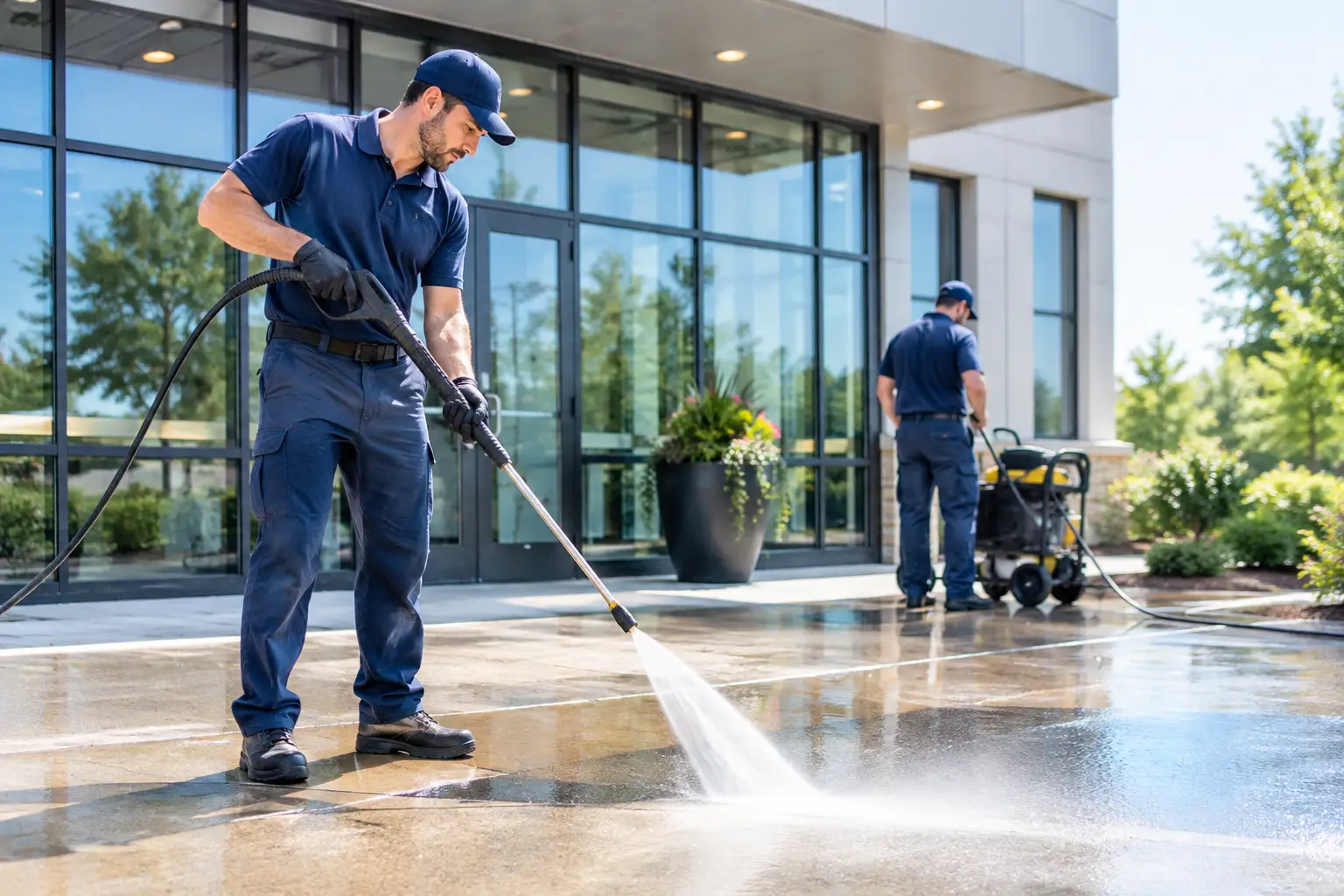
A stained sidewalk, darkened entryway, or grimy dumpster area can change how tenants, visitors, and customers view a property before they step inside. Commercial pressure washing addresses the exterior surfaces that daily foot traffic, weather, landscaping debris, spills, and vehicle use gradually wear down. For property managers and facility teams, it is a practical part of presenting a clean, well-maintained site.
The work is not simply about making concrete look brighter. A thoughtful plan considers the surface, the type of buildup, pedestrian activity, access requirements, and where water will go during service. That planning matters at an office park just as much as it does at a multifamily community, retail center, clubhouse, or shared HOA facility.
Where Commercial Pressure Washing Makes the Biggest Difference
Exterior cleaning is most valuable in the areas people use and notice repeatedly. Building entrances, sidewalks, breezeways, loading areas, patios, parking structures, curbs, and community gathering spaces can all collect dirt that routine janitorial service is not designed to remove.
Walkways are often the first priority. Dust, leaf residue, beverage spills, gum, and tracked-in grime can leave traffic paths looking neglected even when the interior is consistently cleaned. Pressure washing can refresh these high-visibility surfaces and help an entry feel aligned with the standard set inside the building.
At apartment and HOA properties, common areas deserve the same attention. Pool-adjacent hardscapes, clubhouse patios, mail areas, trash enclosures, stairwells, and shared corridors are used by many residents and guests. Keeping them on a recurring exterior cleaning schedule can reduce the need for a large catch-up project before an inspection, event, or property tour.
Commercial sites also have less visible but important areas. Service corridors, dumpster pads, receiving zones, and rear entrances can develop grease, spills, and debris faster than front-facing spaces. Cleaning these areas supports a more orderly operation and makes it easier for onsite teams to monitor the condition of the property.
Pressure Washing Is Not the Same for Every Surface
The phrase “pressure washing” can suggest one setting and one process, but appropriate cleaning methods vary widely. Concrete can often tolerate a different approach than painted surfaces, pavers, stucco, exterior walls, composite decking, or older materials. Too much pressure, the wrong angle, or an unsuitable cleaning product can create unnecessary damage or leave an uneven result.
That is why the initial evaluation should come before the equipment starts. A provider should identify what the surface is made of, how heavily it is soiled, whether stains are localized or widespread, and whether nearby landscaping, doors, windows, drains, or electrical fixtures need added protection.
Some jobs need focused spot treatment before washing. Oil residue near parking spaces or grease around a dumpster enclosure may require a different process than general dirt on a sidewalk. Organic buildup in shaded areas may call for careful treatment and a controlled rinse. The goal is to match the method to the condition instead of applying maximum pressure everywhere.
For property managers, this distinction is especially useful when a site has mixed surfaces. A community may include concrete paths, painted railings, pavers around a gathering area, and walls near landscaped beds. A customized scope helps make sure each area receives the appropriate level of care.
Build Exterior Cleaning Into the Property Schedule
Waiting until surfaces appear heavily stained can turn routine maintenance into a larger operational task. A recurring commercial pressure washing plan helps facilities stay ahead of visible buildup while allowing service to be scheduled around business hours, resident traffic, deliveries, and community events.
The right frequency depends on the property. A busy storefront entrance may need more frequent attention than a lightly used office walkway. A multifamily property with shaded corridors, mature landscaping, and active common areas may benefit from seasonal service, while a facility with delivery traffic may prioritize loading and waste areas on a separate schedule.
In San Diego County, dry conditions can leave dust and debris on exterior hardscapes, while coastal air, landscaping, irrigation overspray, and seasonal weather can affect surfaces differently from one neighborhood to the next. There is no one-size-fits-all interval. A walk-through of the property can help determine where cleaning will have the most visible impact and how often those spaces need attention.
It also helps to coordinate exterior washing with other property tasks. For example, scheduling before a leasing event, board meeting, seasonal inspection, tenant open house, or community gathering can prevent last-minute scrambling. When the cleaning team understands the property calendar, the work becomes easier to plan and less disruptive to occupants.
What a Well-Planned Service Visit Should Consider
The quality of the result matters, but so does how the work fits into the day. Commercial properties are active environments, and exterior cleaning needs clear communication before, during, and after the visit.
A practical service plan should account for access points, areas that need to stay open, vehicle movement, resident or customer foot traffic, and any site-specific restrictions. At a medical office complex or a retail location, early scheduling may be preferable. At an HOA community, the best window may depend on pool use, clubhouse reservations, or resident parking patterns. The right timing depends on the property rather than a generic service checklist.
Water management is another key consideration. Crews need to pay attention to drains, slopes, nearby landscaping, and the type of residue being removed. This is particularly important near trash areas, food-service spaces, parking lots, and older surfaces where runoff can carry more than ordinary dust.
Communication should also cover the scope. A clear plan identifies which areas are included, whether spot stains need special attention, and what reasonable results can be expected from the existing condition of the surface. Some discoloration may be permanent, especially on aging concrete or materials that have absorbed stains over time. Honest expectations prevent confusion and help property decision-makers prioritize future maintenance.
Pair Pressure Washing With a Complete Cleaning Plan
Exterior care has more value when it supports the rest of the property’s cleaning program. A polished front walk creates a stronger impression when common areas, lobbies, restrooms, floors, and shared amenities are also maintained with consistency.
For a commercial property manager, that may mean coordinating pressure washing with recurring janitorial service for interior common spaces. For an HOA manager, it may involve pairing exterior hardscape cleaning with clubhouse, community room, and shared-facility cleaning. The advantage is not just appearance. It is having a plan that reflects how people actually move through and use the property.
Call The Helper LLC can help commercial, HOA, and property management clients develop cleaning scopes around their facilities, schedules, and priorities. A customized plan is often more useful than treating every exterior area as if it has the same needs.
Questions to Ask Before Scheduling Commercial Pressure Washing
Before approving service, property managers should be clear about the priorities for the visit. Ask which surfaces will be cleaned, how the provider will address high-traffic areas, what access is needed, and whether any sections should be handled outside regular operating hours. It is also reasonable to discuss water management, protection for surrounding features, and how crews will communicate if site conditions change.
Photos and a walkthrough can make the scope more accurate, especially for larger communities or multi-building facilities. They help distinguish general cleaning needs from specific concerns such as tire marks, irrigation stains, greasy enclosure pads, or heavily used corridors.
The most useful question is simple: what needs to look better, function better, or be easier to maintain after the service? That answer keeps the conversation centered on the property’s actual needs instead of an off-the-shelf package.
A clean exterior does not have to wait for a major event or a complaint. With the right timing and a clear scope, commercial pressure washing can become a dependable part of keeping shared spaces ready for the people who rely on them every day.


Comments are closed