



A missed cleaning task can become the first thing residents, guests, and prospective buyers notice. Overflowing trash enclosures, marked-up elevator doors, dusty clubhouse corners, and neglected walkways can quickly make a well-managed community feel less cared for. The top HOA maintenance cleaning tasks focus on the high-visibility spaces residents use every day while supporting a cleaner, more organized property overall.
For HOA boards and property managers, the goal is not to clean every surface with the same frequency. It is to create a practical plan that matches traffic levels, amenities, weather, events, and the expectations of the community. The right schedule protects shared spaces from avoidable buildup and helps management address concerns before they turn into recurring resident complaints.
Top HOA Maintenance Cleaning Tasks for Common Areas
Entrances, lobbies, and mail areas
The entrance sets the tone for the entire property. Glass doors, entry mats, call boxes, lobby floors, handrails, and mail areas accumulate fingerprints, dust, leaves, and debris faster than many managers expect. These areas should receive frequent attention because they are used by residents, delivery drivers, visitors, vendors, and prospective buyers.
Daily or several-times-weekly service often makes sense for active communities, especially where foot traffic brings in dirt from parking lots, sidewalks, or nearby landscaping. A cleaning plan may include sweeping and mopping hard floors, wiping high-touch surfaces, spot-cleaning glass, straightening shared spaces, and removing visible litter.
Mail areas deserve particular attention. Paper scraps, discarded packaging, and dust around parcel lockers can make an otherwise clean lobby appear neglected. Since residents may visit these areas at different times of day, consistent upkeep has an outsized impact.
Hallways, stairwells, and elevators
Interior corridors and stairwells can quietly collect scuff marks, cobwebs, dust, and debris. Unlike a lobby, residents may not report the issue until it becomes noticeable. Routine vacuuming or sweeping, spot-cleaning walls and doors, wiping handrails, and removing cobwebs help keep these transition spaces presentable.
Elevators require their own checklist. Buttons, rails, doors, mirrors, floor edges, and tracks are high-contact or highly visible areas. Cleaning elevator interiors regularly helps prevent smudges and debris from becoming the standard residents come to expect.
Frequency depends on building density and use. A smaller condominium building may need a lighter schedule than a large multifamily community with frequent move-ins, deliveries, and daily elevator traffic. The important part is matching service intervals to actual conditions rather than relying on a generic schedule.
Clubhouses and community rooms
Clubhouses and community rooms need flexible cleaning support because their condition can change quickly after a meeting, reservation, or resident event. Even when a room is not formally booked, dust settles, floors show traffic patterns, and restrooms require ongoing attention.
A regular service plan should address floors, tables, counters, glass, seating areas, kitchen surfaces, and waste bins. After-event cleaning may require a more detailed reset, including cleaning spills, removing trash, wiping down furniture, and preparing the room for the next use.
Property managers benefit from a clear division between routine cleaning and event-related service. Routine work keeps the space consistently ready. Event cleaning handles the heavier needs that follow gatherings, celebrations, board meetings, or vendor presentations. Separating those scopes makes scheduling and communication easier.
Restrooms in shared facilities
Restrooms are one of the most sensitive indicators of property care. In clubhouses, pool areas, fitness rooms, and leasing-adjacent spaces, residents expect restrooms to look clean, smell fresh, and remain orderly throughout the day.
Core tasks include cleaning toilets, sinks, mirrors, counters, fixtures, floors, door handles, and waste receptacles. Supply monitoring may also be appropriate when it is included in the cleaning plan. The best frequency depends on how many people use the facility and whether the area sees heavier weekend or seasonal traffic.
A restroom that is cleaned only on a fixed weekly schedule may be sufficient for a lightly used room, but it may not work near a busy pool or fitness center. Managers should adjust the plan when seasonal use changes rather than waiting for complaints.
Outdoor HOA Cleaning Priorities
Walkways, breezeways, and entry paths
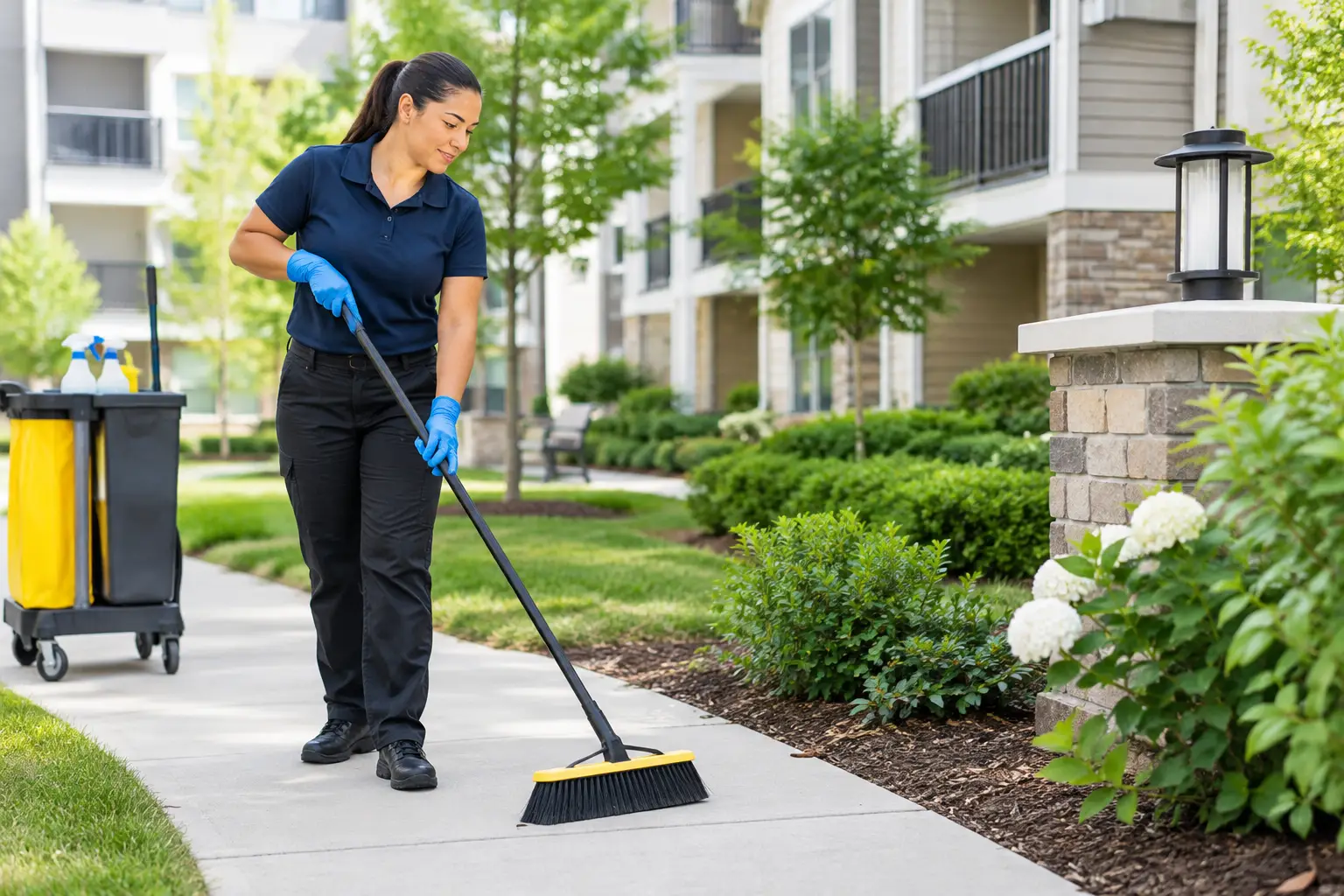
Outdoor common areas affect curb appeal and day-to-day safety perception. Leaves, dirt, windblown trash, spider webs, and stains can accumulate around walkways, breezeways, gates, benches, and building entrances. Regular sweeping, litter pickup, and cobweb removal make a noticeable difference without requiring a major project every visit.
In San Diego County, dry conditions can mean persistent dust in breezeways and near parking areas. Coastal properties may also contend with sand and salt residue. Communities surrounded by mature landscaping may need more frequent attention during leaf drop or after windy weather.
Pressure washing can be useful for deeper cleaning of sidewalks, patios, dumpster pads, and other hard surfaces, but it should be scheduled based on surface condition rather than used as a substitute for routine upkeep. Too much time between cleanings allows stains and buildup to become more difficult to address.
Pool decks, fitness areas, and amenity spaces
Amenity areas are often a deciding factor for residents and buyers, so their appearance matters. Pool decks can collect leaves, sunscreen residue, dirt, and water spots. Fitness rooms accumulate dust, fingerprints, and floor debris from repeated use. Outdoor seating areas can gather pollen, cobwebs, food crumbs, and windblown litter.
These spaces need cleaning methods that fit the surface and the amenity. A pool deck may need sweeping and detail work around furniture, while a fitness room may require regular floor care and wiping of shared touchpoints. Avoid treating every amenity with a single checklist. A tailored plan is more efficient and produces better visible results.
Trash enclosures and dumpster pads
Trash areas are easy to overlook until odors, scattered debris, or stains become a resident issue. Regular litter pickup, sweeping, and cleanup around bins and enclosures improve the appearance of service areas and help prevent a messy zone from affecting nearby walkways or parking areas.
The right schedule depends on collection days, resident volume, enclosure layout, and whether bulky items are a recurring concern. Trash bin cleaning or pressure washing may be useful additions for properties where residue and odors build up quickly. Coordinating cleaning around pickup schedules usually makes the work more effective.
Build a Schedule That Reflects the Property
A useful HOA cleaning plan separates tasks by frequency. High-traffic touchpoints and visible floors may need daily or multiple-times-weekly attention. Clubhouse cleaning, hallway service, and restroom care may be scheduled weekly or more often based on use. Deep floor cleaning, pressure washing, and detailed dust removal are often better planned monthly, quarterly, or seasonally.
Rather than assuming every building needs the same service, review the property through the eyes of a resident. Which spaces are seen first? Where do complaints tend to occur? Which amenities get busiest on weekends? Are there areas that look clean on Monday but noticeably need attention by Friday? These answers make the schedule more precise.
It also helps to account for predictable changes. Pool and clubhouse use often increases during warmer months. Rain can track dirt into lobbies and corridors. Move-in periods create extra elevator, hallway, and trash-area traffic. A cleaning plan should have enough flexibility to respond to those cycles.
Communication Makes HOA Cleaning Easier to Manage
For property managers, the cleaning provider’s communication process can be as valuable as the task list. A clear scope helps everyone understand which areas are serviced, how often they are serviced, and what should be reported when conditions change.
Walk-throughs are especially helpful when starting a new service plan or preparing for a board inspection, community event, or seasonal refresh. They allow management to identify overlooked corners, clarify expectations for shared facilities, and prioritize the areas residents notice most.
Call The Helper LLC can help property managers build customized cleaning plans for clubhouses, community rooms, common areas, and shared facilities. A reliable plan should make the property easier to manage, not create another vendor detail to chase.
A well-kept community does not happen because every surface is cleaned constantly. It happens when the right spaces receive the right attention at the right time – giving residents a cleaner place to come home to and managers a property that reflects the care behind it.


Comments are closed