



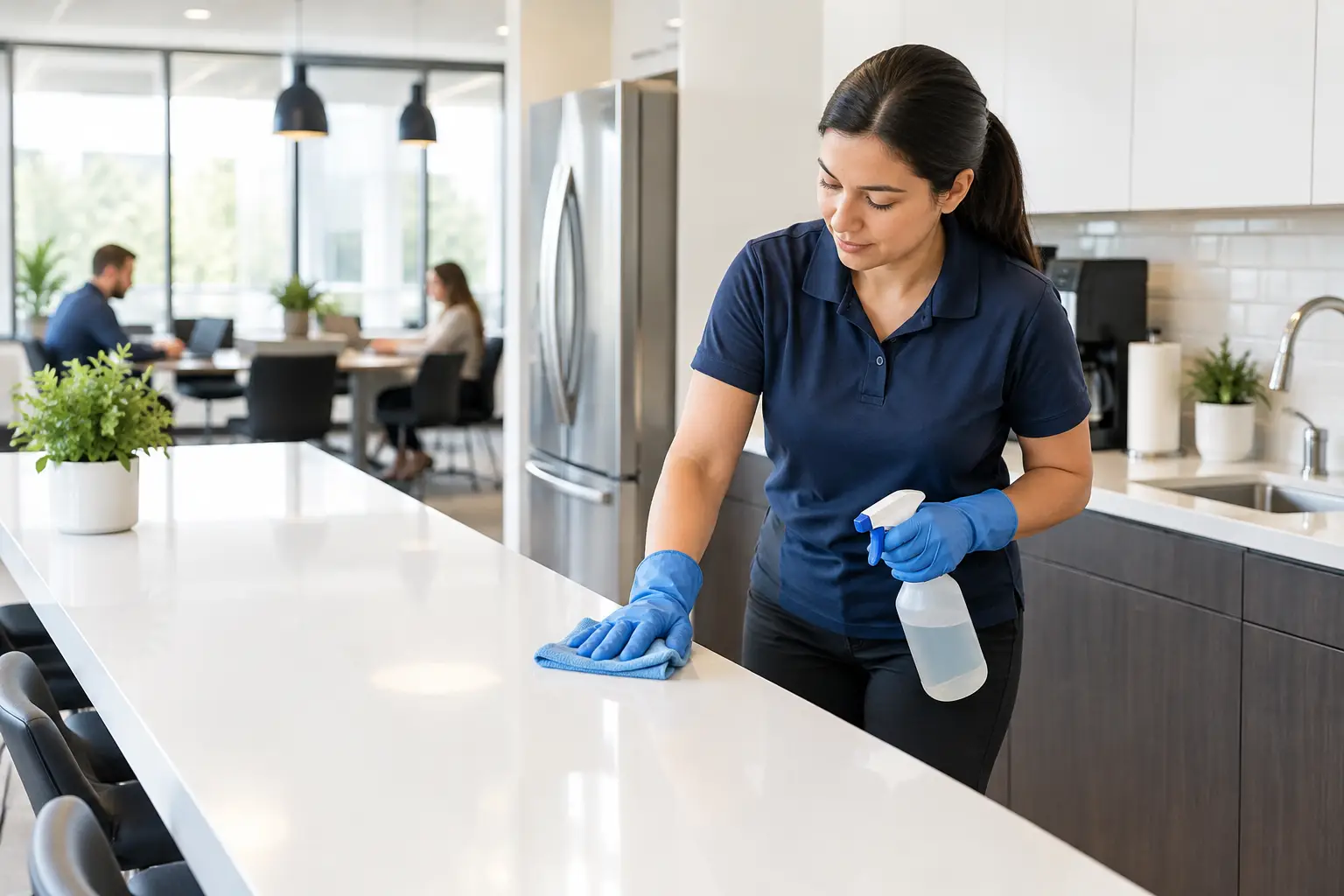
A neglected office kitchen rarely stays a kitchen problem. Overflowing trash, dried spills around the coffee station, and a microwave with last month’s lunch still inside can affect how employees, visitors, and prospective tenants view the entire workplace. Knowing how to clean office kitchens means creating a repeatable system that keeps a high-traffic shared space sanitary, presentable, and ready for the next person without interrupting the workday.
For office managers, facility teams, and property managers, the goal is not to make the kitchen look freshly renovated every afternoon. It is to prevent the small issues that become odors, pest concerns, employee complaints, and a larger cleaning project later.
Start With a Cleaning Plan That Matches Kitchen Use
An office kitchen used by six employees needs a different schedule than a breakroom shared by multiple suites or a busy corporate floor. Before assigning tasks, look at how people use the room. Count the appliances, identify food preparation areas, note when traffic is heaviest, and pay attention to recurring trouble spots such as the sink drain, refrigerator handles, or coffee counter.
A practical plan separates cleaning into daily, weekly, and monthly work. Daily service handles visible soil and sanitation touchpoints. Weekly work addresses buildup that will not disappear with a quick wipe. Monthly tasks focus on appliances, storage areas, and details that support the condition of the whole kitchen.
The schedule also needs ownership. Employees can be asked to label personal food and wipe up immediate spills, but a shared kitchen should not depend entirely on voluntary cleanup. Clear expectations and consistent janitorial support make the space easier to maintain.
Daily Office Kitchen Cleaning Tasks
Daily cleaning should happen after the busiest use period or after office hours, depending on the building’s needs. Begin by removing trash and replacing liners before they overflow. Food waste is the main source of breakroom odors, so bins should be emptied often enough for the volume of the office, not simply according to a calendar.
Clean and disinfect high-touch surfaces next. This includes refrigerator and microwave handles, cabinet pulls, faucet handles, coffee machine controls, water dispenser buttons, and the door handle. Clean first to remove visible residue, then use an appropriate disinfectant according to its label directions. A disinfectant needs the required contact time to do its job, so spraying and immediately wiping it away may not be effective.
Wipe countertops, tables, and the exterior surfaces of appliances. Crumbs and coffee rings may seem minor, but they quickly make a shared kitchen appear unmanaged. Give particular attention to the area around coffee makers, toasters, and microwaves, where splatter and sticky residue tend to collect.
The sink needs more than a quick rinse. Remove food particles from the basin and strainer, clean the faucet and surrounding counter, and leave the drain area free of standing debris. Avoid pouring harsh chemical combinations into drains. If slow drainage or persistent odor is an issue, it may require a facilities response rather than repeated surface cleaning.
Finish with the floor. Spot mop spills as needed, then sweep or vacuum loose debris and mop hard flooring with a product suited to the surface. Place wet-floor signage while the floor dries, especially in kitchens near busy walkways.
How to Clean Office Kitchens Each Week
Weekly cleaning is where a routine shifts from basic tidiness to real upkeep. Move smaller countertop items when possible and clean beneath them. The space under a coffee maker, paper towel holder, or countertop appliance often holds sticky drips that attract dust and create lingering odors.
Clean the inside of the microwave at least weekly in most offices. Remove crumbs and food splatter from the turntable, walls, ceiling, and door seal. If buildup is hardened, use a food-safe method appropriate for the appliance rather than scraping aggressively. Dry the interior so moisture does not contribute to odors.
Wipe down cabinet fronts, backsplash areas, and the exterior of the refrigerator. Check the refrigerator for expired or abandoned food according to the office’s policy. In a larger workplace, a scheduled notice before a refrigerator cleanout is usually more practical than throwing away clearly labeled items without warning.
Weekly service should also include a closer inspection of trash and recycling containers. Wipe the interior and exterior, clean around the bin location, and replace liners. If containers smell even after trash removal, they need more thorough washing and drying. The same goes for compost collection, if the office uses it.
Handle Refrigerators and Shared Appliances Carefully
The refrigerator is often the most sensitive part of an office kitchen because it holds personal items. Set a written cleanout schedule, post the date in advance, and ask employees to label food with a name and date. This gives cleaners and managers a reasonable process for removing clearly expired, leaking, or unlabeled items.
During a full refrigerator clean, remove shelves and drawers only if they can be safely handled and the appliance can remain at a proper temperature. Clean interior surfaces with a suitable product, dry them thoroughly, and pay attention to shelf edges and drawer tracks. For a heavily used refrigerator, quarterly deep cleaning may be appropriate. For a lightly used suite kitchen, the schedule may be less frequent.
Coffee machines, ice makers, and water dispensers need cleaning based on the manufacturer’s instructions. These appliances are not all maintained the same way. A general surface-cleaning routine can keep their exteriors presentable, but internal descaling, filters, and service requirements should follow the equipment guidance and the office’s facilities process.
Monthly Deep Cleaning Protects the Space
Monthly kitchen cleaning addresses the details that are easy to miss during daily service. Clean behind and beneath movable appliances, wipe vent covers and baseboards, and inspect corners where crumbs collect. Wash or replace reusable cleaning tools as needed so they do not spread soil from one area to another.
This is also a good time to clean the inside of cabinets used for shared dishes, cups, or supplies. Remove crumbs, wipe shelves, and check for damaged containers or spills. Organizing supplies is useful, but avoid moving personal items unless the office has clear rules for doing so.
Floors deserve closer attention monthly, especially grout lines, edges, and areas near the sink. Regular mopping keeps the room presentable, but periodic detail work removes the buildup that can make floors appear dull or sticky. The right approach depends on whether the kitchen has vinyl, tile, sealed concrete, laminate, or another flooring material.
Use Products That Fit the Surface and Task
One product does not belong on every kitchen surface. Abrasive cleaners can scratch stainless steel or damage certain countertop finishes, while overly wet cleaning can affect unsealed materials and cabinet edges. Read product labels, follow dilution directions, and use separate cloths or tools for restrooms and kitchen areas to prevent cross-contamination.
Color-coded microfiber cloths and labeled spray bottles can make a cleaning program easier to manage, particularly across multiple offices or common areas. The system does not need to be complicated. It simply needs to help staff use the right tool in the right place every time.
For property managers and office decision-makers, recurring service is especially useful when the kitchen is part of a larger cleaning scope. A kitchen should be considered alongside restrooms, reception areas, conference rooms, and shared corridors, since each space affects how the property is experienced.
Prevent Messes Before They Become a Cleaning Issue
Cleaning works best when the kitchen layout supports it. Keep trash and recycling bins easy to reach, provide paper towels near spill-prone areas, and post simple guidance about labeling food and cleaning personal dishes. If the sink frequently fills with dishes, the issue may be inadequate dish storage or unclear employee expectations, not the cleaning schedule itself.
It also helps to report maintenance concerns early. A leaking refrigerator, malfunctioning garbage disposal, loose faucet handle, or damaged floor edge cannot be solved with routine cleaning. Catching these issues early protects the appearance of the kitchen and prevents avoidable disruptions.
For San Diego County offices, Call The Helper LLC can build recurring commercial cleaning plans around the kitchen, breakroom, and the rest of the workplace. The most effective routine is the one that fits the building’s traffic, operating hours, and expectations – then gets completed consistently enough that employees barely have to think about it.


Comments are closed