



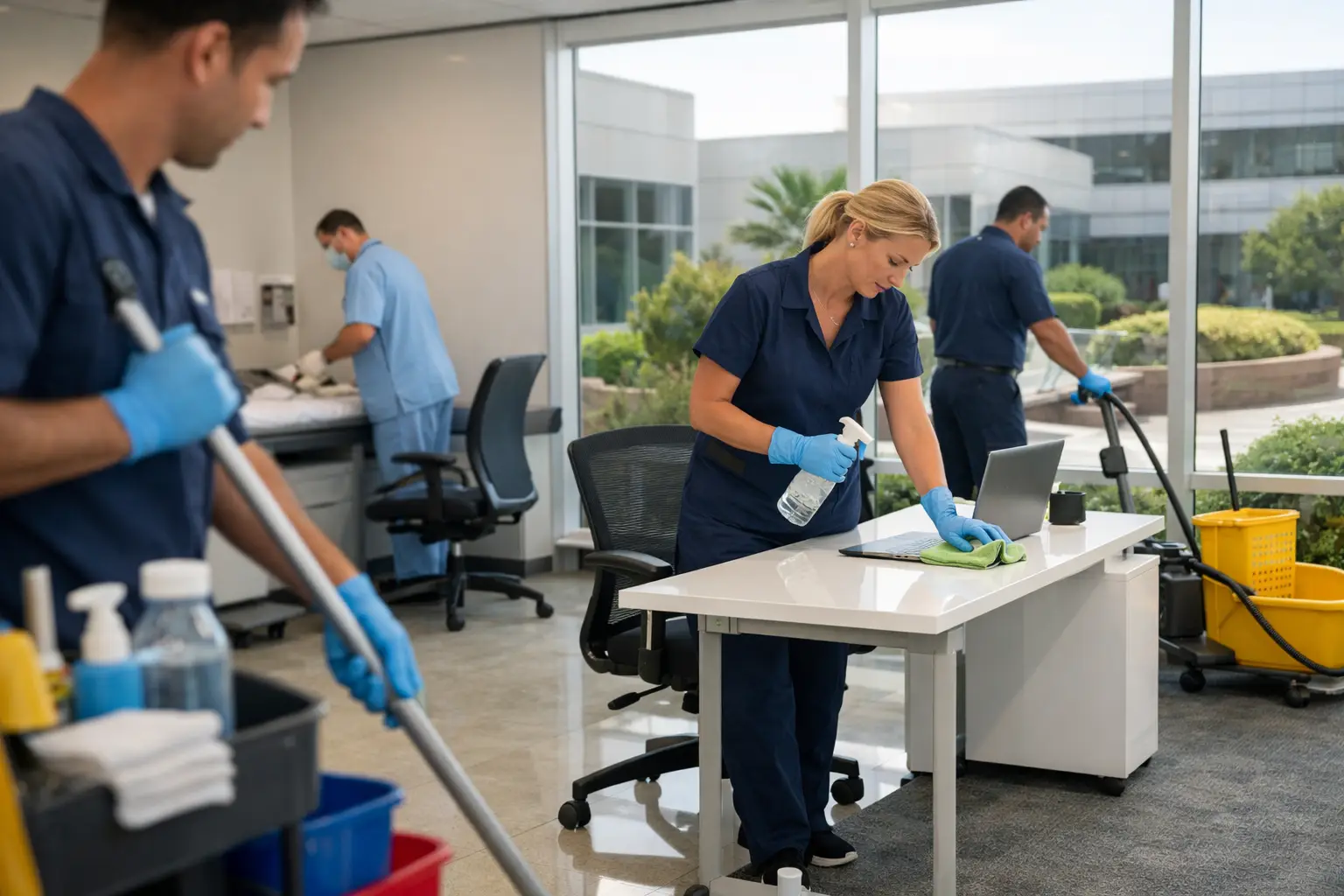
A lobby floor that looks fine at 8 a.m. can tell a different story by noon. Entry glass collects fingerprints, restrooms need attention, and break rooms become busy before the workday is half over. Commercial cleaning is not simply about making a space look presentable after hours. It is about creating a clean, orderly environment that supports employees, visitors, tenants, and the daily work happening inside.
For office managers, facility teams, property managers, and business owners, the right cleaning plan removes one more recurring responsibility from an already full schedule. The best approach is specific to how the property is used, when people are present, and which details shape the experience of everyone who walks through the door.
What Commercial Cleaning Should Accomplish
A dependable cleaning service starts with the visible basics: clear floors, clean restrooms, wiped surfaces, emptied trash, and a professional appearance at entrances and shared spaces. But a useful plan also considers what happens between those visible tasks. Are high-touch areas getting regular attention? Does the cleaning schedule fit the flow of the business? Are concerns communicated quickly rather than left for the next scheduled visit?
The answers matter because no two commercial properties operate the same way. A small office may need recurring attention to workstations, conference rooms, kitchens, and restrooms. A larger facility may have heavier traffic at entrances, multiple common areas, and different cleaning needs by zone. An HOA clubhouse or community room may need to look ready for residents and scheduled events, while still accommodating the everyday use that creates dust, spills, and clutter.
A customized scope of work gives everyone a clearer standard. Rather than relying on a vague expectation of “clean,” the property has a plan that identifies priority areas, recurring tasks, preferred service times, and any details that need extra attention.
Build a Commercial Cleaning Plan Around the Property
The most effective cleaning plans begin with a walkthrough and a practical conversation. The goal is to understand the space as people actually use it, not just as it appears on a floor plan. A cleaning schedule that works well for a quiet professional office may not work for a community facility with evening activities or a busy shared building entrance.
Start with traffic, not square footage
Square footage helps estimate the size of the job, but traffic often determines the level of attention a space needs. A compact restroom used by dozens of people may require more frequent service than a large, low-traffic room. Similarly, an entrance, elevator area, reception desk, or break room can create a strong impression even when it represents only a small portion of the property.
Consider where people enter, wait, eat, meet, and move throughout the day. These are usually the areas where dust, debris, fingerprints, and spills become noticeable first. Giving them appropriate attention helps the whole space feel cared for.
Define daily, weekly, and periodic priorities
Not every task needs to happen at the same frequency. Trash removal, restroom cleaning, floor care in busy corridors, and cleaning shared kitchen surfaces may belong on a frequent schedule. Less-used offices, storage areas, baseboards, interior glass, and detailed floor work may be better handled weekly or periodically.
Separating these tasks keeps the plan practical. It also helps avoid a common problem: paying for a broad checklist while urgent, high-traffic details do not receive enough attention. A clear schedule makes it easier to adjust service when occupancy, events, or seasonal conditions change.
Choose service times that respect operations
Cleaning should support the workday, not interrupt it. Some businesses prefer service after closing, while others need daytime support for restrooms, common areas, or high-traffic facilities. There is no single right answer. It depends on building access, noise concerns, security procedures, customer traffic, and the condition the space needs to be in each morning.
Flexible scheduling is especially valuable for properties with changing needs. A conference, resident gathering, inspection, or busy period may call for additional attention before or after the event. Communicating those needs early allows the cleaning plan to stay useful rather than rigid.
The Details That Shape a Professional Space
People notice more than polished floors. They notice whether the front door glass is clear, whether a restroom feels orderly, and whether the break room looks like someone is responsible for it. These small signals influence how employees, clients, residents, and visitors experience a property.
For offices, the focus often includes reception areas, desks or shared work surfaces as directed, conference rooms, restrooms, kitchens, and flooring. For facilities and common areas, it may include hallways, entryways, shared restrooms, lounges, elevators, stairwells, and amenity spaces. HOA communities may need a plan centered on clubhouses, community rooms, fitness or shared-use areas, and other resident-facing spaces.
Floor care deserves special attention because it affects both appearance and day-to-day upkeep. Dirt at an entry can travel quickly through a building, particularly during busy periods. Regular vacuuming, mopping, and targeted carpet or floor cleaning can help maintain a more polished appearance. The right frequency depends on the floor type, weather, foot traffic, and how quickly the area needs to look ready again.
When Recurring Service Is the Right Fit
Recurring commercial cleaning is usually the best choice when a property sees regular use and needs consistent upkeep. It creates a predictable routine, reduces the chance that small issues build up, and gives managers a reliable point of contact for ongoing needs.
That does not mean every property needs the same number of visits. A small office with limited staff may need weekly cleaning. A busy workplace, shared facility, or active common area may need service more often. For a property between tenants, after construction work, or ahead of a major event, a one-time detailed cleaning may make more sense before shifting to recurring service.
The key is matching the service level to the condition you want to maintain. Waiting until a space looks neglected usually means more time is spent catching up. A consistent schedule helps protect the everyday presentation of the property.
How to Compare Commercial Cleaning Providers
Choosing a cleaning provider should feel straightforward, but the lowest quote or broadest checklist does not always lead to the best fit. Focus on whether the provider takes time to understand the property and can explain how the work will be organized.
Ask how the scope is customized, who handles communication when priorities change, and how service times are coordinated with your operations. Confirm that the provider understands the areas that matter most to your staff, tenants, customers, or residents. For example, a property manager may need close attention to common areas and event spaces, while an office manager may prioritize restrooms, kitchens, and conference rooms.
It is also helpful to discuss special situations before they become urgent. Ask how the provider handles an extra cleaning request, a spill in a shared space, a schedule adjustment, or preparation for an upcoming meeting. Clear expectations from the beginning make the relationship easier to manage over time.
A Better Standard for Commercial Cleaning
A clean commercial space should not require constant follow-up from the person managing it. It should feel organized, welcoming, and ready for the next workday, meeting, resident event, or visitor. That result comes from attentive service, clear communication, and a plan that reflects the property’s real needs.
For businesses and managed properties in San Diego County, Call The Helper LLC can build commercial cleaning around your schedule, priorities, and space. Let us take care of the cleaning so your team can focus on the work and people that keep your property moving.


Comments are closed