



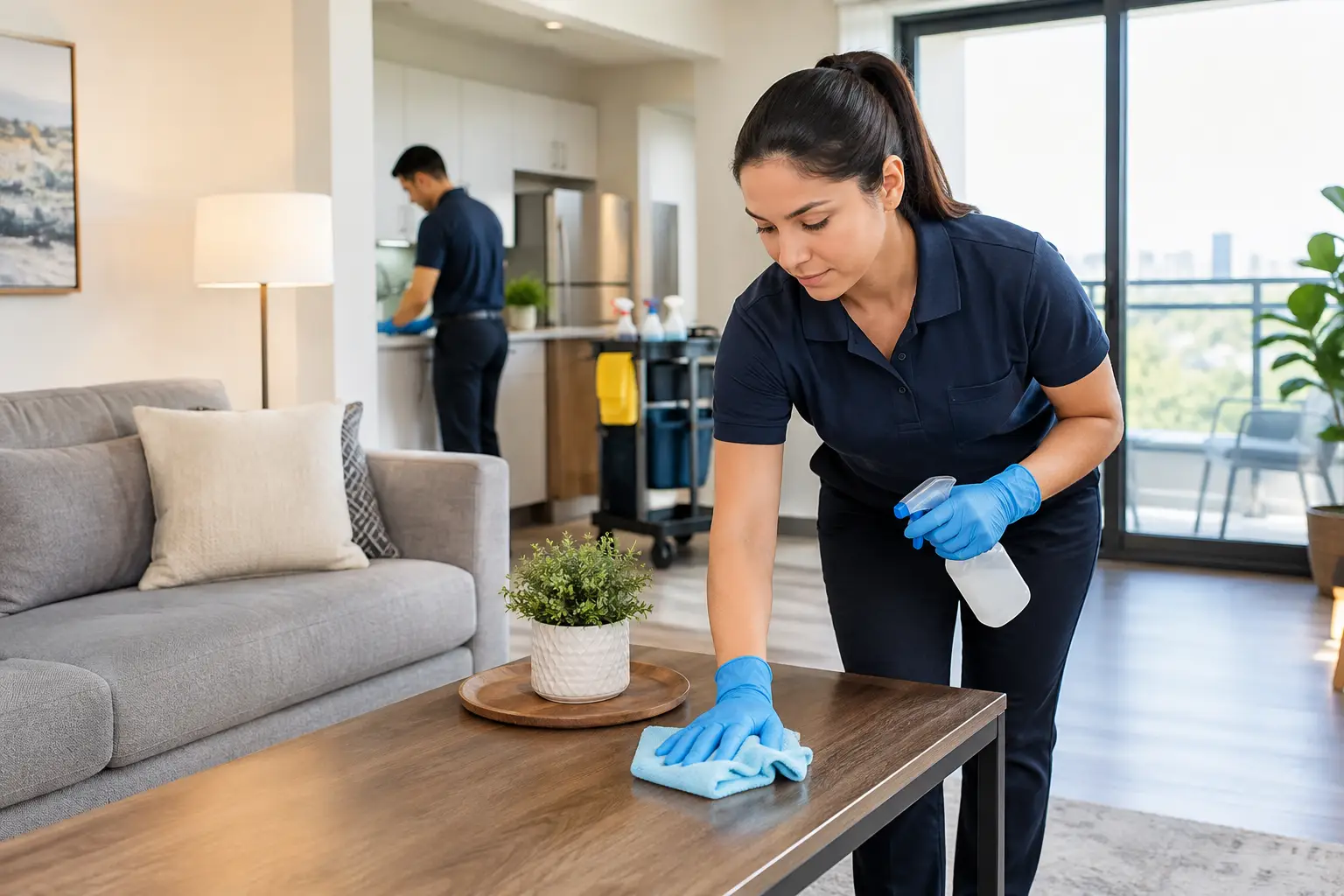
A vacant unit can either protect your leasing schedule or quietly disrupt it. Knowing how to prepare apartment turnovers means treating the period between residents as a coordinated operation, not a last-minute cleaning task. For property managers, every delayed repair, missed inspection item, or overlooked cabinet can push back move-in readiness and create avoidable pressure for the onsite team.
The most effective turnover process starts before the former resident has fully moved out. It gives maintenance, cleaning, leasing, and vendors a shared picture of what needs to happen, who owns each task, and when the unit is truly ready to show. The goal is not simply to make the apartment look clean. It is to return it to a consistent, move-in-ready condition that reflects well on the community.
Build the Turnover Plan Before Move-Out Day
A strong apartment turnover begins with visibility. As soon as notice is received, confirm the expected move-out date, schedule the preliminary inspection if appropriate, and note known maintenance concerns from work orders or resident communications. This early planning gives your team time to coordinate access, source needed materials, and reserve cleaning support during high-volume turnover periods.
Start with a unit-specific scope rather than assuming every apartment needs the same level of work. A lightly used unit with no reported issues may need routine touch-up work and a detailed cleaning. A unit with wall damage, flooring concerns, appliance problems, or heavy buildup may need a more involved sequence. Assigning the same turnaround window to both can lead to rushed work or idle time.
It also helps to identify dependencies. Cleaning should not begin before dusty repairs, painting, or major maintenance are complete. At the same time, maintenance should know if a detailed cleaning inspection finds a slow drain, damaged blind, or appliance issue that was not visible earlier. The work moves faster when each team knows what comes before and after its portion of the turnover.
How to Prepare Apartment Turnovers With a Clear Scope
Once the resident has vacated, conduct a documented move-out inspection as soon as access is available. Walk the unit in a consistent order, such as entry, living areas, bedrooms, kitchen, bathrooms, closets, patio or balcony, and utility spaces. Use the same inspection standard across the property so different team members are evaluating units consistently.
Document conditions with notes and photos according to your property procedures. The purpose is operational clarity: your maintenance and cleaning teams need to know what requires attention, while leasing needs a realistic readiness date. Small issues matter because they are often the details a prospective resident sees first, including scuffed doors, loose hardware, stained grout, burned-out bulbs, and debris in drawers.
A useful scope separates work into four categories:
- Repair or replacement items, such as damaged fixtures, doors, blinds, appliances, or flooring concerns
- Surface preparation, including patching, painting, caulking, and wall touch-ups
- Detailed cleaning tasks, from kitchens and bathrooms to baseboards, closets, and interior glass
- Final presentation items, including odor checks, debris removal, light fixtures, and show-ready finishing touches
This separation prevents a common problem: a cleaning crew arrives at a unit that is technically vacant but not ready to clean. If painting dust is still present or a maintenance repair is underway, a final clean may need to be repeated. A clearer scope protects the schedule and reduces duplicated labor.
Sequence Repairs, Cleaning, and Final Checks
The best order depends on the unit condition, but most turnovers follow a reliable pattern. First, remove abandoned items and address any safety or access concerns. Next, complete repairs that create dust, debris, or require work behind appliances and fixtures. Then complete paint touch-ups and allow adequate drying time before detailed cleaning begins.
Professional turnover cleaning is most effective after the disruptive work is finished. The cleaning scope should address the areas residents notice immediately and the areas that affect everyday use. In kitchens, that includes appliance interiors and exteriors, cabinets and drawers, sinks, counters, backsplashes, and floors. Bathrooms need close attention to tubs, showers, toilets, vanities, mirrors, fixtures, grout lines, and ventilation areas.
Living areas and bedrooms require more than a quick vacuum. Baseboards, window sills, doors, closet shelves, switch plates, ceiling fans, and floor edges can hold visible dust and buildup. A well-cleaned unit should feel cared for when someone walks through it, not merely emptied out.
Floor care deserves separate planning. Carpet condition may call for targeted treatment or deeper service, while hard floors may need detail work along edges, in corners, and around appliances. The right approach depends on the material and condition. A rushed treatment can leave floors looking dull or unfinished, while a delayed floor decision can hold up the entire unit.
Use a Turnover Checklist That Supports Accountability
A checklist is not meant to replace judgment. It creates a shared standard and makes it easier to see whether a unit is ready for the next stage. Keep it practical enough for onsite teams and vendors to use, and update it when recurring issues appear across the property.
For example, a final walkthrough should confirm that repairs are complete, all trash and materials are removed, major surfaces are clean, appliances are presentable, plumbing fixtures function as expected, lights are addressed, and no obvious odor or damage remains. Leasing staff should be able to enter the unit without discovering unfinished work that requires another round of coordination.
Consider having a different team member perform the final quality check when schedules allow. Fresh eyes often catch items that the person completing the work has become accustomed to seeing. This is particularly useful in high-turnover seasons, when teams are moving quickly between multiple units.
The checklist should also distinguish between a unit that is clean and a unit that is lease-ready. A spotless apartment with a broken cabinet hinge or missing smoke detector cover is not ready for a resident. Likewise, a repaired unit with dusty floors and streaked mirrors does not support a strong showing. Both conditions must be satisfied.
Plan for Volume Without Lowering Standards
Turnover volume changes the operational challenge. When several leases end in the same week, the bottleneck is rarely one single task. It is usually coordination: access delays, material availability, vendor scheduling, approval timing, or uncertainty about the scope of work.
Create a simple turnover board or tracker that shows each unit’s move-out date, inspection status, repair status, cleaning date, final walk status, and target ready date. This gives property managers a quick way to identify units that need attention before they become urgent. It also makes vendor communication more specific. Instead of asking whether a unit is done, the team can confirm exactly what remains.
For multifamily communities, a cleaning partner with a defined turnover scope can help property teams maintain consistency when volume increases. Call The Helper LLC can tailor apartment turnover cleaning plans around unit condition, scheduling needs, and the handoff points between maintenance and leasing. The most useful arrangement is one that supports your existing workflow rather than adding another layer of follow-up.
Avoid the Mistakes That Create Rework
The fastest turnover is not always the one with the shortest calendar window. It is the one completed in the right order, with clear expectations and a real final inspection. Skipping the initial scope, scheduling cleaning too early, or relying on a vague definition of “finished” can create rework that costs more time than a careful plan would have required.
Communication is equally important. Let every involved party know the target ready date, access instructions, approved scope, and who should be contacted when an issue is found. When a cleaner discovers a leaking faucet or a maintenance technician sees an area that needs additional cleaning, timely communication keeps the unit moving instead of leaving the issue for the final walkthrough.
Apartment turnovers will always involve variables, from resident move-out timing to unexpected repairs. A consistent process gives your team room to handle those variables without losing control of the schedule. When each handoff is clear and each unit receives the same careful final review, the next resident walks into a space that feels prepared for them from the first visit.


Comments are closed