



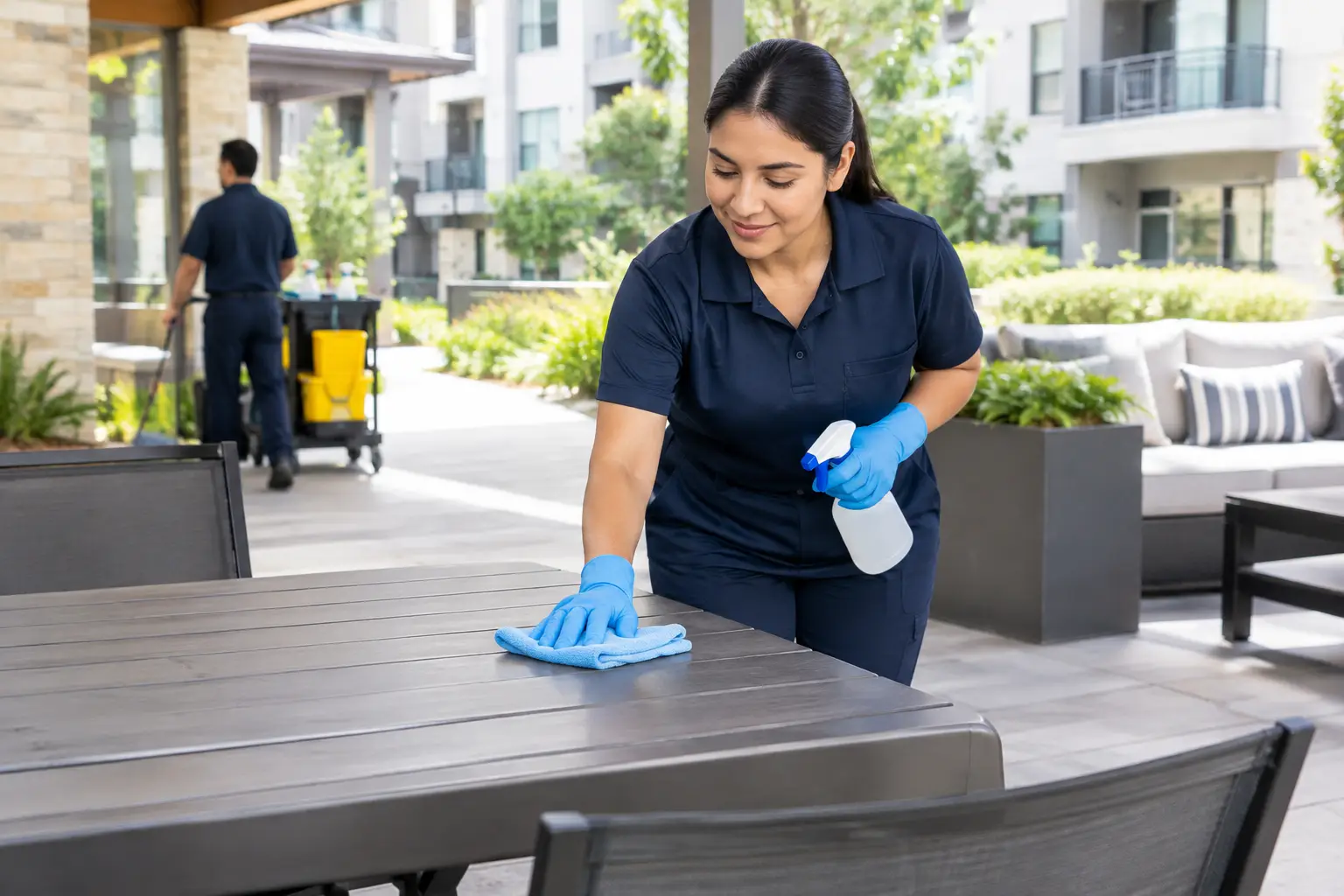
A clubhouse can look orderly at 8 a.m. and feel neglected by noon after resident traffic, package deliveries, meetings, and a busy fitness room. Effective HOA cleaning accounts for that reality. It is not simply a routine janitorial visit. It is a practical plan for keeping shared spaces presentable, usable, and ready for the people who rely on them every day.
For HOA boards and property managers, the visible condition of common areas affects resident satisfaction, leasing and resale impressions, and the daily workload of onsite teams. A cleaning plan should support the way a community actually operates, from quiet residential hallways to high-use clubhouses and community rooms.
What HOA Cleaning Includes
HOA cleaning focuses on the shared areas a homeowners association, condominium community, or managed residential property is responsible for maintaining. The exact scope changes by property. A smaller community may need recurring attention for an entryway, mailroom, and community restroom. A larger property may require scheduled service for multiple buildings, elevators, amenity spaces, fitness areas, lounges, and management offices.
The most effective approach starts with a walkthrough and a clear understanding of how each space is used. A room that hosts board meetings twice a month needs a different schedule than a clubhouse used daily by residents. Likewise, an entry lobby may need frequent touch-up cleaning because it creates a first impression, while a storage room may only need periodic service.
Common HOA cleaning tasks often include cleaning and disinfecting restrooms, removing trash, wiping high-touch surfaces, dusting ledges and fixtures, vacuuming carpets, mopping hard floors, and tidying shared rooms. Depending on the property’s needs, the plan may also include floor cleaning, carpet care, pressure washing, trash bin cleaning, or post-construction cleanup after a community project.
Why Common Areas Need a Property-Specific Plan
A fixed checklist can be useful, but it is not enough on its own. Property managers need a cleaning partner who understands the difference between a space that looks clean after service and a space that stays manageable between visits.
Traffic patterns matter. An elevator lobby near a parking garage may collect dust and debris faster than an interior corridor. A pool-adjacent restroom may need more frequent attention during warm weather. Community rooms often require cleaning before or after scheduled events, while mail areas may need consistent upkeep because nearly every resident uses them.
Scheduling matters just as much. Daytime cleaning can work well when a property has an active management office and staff can communicate easily with the cleaning team. After-hours cleaning may be a better fit for communities that want minimal disruption in shared spaces. Neither option is automatically better. The right choice depends on resident activity, building access, event schedules, and the tasks being performed.
A customized plan also helps property managers prioritize the areas residents notice first. Clean glass doors, orderly entryways, fresh-smelling restrooms, and well-maintained floors send a stronger message than a long task list no one can see. At the same time, less visible areas should not be ignored. Stairwells, utility-adjacent corridors, and waste areas can affect the overall condition of a property when routine maintenance falls behind.
High-Use Areas That Deserve Extra Attention
Some shared spaces consistently need more than a basic pass. These are the areas where a thoughtful HOA cleaning schedule can prevent small issues from becoming repeated complaints.
Clubhouses and Community Rooms
Clubhouses are often used for resident gatherings, association meetings, celebrations, and private events. They need to be clean, but they also need to feel ready for the next use. That can mean refreshing floors and restrooms, cleaning tables and seating, removing trash, and checking kitchens or serving areas included in the cleaning scope.
Event-driven spaces benefit from flexible scheduling. A recurring visit may maintain the room week to week, while additional service before or after an event can help restore the space quickly. Property managers should identify who communicates event dates and how last-minute requests are handled before setting the plan.
Lobbies, Hallways, and Elevators
These spaces create the daily visual standard for a community. Dirt near entrance doors, fingerprints on glass, full trash receptacles, or debris in elevator corners are noticed quickly because residents and visitors pass through them repeatedly.
Frequency should reflect traffic, not just square footage. A short hallway with constant foot traffic may need more regular service than a larger but lightly used area. Floors deserve particular attention because they carry in dust, sand, moisture, and outdoor debris. The appropriate method depends on the floor type, condition, and the amount of daily use.
Restrooms and Fitness Areas
Shared restrooms require consistent cleaning because appearance, odor control, and supplies all shape the resident experience. Fitness areas add another consideration: equipment, mirrors, floors, and high-touch surfaces receive frequent contact and should be addressed on a schedule that matches usage.
The goal is not to over-service every space. It is to build a realistic routine that keeps the area orderly and avoids the appearance of neglect. A high-use gym may need more frequent attention than a meeting room that is reserved only occasionally.
How to Build a Better HOA Cleaning Scope
Before requesting a proposal or changing providers, property managers can save time by defining the property’s operational needs. Start with the areas included, the preferred service times, and the cleaning frequency each space realistically requires. Then consider the details that affect access, communication, and expectations.
A useful scope identifies whether service is needed daily, several times a week, weekly, or on a flexible schedule. It should also clarify whether the team is responsible for routine trash removal, restroom attention, floor care, or event-related resets. If management wants periodic services such as pressure washing or carpet cleaning, those should be discussed separately rather than assumed to be part of the standard visit.
Communication procedures are equally important. The cleaning team should know who to contact for access questions, maintenance concerns, supply issues, or changes to the schedule. Property managers benefit from having one clear point of contact and a straightforward way to adjust the plan as the community’s needs change.
It also helps to separate cleaning issues from maintenance issues. A cleaning professional can report a leaking fixture, damaged wall, burned-out light, or broken dispenser observed during service. However, defining how those observations are communicated helps prevent them from being lost in day-to-day operations.
Signs Your Current Plan May Need Adjustment
A community does not need a major complaint to revisit its cleaning plan. Often, the first signs are small: trash fills up before the next visit, floor edges collect debris, a clubhouse feels unprepared after weekend use, or staff members repeatedly handle cleanup tasks that were not built into the service scope.
Seasonal changes can also create new demands. Rainy periods may increase tracked-in moisture and debris. Summer use can raise the cleaning needs around amenities and outdoor-adjacent spaces. Construction, landscaping activity, or move-ins may temporarily increase dust and traffic in particular buildings.
Instead of treating these changes as isolated problems, use them to refine the schedule. A short-term adjustment may be enough, or the property may need a different recurring frequency for one high-use area. The best cleaning plans are clear but not rigid. They can adapt without becoming confusing or difficult to manage.
Choosing an HOA Cleaning Partner
For an HOA manager, reliability begins with clear expectations. Look for a provider that asks practical questions about the property instead of offering a one-size-fits-all scope before understanding the site. The conversation should cover the spaces involved, timing, access, recurring priorities, and any services that may be needed periodically.
Responsiveness matters because community schedules change. Board meetings, resident events, inspections, vendor work, and unexpected messes can all affect cleaning needs. A provider should make it easy to communicate updates and should understand that shared spaces represent the property management team as much as they represent the community.
Call The Helper LLC works with property managers and HOA communities to create cleaning plans around the spaces residents use most. From community rooms and clubhouses to common areas and shared facilities, the focus is on detailed work, dependable communication, and scheduling that fits the property.
A well-maintained common area does more than look good for a few hours after service. It gives residents, visitors, and onsite teams the confidence that the community is being cared for with attention to the details they see every day.


Comments are closed