



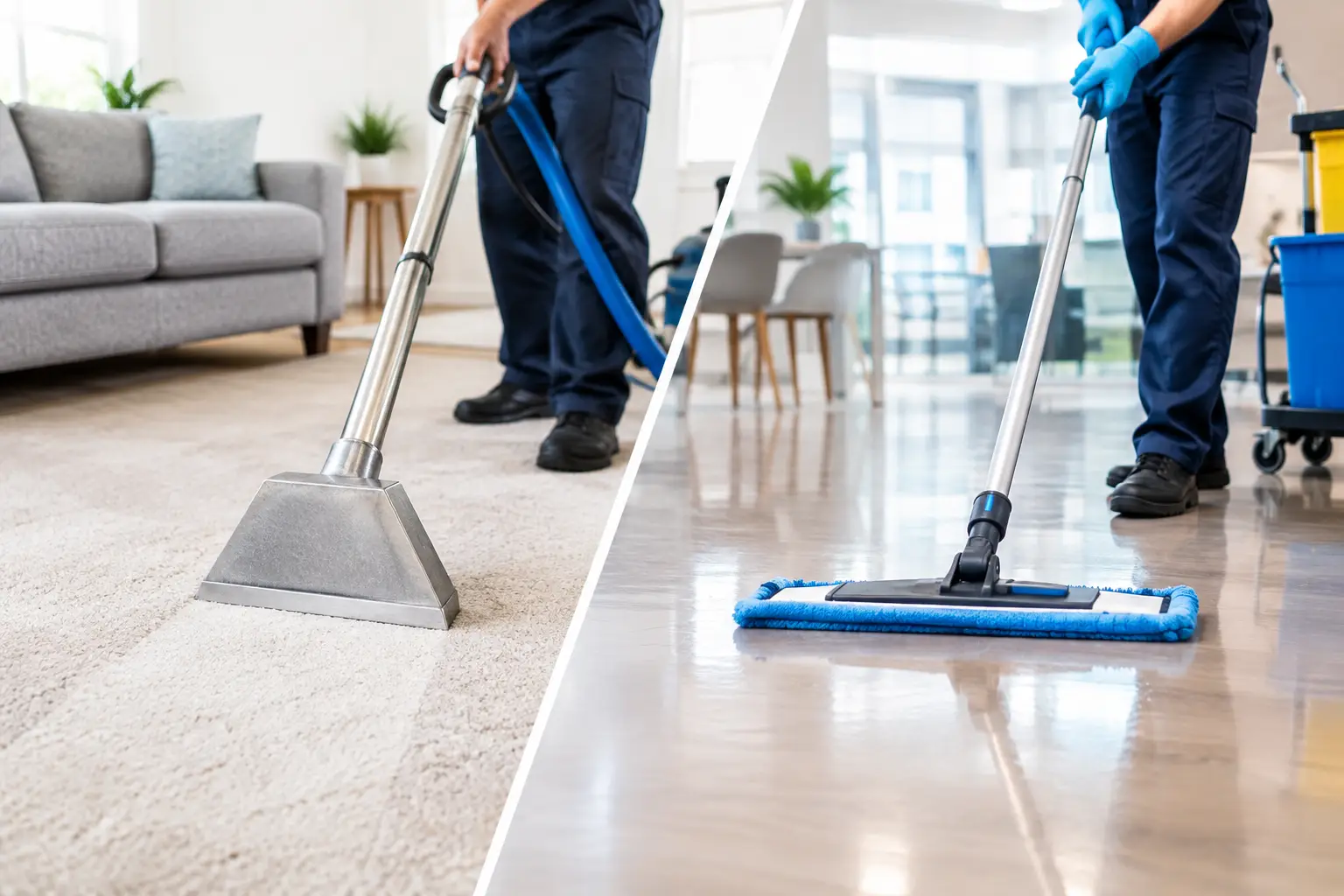
A carpet stain near an office entrance, dull vinyl in a clubhouse hallway, and scuffed hard flooring in a shared lobby can all make a property feel less cared for – but they do not call for the same cleaning response. Carpet cleaning versus floor care is not simply a choice between two services. For property managers, HOA managers, and facility teams, it is a decision about materials, traffic patterns, tenant and visitor expectations, and the kind of maintenance plan that keeps common areas presentable between major cleanings.
The right approach starts with identifying what is on the floor and what it faces every day. Carpeting holds onto dry soil and spills below the surface. Hard flooring shows dust, tracked-in debris, residue, scratches, and wear at the surface. Both need consistent attention, but their cleaning methods, timing, and visible warning signs are different.
Carpet Cleaning Versus Floor Care: The Core Difference
Carpet cleaning focuses on textile flooring. Its purpose is to remove embedded soil, spots, odors, and residue from carpet fibers while improving the overall appearance of the space. Regular vacuuming is part of carpet maintenance, but it does not replace periodic deep cleaning. Fine grit works its way down into the pile, especially around entryways, elevator landings, corridors, and areas near break rooms.
Floor care is a broader category for hard surfaces such as vinyl, luxury vinyl tile, tile, laminate, sealed concrete, and other resilient flooring. Depending on the material and its condition, floor care may include routine sweeping or vacuuming, damp mopping, spot removal, machine scrubbing, detailed edge work, and maintenance designed to address buildup or restore a more even appearance.
That distinction matters because using a one-size-fits-all approach can create problems. Overwetting carpet can extend dry time and disrupt use of a space. Using an overly aggressive method or unsuitable product on hard flooring can leave haze, affect the finish, or contribute to premature wear. A practical cleaning plan matches the method to the surface instead of treating every floor like it has the same needs.
What Your Property Is Telling You
The condition of the flooring often provides the clearest answer. Carpet usually needs more than routine vacuuming when traffic lanes look darker than surrounding areas, spills reappear after spot treatment, or the fibers look flattened and tired. These are common signs that soil has settled beyond the surface.
Hard floors need closer attention when they lose their uniform appearance. Dull paths near doors, cloudy residue, sticky spots, grout discoloration, or debris collecting along edges can make an otherwise clean room look unfinished. In a commercial setting, these details matter because visitors see floors before they notice many other cleaning tasks.
For a managed community, consider where residents, guests, vendors, and staff move through the property. Clubhouse entries, mailrooms, fitness areas, leasing offices, corridors, community rooms, and restrooms may each have different flooring and different usage levels. An office may need focused attention at reception, conference rooms, kitchens, and walkways, while an apartment turnover may call for a more targeted assessment of carpet spots, hard-floor buildup, and baseboard edges.
Routine Maintenance and Deep Cleaning Work Together
A common mistake is waiting until flooring looks visibly dirty before scheduling professional service. By that point, embedded dirt, residue, and heavy traffic wear may require more intensive work. Routine maintenance helps control the day-to-day conditions that make a space look neglected, while periodic carpet cleaning or detailed floor care addresses what routine service cannot fully remove.
For carpet, a recurring plan often centers on frequent vacuuming in high-traffic zones, prompt spot response, and scheduled deep cleaning based on use. A quiet executive office with limited foot traffic will have different needs than a busy medical-adjacent lobby, a shared HOA clubhouse, or an apartment community corridor. The schedule should follow actual traffic, not a generic calendar.
For hard floors, routine service helps prevent dirt from being ground across the surface. Entrance matting, regular removal of dry debris, correct damp-mopping practices, and attention to spills all support a cleaner appearance. Periodic detailed work can address the buildup that develops in corners, along walls, around furniture, and in textured areas where a standard mop may not reach effectively.
The goal is not to clean a floor more often than necessary. It is to establish a predictable schedule that reflects how the property operates and helps avoid the sudden, highly visible decline that prompts an emergency request before an inspection, event, or move-in.
Choosing the Right Service by Surface and Use
Flooring type should guide the scope of work, but so should how the space is used. Carpet in a conference room may primarily collect dust and occasional spills. Carpet in a rental unit may need more attention after a move-out. Both are carpeted spaces, yet the service plan can be very different.
Hard flooring presents similar variations. Tile in a restroom may need detailed attention to grout lines and residue. Luxury vinyl in a lobby may need consistent cleaning that preserves its intended finish. Sealed concrete in a utility area may be more concerned with dust, tracked debris, and marks. Each surface has a different tolerance for moisture, products, equipment, and foot traffic during service.
Before choosing a service, property teams should consider these operational questions:
- Which areas create the strongest first impression for visitors, residents, or prospective tenants?
- Where does foot traffic concentrate during the day or week?
- Are there recurring spills, weather-related tracking, pet issues, or food-service concerns?
- Does the space need to remain open while cleaning is performed, or can work be scheduled after hours?
- Are the floors part of a larger recurring janitorial plan or a one-time project?
These answers help turn a broad request for floor cleaning into a defined scope that makes sense for the property.
Why Timing Matters for Commercial and HOA Properties
Scheduling is often just as important as the cleaning method. A thorough carpet cleaning project may require time for drying before the area returns to normal use. Detailed hard-floor work may require sections of a hallway, lobby, or community space to be kept clear while the work is completed. Managers should plan around meetings, resident events, move-ins, vendor access, and peak business hours.
For multi-use properties, dividing the work into zones can reduce disruption. A clubhouse may be handled around an event calendar. An office can schedule work outside normal business hours. A large common area may be addressed in sections so essential paths remain available. The best plan is not always the largest single cleaning visit. In some settings, a phased approach is more practical for tenants, staff, and visitors.
Communication also matters. When cleaners understand which entrance receives the heaviest traffic, which conference room hosts client meetings, or which common area is used for weekly programming, they can prioritize the places where visible results matter most.
Avoiding the “Cleaned but Still Dull” Problem
A floor can be technically clean yet still look undermaintained. This often happens when surface dirt is removed but traffic patterns, residue, edge buildup, or neglected details remain. It can also happen when cleaning products are not suited to the floor type or are not removed properly.
For carpet, visible traffic lanes may remain even after basic maintenance because the fibers are compressed or soil is embedded below the surface. For hard floors, a quick mop may not correct dullness caused by residue, heavy soil, or uneven cleaning across the space. This is why a professional assessment should look beyond the overall square footage and focus on the condition of specific zones.
Property managers do not need a complicated floor program. They need a clear one: what gets handled during recurring cleaning, what requires periodic deep service, which areas need extra attention, and when the work can be scheduled with minimal disruption.
Build a Floor Plan Around Real Property Needs
Carpet cleaning and floor care are most effective when they are part of the property’s ongoing maintenance strategy rather than isolated, last-minute tasks. A recurring cleaning team can help keep daily debris and spills under control, while scheduled specialty work addresses the deeper issues that affect appearance over time.
For San Diego County offices, HOAs, apartment communities, and managed facilities, Call The Helper LLC can tailor cleaning plans around the materials, traffic patterns, and scheduling needs of the property. The most useful starting point is a walkthrough that identifies the floors people notice first, the areas that wear fastest, and the service timing that fits daily operations.
A well-maintained floor does more than look cleaner. It helps a lobby feel ready for visitors, a community room feel cared for before an event, and an office feel more organized at the start of the workday. Start with the surface in front of you, then build the cleaning schedule around how the space is actually used.


Comments are closed