



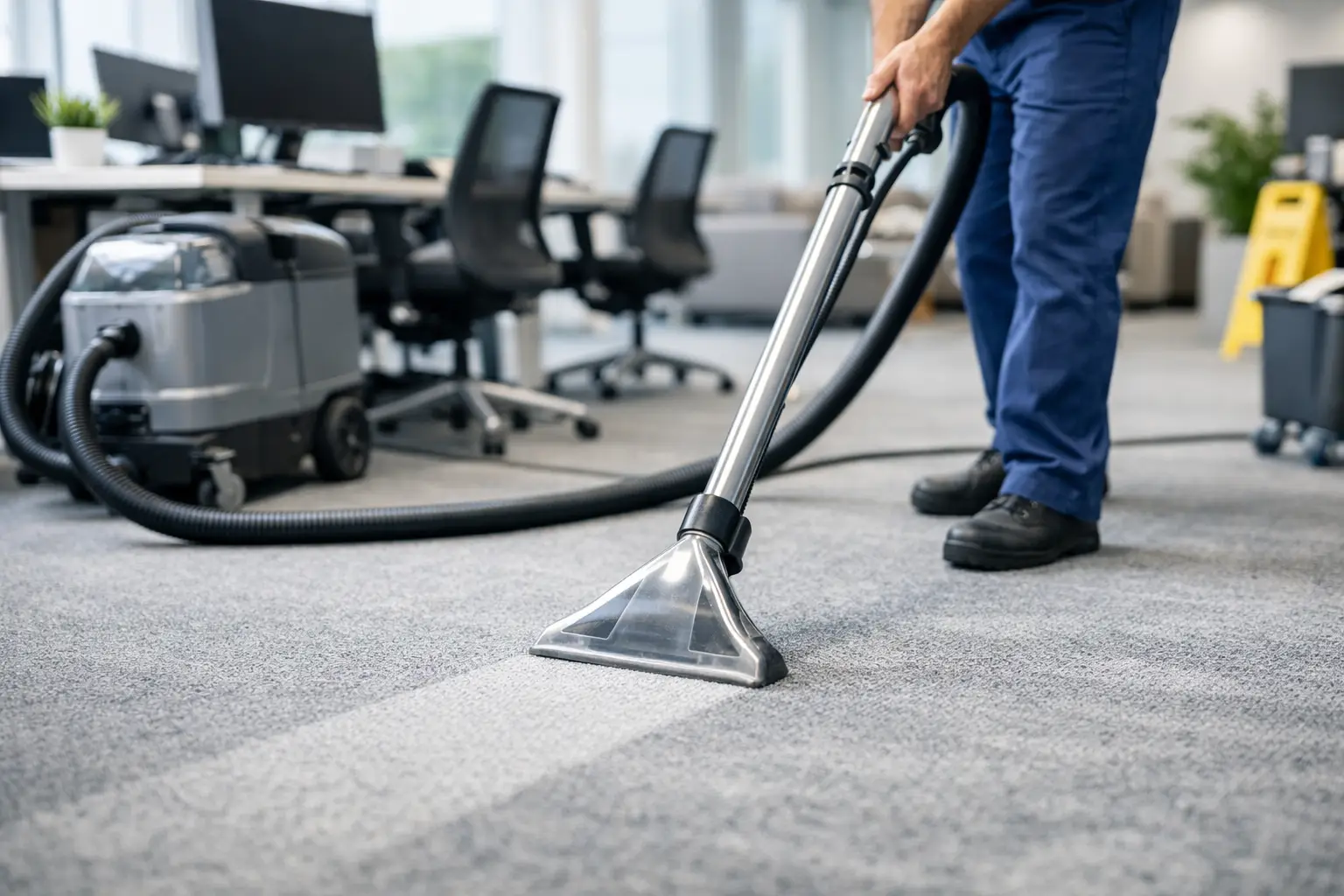
A carpet can look acceptable from the doorway while holding weeks of tracked-in sand, coffee drips, chair-wheel marks, and dust around workstations. For office managers, carpet cleaning for office spaces is not simply a cosmetic task. It is part of maintaining a workplace that feels orderly to employees, clients, tenants, and visitors from the moment they walk in.
In San Diego County, dry weather, outdoor walkways, and frequent foot traffic can move fine grit indoors quickly. Left in carpet fibers, that grit can make high-traffic lanes look dull long before the rest of the office needs attention. A thoughtful cleaning plan helps your space stay presentable without disrupting the workday.
Why office carpet needs a planned approach
Office carpet takes a different kind of wear than carpet in a home. The same paths are used repeatedly: from the entrance to reception, through hallways, between desks, and into conference rooms. Rolling office chairs press soil into the pile, while small spills can become visible stains if they are not handled promptly.
Waiting until the carpet looks heavily soiled often makes the job harder. Soil works its way down into the fibers, and worn traffic lanes become more noticeable. Regular care helps address surface debris before it builds up and gives facility managers a clearer schedule for deeper cleaning.
The right approach also depends on the building. A small professional office with a few employees may need periodic focused service in the entry and hallways. A larger shared facility, medical-adjacent administrative suite, sales office, or property management office may need a more frequent schedule based on visitor volume and daily use. There is no one-size-fits-all interval, which is why a customized plan is more useful than a generic calendar reminder.
What carpet cleaning for office spaces should address
A professional office carpet service should begin with the practical questions: Where is the heaviest traffic? Are there recurring spills near break areas? Which rooms need to be ready for visitors? Is the office occupied during standard business hours, or can service be scheduled after hours?
These details help determine where attention is needed most. Entryways and reception areas usually set the first impression. Hallways can show flattened traffic patterns. Under desks and around chair mats, crumbs and fine dust may collect even when the carpet appears clean from above. Conference rooms deserve attention as well, particularly when clients, vendors, or prospective tenants use them.
Spot treatment is another important part of the process. Coffee, tea, food, ink, and tracked-in debris do not all respond the same way. Acting quickly gives a stain the best chance of being addressed before it becomes more difficult to remove. Still, the age of the spill, the carpet material, and prior attempts to treat it can affect the result. A responsible cleaning provider should assess the area rather than promise that every mark will disappear.
Appearance is only one part of the result
Clean carpet contributes to a more organized office, but the benefit is also operational. Employees are less likely to avoid reporting a spill when there is a clear process for handling it. Managers can schedule deeper cleaning before a busy season, tenant walkthrough, board meeting, or client event rather than reacting at the last minute.
It also helps protect the overall appearance of the space. When carpets look neglected, even clean desks, polished glass, and well-maintained restrooms can be overshadowed by worn-looking floors. Consistent carpet care supports the standards your team works hard to maintain elsewhere in the building.
Building the right schedule for your office
Most offices benefit from a combination of routine janitorial care and scheduled carpet service. Vacuuming or removing loose debris regularly keeps everyday dirt from settling in. Prompt attention to spills limits the chance of a visible stain. Periodic deeper carpet cleaning addresses the buildup that routine vacuuming alone cannot reach.
The timing depends on your office’s use. A low-traffic suite may only need deeper carpet attention at longer intervals, especially if it has controlled entry and limited visitors. An office with daily client appointments, a busy lobby, shared corridors, or frequent deliveries may need a more frequent plan. Seasonal conditions matter too. Rainy periods can bring in moisture and debris, while summer activity can increase foot traffic from outdoor events and construction work nearby.
Scheduling is just as important as frequency. Carpet service during a packed workday can create avoidable interruptions if staff need to move around equipment or avoid treated areas. Many offices prefer service outside normal operating hours, before opening, or at a quieter time when conference rooms and common areas are available. The best plan balances cleaning needs with the way your team actually uses the space.
Prepare without creating extra work
A little preparation makes office carpet service more efficient, but it should not become another major project for your staff. Let the cleaning team know about restricted rooms, sensitive equipment, security procedures, and any areas with known spills or odors. Remove personal items, loose cords, and small floor-level objects where possible.
For larger offices, it can help to identify priorities in advance. If furniture cannot be moved, a provider can focus on accessible traffic paths, entrances, and open areas. If a conference room must look its best for an upcoming meeting, that can be built into the service plan. Clear communication prevents missed expectations and keeps the work focused on visible results.
Common mistakes that make office carpets look worse
The most common mistake is treating carpet cleaning as an emergency-only service. By the time a hallway looks gray or a reception area has obvious spots, soil may be well established. Another issue is using too much off-the-shelf spot cleaner. Excess product can leave residue that attracts more dirt, turning a small stain into a recurring dark patch.
Offices also sometimes overlook the areas just outside the carpet. Entry mats, hard-floor transitions, and exterior walkways influence how much soil reaches the office. If those areas are not maintained, the carpet has to work harder. Coordinating floor cleaning across entrances and common areas creates a cleaner result than treating the carpet in isolation.
Finally, avoid choosing a schedule based only on what is visible after a quick walk-through. Look at traffic patterns, visitor expectations, and the demands placed on your staff. A carpet that is technically not stained can still look flattened, dusty, or tired in the areas people notice first.
Choosing a responsive cleaning partner
Office managers and property managers need more than a one-time service appointment. They need clear communication, reliable scheduling, and a provider willing to tailor service around the building’s needs. Before booking, discuss the size of the area, carpet condition, access requirements, preferred service hours, and whether ongoing janitorial support is also needed.
It is useful to ask how the provider will handle high-traffic zones, spots, furniture constraints, and drying time considerations. The goal is not to overcomplicate the work. It is to make sure the plan fits your office so employees can return to a clean, functional space with minimal disruption.
Call The Helper LLC works with offices and facilities throughout San Diego County to create cleaning plans that fit real schedules and real spaces. Whether you need focused carpet attention before an important event or recurring support for a busy workplace, clear expectations from the start make the process easier.
A well-kept carpet quietly supports every other part of a professional office. When visitors notice the welcome at reception instead of the traffic lane beneath their feet, the cleaning plan is doing exactly what it should.


Comments are closed