



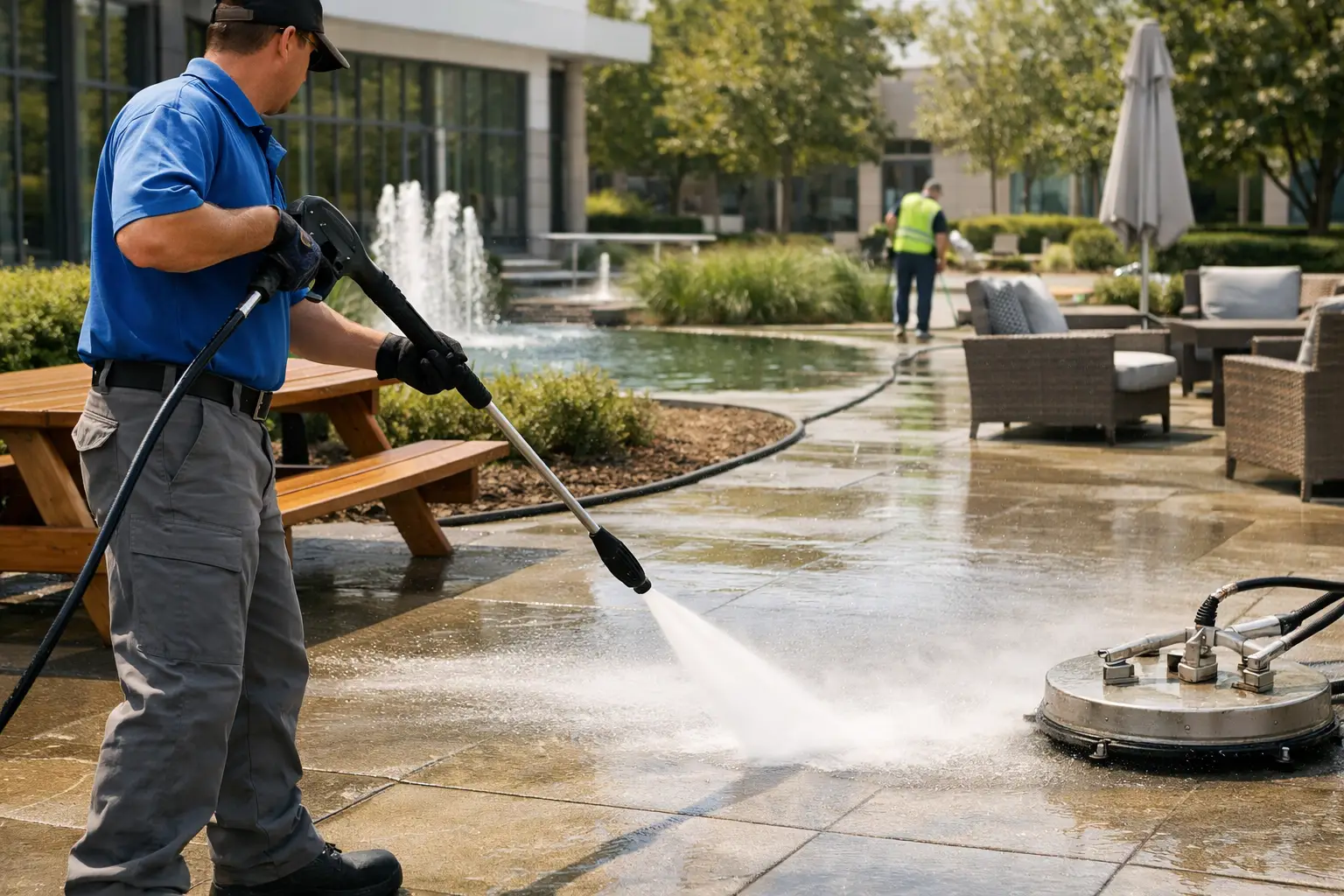
A stained entry walk, algae-marked pool deck, or grimy dumpster enclosure can shape how residents and visitors view an entire community before they step inside. Pressure washing shared spaces is one of the most visible ways an HOA or property manager can restore a cared-for appearance – but the best results come from a clear plan, not simply turning up the pressure.
For managed communities, commercial properties, and multifamily buildings, exterior cleaning has to work around residents, access routes, landscaping, drainage, and the condition of each surface. The goal is a cleaner property that looks consistently attended to without disrupting the people who use it every day.
Why Pressure Washing Shared Spaces Needs a Plan
Shared areas collect a different kind of buildup than a private patio. Foot traffic carries in dirt, leaves, food spills, drink residue, tire marks, and dust. In San Diego County, shaded areas can also develop algae or mildew-like staining, while dry weather can leave walkways and breezeways coated in fine dirt.
When these conditions are left in place, they make surfaces look neglected and can become harder to remove over time. A focused pressure washing schedule helps property teams maintain the visible areas residents notice most: building entrances, sidewalks, stairwells, breezeways, courtyards, patios, pool-area hardscapes, clubhouse exteriors, parking areas, and trash enclosures.
The right frequency depends on the property. A busy community clubhouse or a walkway near landscaped areas may need attention more often than a lightly used rear path. Rather than applying the same schedule everywhere, it makes sense to prioritize surfaces based on traffic, shade, staining, and how quickly debris returns.
Appearance Is Only Part of the Job
A clean surface should not come at the expense of nearby landscaping, painted finishes, windows, doors, or residents’ routines. Pressure washing is not one setting for every area. Concrete may tolerate a different approach than pavers, coated decking, stone, wood, or delicate exterior fixtures.
That distinction matters. Excessive pressure can scar a surface, loosen joint material, strip paint, or push water where it does not belong. Too little pressure may leave uneven results and visible cleaning patterns. Professional exterior cleaning starts with assessing the material, the soil level, the drainage path, and the surrounding features before work begins.
Which Common Areas Benefit Most?
Property managers often get the best value by focusing first on high-visibility, high-use zones. These are the places where residents wait, walk, gather, unload vehicles, or pass through several times a day. A refreshed entry path can improve the presentation of an entire building, while a cleaner trash enclosure can make routine maintenance feel more organized.
Walkways and breezeways are common priorities because they show dirt quickly and affect the day-to-day experience of residents. Courtyards, patios, and community-room entrances also benefit from regular attention, especially after events or during periods of heavy use.
Pool decks and outdoor amenity areas require additional care. These spaces may include furniture, drains, textured surfaces, gates, and adjacent landscaping. Cleaning should be coordinated around access and surface requirements, not treated like an empty driveway.
Parking areas and garage approaches can also need targeted service. Tire marks, oil spots, and windblown debris may not respond the same way as ordinary surface dirt. In some cases, spot treatment and a focused cleaning approach are more practical than washing an entire large area at once.
Scheduling Around Residents and Daily Operations
The cleanest walkway is not helpful if access is blocked without notice or the work creates avoidable disruption. Timing is a core part of pressure washing shared spaces, particularly for HOAs, apartment communities, office properties, and mixed-use facilities.
A good service plan identifies which areas can be completed in sections, where residents need alternate access, and when common spaces are least active. Early communication allows property managers to post notices, move patio furniture when needed, and alert residents to temporary route changes. It also gives the cleaning team a chance to understand gate access, water availability, parking restrictions, and any on-site requirements.
For a large property, dividing work into zones is often the better choice. Cleaning one courtyard, building entrance, or parking section at a time limits the impact on residents while keeping the property presentable throughout the service. For smaller properties, a single scheduled visit may be more efficient. It depends on the layout, the number of shared areas, and how much activity the property sees each day.
Weather and Drainage Matter
Exterior cleaning plans should account for weather conditions and how water moves through the property. Rain can make scheduling unpredictable, while windy conditions may blow debris back onto freshly cleaned areas. Drain locations, slopes, and nearby planting beds affect how a team prepares the site and manages runoff during the work.
This is another reason a walkthrough is useful. It helps identify areas where water should be controlled carefully, surfaces that need a gentler method, and obstacles that may require advance preparation. A rushed approach can create unnecessary rework. A thoughtful one produces more even, professional-looking results.
What to Look for in a Pressure Washing Service
For HOA boards and property managers, dependable communication is as valuable as visible cleaning results. You need a provider who can understand the scope, confirm the access plan, and adjust the work to fit the property rather than forcing the property to fit a standard checklist.
Ask how the provider approaches different materials and whether they can address the specific spaces that matter to your community. It is also helpful to clarify what needs to be moved, which areas will be temporarily unavailable, and how the team will communicate if site conditions change.
A customized plan is especially useful when pressure washing is part of broader common-area care. For example, a community may coordinate exterior washing with clubhouse cleaning, community-room cleaning, floor care, or recurring janitorial service. Grouping related needs can simplify scheduling and help property teams keep the whole environment looking consistently maintained.
Call The Helper LLC works with property managers and HOA communities that need attentive, practical cleaning support for shared facilities and common areas. The focus should always be on the details that affect daily use: clear communication, respectful work around occupied spaces, and a cleaning plan shaped around the property.
Keeping Results Looking Better Between Visits
Pressure washing does the heavy work, but routine attention helps results last longer. Property staff do not need an elaborate maintenance program to make a difference. Promptly removing loose leaves, monitoring spills in gathering areas, and keeping trash enclosures orderly can prevent stains and debris from becoming more difficult to manage.
Landscaping also influences how quickly surfaces get dirty. Soil, mulch, and leaf litter naturally travel onto nearby walkways, particularly after irrigation or wind. If one area repeatedly looks dirty soon after cleaning, the solution may be to adjust the maintenance rhythm for that location instead of increasing service across the entire property.
Residents notice when shared spaces receive consistent care. A clean entry, a presentable courtyard, and well-maintained paths make routine moments feel more orderly and welcoming. With the right schedule and a team that treats the property thoughtfully, exterior cleaning becomes a practical part of protecting the community’s everyday appearance.


Comments are closed