



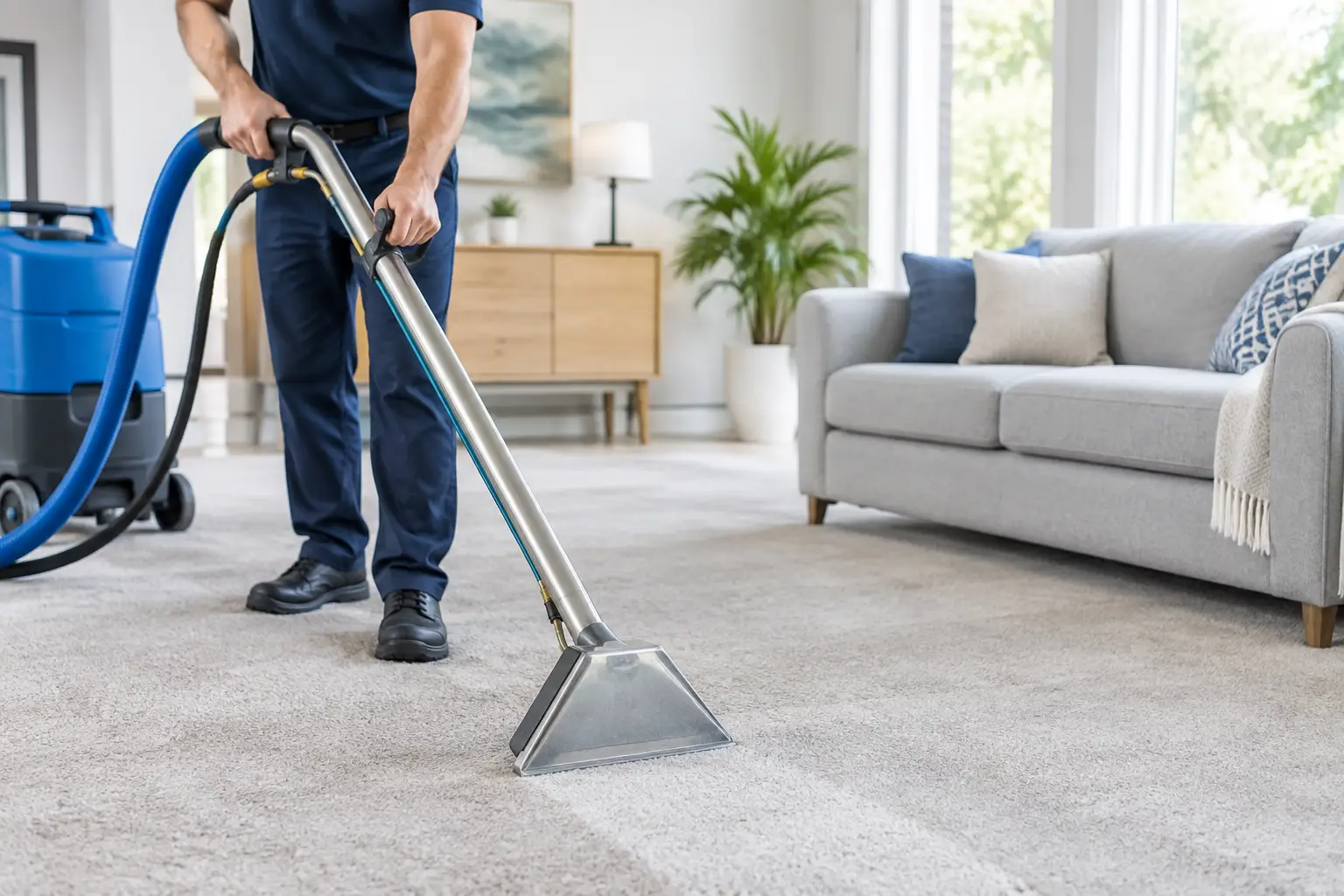
Carpet cleaning is often treated as a last-minute response to a visible stain, an upcoming inspection, or a tenant turnover. For property managers, HOA teams, office managers, and commercial owners, that approach usually creates more disruption than necessary. A planned carpet care schedule helps shared spaces look maintained, supports a cleaner impression for visitors and residents, and gives teams a practical way to address wear before it becomes the first thing people notice.
The right schedule and method depend on how a property is actually used. A quiet professional office, a busy apartment hallway, and a clubhouse entrance may all have carpet, but they do not have the same traffic patterns, soils, or timing needs. Effective cleaning begins with that difference.
Why carpet condition affects the whole property
Carpet covers a large visual area, so it can shape how people perceive a space before they notice anything else. Dull traffic lanes, tracked-in dirt near entrances, and lingering spots can make an otherwise well-maintained office or community facility feel neglected. In multifamily and HOA settings, carpeted clubhouses, leasing areas, corridors, and community rooms are part of the resident experience.
There is also an operational side. Soil settles into carpet fibers over time, especially near exterior doors, elevator lobbies, break rooms, and paths between workstations. Waiting until carpet looks heavily soiled can make the cleaning process more involved and may leave less flexibility to schedule service around tenants, meetings, or property events.
Routine carpet care is not about making every room look brand new at all times. It is about maintaining a clean, orderly appearance that aligns with the way the property is managed. That is particularly valuable for teams responsible for multiple common areas or locations.
Carpet cleaning starts with the space, not a one-size plan
A useful carpet cleaning plan considers the carpet type, current condition, foot traffic, furniture layout, and the amount of time available for the area to be out of use. These details influence both the cleaning approach and the best time to complete the work.
For example, a small office suite may be easiest to service after business hours or on a lower-traffic day. A community room may need attention between booked events. A property manager coordinating several apartment turnovers may prioritize individual units as they become vacant, rather than trying to schedule every unit at once.
Before scheduling service, it helps to identify four practical details:
- Which rooms or common areas receive the heaviest daily traffic
- Whether there are recurring spots, odors, or visibly darker walkways
- What furniture needs to remain in place or be moved beforehand
- When the space can be cleaned with the least interruption to residents, staff, customers, or guests
This information allows a cleaning provider to build a plan around the property instead of forcing the property into a generic appointment window.
High-traffic areas need more attention
Entryways and transition areas collect the most soil because they receive debris from shoes, carts, strollers, deliveries, and regular daily movement. In offices, this may include reception paths, hallways, and work areas near shared printers or break rooms. In HOA and multifamily communities, it can include clubhouses, fitness-adjacent spaces, leasing offices, and corridors.
These areas often benefit from more frequent attention than low-use conference rooms or private offices. Addressing them on a regular cadence can help the entire space look more consistent without treating every carpeted room as if it has the same needs.
Timing matters as much as technique
Carpet service should fit the property’s operating rhythm. Cleaning a community room immediately before an event, or a busy office during peak hours, creates avoidable inconvenience. The best plan accounts for access, use patterns, and the time needed before normal foot traffic resumes.
For commercial and managed properties, clear communication is essential. Managers may need to notify tenants, coordinate access, reserve elevators, arrange entry to locked rooms, or make sure furniture and personal items are addressed in advance. A responsive provider can help make those details straightforward rather than leaving staff to solve them at the last minute.
What a maintenance schedule can look like
There is no universal interval for professional carpet cleaning. Frequency depends on traffic, weather, building access, the age and color of the carpet, and how much soil is carried into the space. Still, a planned approach is generally easier to manage than waiting for a complaint or an inspection deadline.
A low-traffic professional office may schedule cleaning periodically as part of broader floor care. A high-use clubhouse or leasing office may need more frequent attention, especially after events or seasonal increases in activity. For rental units, carpet cleaning may be considered during move-out preparation when the carpet condition calls for it.
The key is to separate routine maintenance from targeted service. Routine visits support an overall standard. Targeted cleaning addresses a particular spill, traffic lane, or turnover need. Combining the two gives property teams more control over priorities and spending without assuming every area requires the same level of work.
Preparing a space for better results
A little preparation can prevent delays and make a service visit more efficient. For offices and common areas, remove small personal items, cords, floor décor, and lightweight furniture when possible. Let the cleaning team know about restricted access, alarms, loading instructions, parking limitations, or rooms that must be completed first.
Property managers should also point out known problem areas before work begins. A spot that has been treated repeatedly, a stain near a doorway, or a section of carpet affected by heavy traffic may need a different level of attention than the rest of the room. Early communication helps set realistic expectations about what can be addressed during the service.
For occupied spaces, it is helpful to notify users about timing and access. Simple coordination reduces the chance of people walking through an area while it is being serviced or moving furniture back before the space is ready for regular use.
When spot treatment is not enough
Quick action after a spill can be useful, but repeated spot treatment has limits. Scrubbing aggressively can spread a stain, roughen carpet fibers, or leave residue that attracts more soil. Using the wrong product can also change the appearance of some carpet materials.
When a spot continues to return, the issue may be beneath the surface or connected to residue left by previous cleaning attempts. Likewise, a carpet that looks generally gray or uneven may need more than attention to a few visible marks. A professional assessment can help determine whether the priority is localized treatment, broader cleaning, or a maintenance schedule for the area.
This is where property-specific planning pays off. Instead of reacting to every mark as a separate emergency, managers can track recurring issues and decide where regular carpet care will have the most visible impact.
Carpet cleaning for turnovers and common areas
Turnover work and common-area maintenance have different goals, but both benefit from clear scope and scheduling. During a move-out, carpet condition is one part of preparing a unit for the next resident, along with general cleaning and any other property tasks. The timing may be tight, so coordinating services in the right order matters.
In shared facilities, the goal is usually continuity. A clean clubhouse, community room, or office lobby supports the property’s daily presentation without requiring constant disruption. Managers can schedule around reservations, inspections, and seasonal activity rather than treating carpet care as an unexpected project.
Call The Helper LLC works with commercial, HOA, property management, and residential clients to create cleaning plans based on the spaces they manage and the schedule they need. Whether the priority is a single carpeted area or ongoing care across a property, clear scope and dependable communication make the process easier to coordinate.
A carpet does not need to reach its worst condition before it receives attention. The most manageable approach is to look at traffic, timing, and visible wear now, then plan the next cleaning around the way the property actually operates.


Comments are closed