



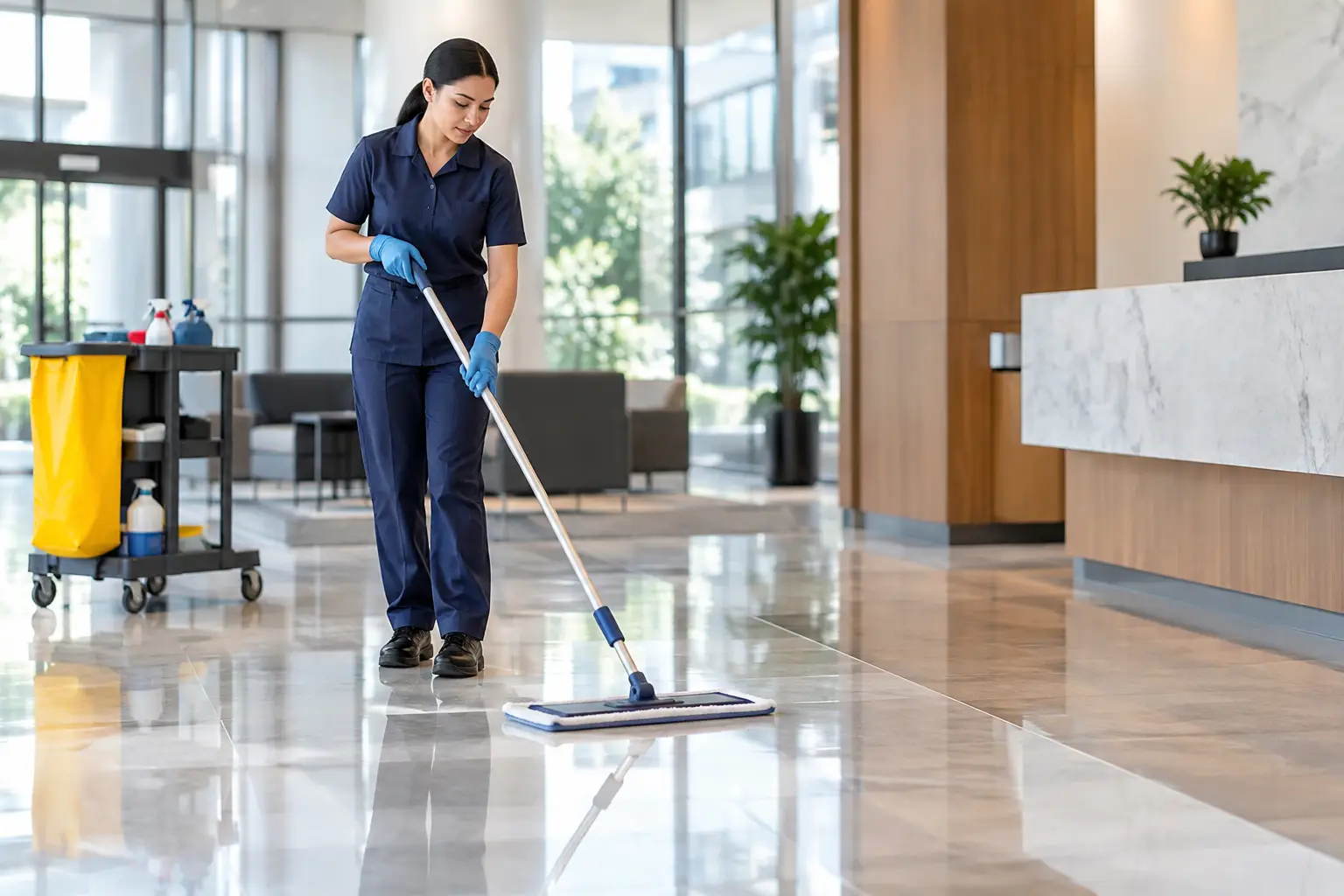
A lobby floor tells visitors something before the front desk, leasing office, or elevator does. Streaks, tracked-in dust, and overflowing entry mats can make an otherwise well-managed property feel neglected. The question of how often to clean lobby floors is not answered by one universal schedule. It depends on how people use the space, what they track in, and how quickly small messes become visible.
For property managers, HOA managers, and facility teams, the best approach is a layered floor care plan: frequent attention where people walk, scheduled detailed cleaning, and adjustments when conditions change. That keeps the lobby presentable without wasting labor on work that does not match the property’s actual needs.
How Often Should You Clean Lobby Floors?
Most active commercial and multifamily lobbies need some level of floor care every day. At a minimum, that usually means removing loose debris, addressing visible spots, straightening mats, and checking corners, thresholds, and elevator areas. During rain, landscaping work, move-ins, events, or high visitor volume, daily service may need to become multiple touch-ups per day.
A more complete wet mop, machine clean, or other floor-specific service belongs on a recurring schedule based on the surface and traffic level. A quiet professional office may look its best with daily dry service and wet cleaning two or three times a week. A busy apartment community, medical-style office environment, retail-adjacent building, or public-facing facility may need wet cleaning every day.
The key is to separate appearance maintenance from deeper floor care. Sweeping a lobby each day is not the same as maintaining finish on vinyl flooring, extracting carpet, or cleaning textured tile and grout. Each task solves a different problem.
Start With the Traffic Pattern, Not a Generic Checklist
The entrance route should drive your schedule. Look at the path from parking areas, sidewalks, garages, and elevators to the reception desk or main doors. Those areas receive most of the grit, moisture, and scuffing, even when the rest of the lobby remains clean.
A low-traffic office lobby with appointments spread throughout the day may only need a detailed daily cleaning and an occasional midday check. In contrast, a community clubhouse entrance used by residents, delivery drivers, vendors, and guests may need morning cleaning, an afternoon walkthrough, and another service after evening activity.
Floor type matters, too. Smooth hard surfaces show footprints and streaks quickly. Dark luxury vinyl plank often reveals dust and shoe marks. Light tile can hide loose debris for a while but may make stains near entrances more noticeable. Carpeted lobbies can appear acceptable on the surface while holding sand and soil below the pile.
Rather than asking only, “How many times a week should this floor be mopped?” ask where dirt enters, when traffic peaks, and which conditions create complaints. That produces a schedule people notice for the right reasons.
A Practical Lobby Floor Cleaning Schedule
For most managed properties, a daily routine should focus on the visible experience. Remove litter and debris, vacuum or sweep as appropriate, spot-clean spills, clean entry glass-adjacent flooring, and inspect mats. Mats deserve special attention because they are the first defense against soil traveling farther inside. If a mat is saturated, bunched up, or covered with debris, it cannot do its job well.
Several times each week, hard floors may need damp mopping or an autoscrubber process suitable for the material. This removes the fine residue that dry methods leave behind and helps prevent dirt from becoming a dull film. Carpeted lobby floors should be vacuumed thoroughly on a routine basis, particularly around seating, elevator banks, and entrances.
Monthly or quarterly tasks depend on the flooring and usage. These may include detailed edge cleaning, machine scrubbing, carpet extraction, grout cleaning, or floor finish maintenance. A floor that receives regular daily care often needs less intensive restoration, which can help protect both appearance and the useful life of the surface.
Suggested Frequencies by Lobby Type
A small, low-traffic office lobby generally benefits from daily spot attention, daily vacuuming or sweeping, and wet cleaning two to three times per week. A moderate-traffic professional building or apartment lobby often needs daily sweeping or vacuuming and daily wet cleaning of the entrance path and elevator areas.
High-traffic spaces should be checked multiple times a day. This includes properties with constant visitors, shared facilities with frequent activity, busy leasing offices, and lobbies connected to garages or outdoor common areas. These locations may need morning service, a midday touch-up, and evening cleaning to remain consistently presentable.
When rain is expected, increase service before, during, and after the weather event. Wet floors are not only unattractive. They also spread grime farther through the building and require prompt attention to keep walking paths clear and orderly.
Adjust for Weather, Events, and Seasonal Conditions
A fixed cleaning plan is useful, but it should not be rigid. San Diego County properties may deal with dry dust, coastal moisture, landscaping debris, and periods of rain that change the workload quickly. A lobby that looks clean in dry weather can need repeated attention after a storm or during a busy community event.
Move-in periods are another common trigger. Carts, boxes, contractors, and increased foot traffic can leave scuffs and debris at the entry and elevator areas. For HOA and multifamily communities, it can be helpful to schedule extra lobby checks around planned gatherings, board meetings, or maintenance projects rather than waiting for routine service day.
This is where responsive communication matters. A reliable cleaning plan should give a property manager a clear base schedule while leaving room to add targeted service when the building’s activity calls for it.
Avoid Cleaning Too Much in the Wrong Way
More cleaning is not always better if the method does not suit the floor. Over-wetting carpet can create drying problems. Using too much cleaning solution on hard floors can leave residue that attracts more soil or creates dullness. Aggressive pads or chemicals may damage finishes, natural stone, or specialty surfaces.
The right frequency works alongside the right process. High-traffic hard floors may need frequent light cleaning and periodic machine care, not repeated heavy mopping with excess product. Carpet may need daily vacuuming long before it needs extraction. Textured tile may require focused scrubbing because a quick mop can glide over embedded soil without removing it.
A customized plan should identify the surface, traffic level, available access times, and the appearance standard the property wants to maintain. That is more useful than assigning the same task list to every lobby.
Signs Your Current Schedule Is Falling Short
Visible debris by midday is an obvious sign, but it is not the only one. Look for recurring footprints near doors, darkened edges along baseboards, sticky spots, dull traffic lanes, lingering odors in carpeted areas, and mats that remain dirty after routine service. These clues often mean the frequency, equipment, or cleaning method needs adjustment.
Tenant and visitor behavior can also be a signal. If people avoid a wet-looking area, comment on tracked-in dirt, or regularly carry debris beyond the entrance, the lobby may need a better combination of mat maintenance, touch-up service, and floor-specific cleaning.
Keeping a simple record for a few weeks can help. Note weather, special events, move-ins, and the times when the lobby starts to look untidy. That information makes it easier to build a schedule based on real conditions rather than assumptions.
Build a Cleaning Plan That Protects the First Impression
The best lobby cleaning frequency is the one that keeps the space consistently clean during normal traffic and adapts quickly when traffic changes. For many properties, that means daily service plus recurring deeper floor care. For busier buildings, it means planned touch-ups throughout the day instead of waiting until the next morning.
Call The Helper LLC can help property and facility managers shape commercial, common-area, and HOA cleaning plans around the condition of their floors, the building schedule, and the level of presentation residents and visitors expect. A well-kept lobby does not need to call attention to itself – it simply helps every arrival feel organized, cared for, and ready for what comes next.


Comments are closed