



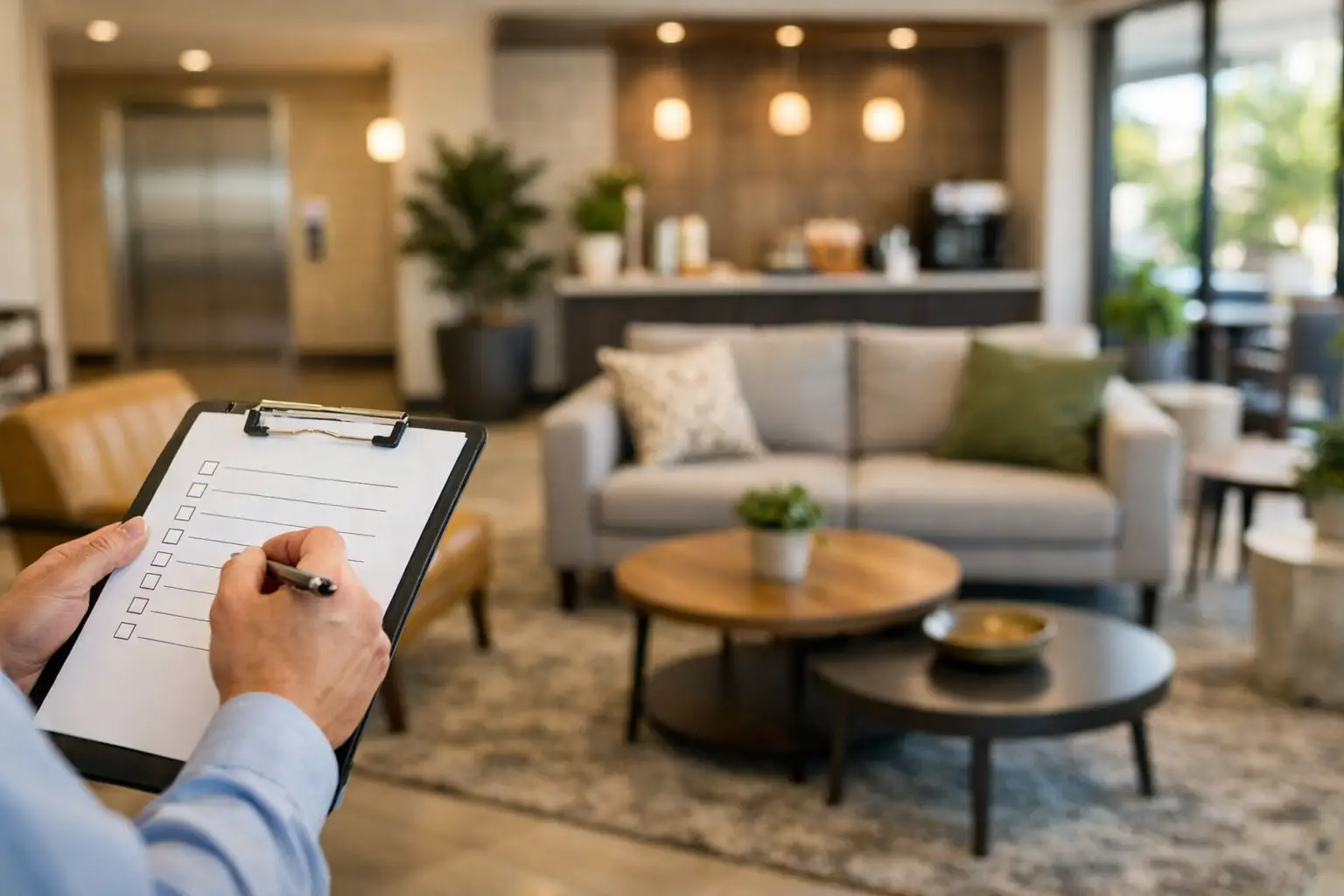
A scuffed entry door, overflowing trash can, or dusty elevator panel can shape a resident’s or visitor’s opinion before they reach the office, clubhouse, or apartment. A consistent common area checklist gives property managers, HOA boards, and facility teams a practical way to protect the appearance of shared spaces without relying on memory or last-minute cleanup.
The best checklist is not a generic page that gets checked off without a close look. It reflects how people actually use your property, which areas receive the most traffic, and what needs attention between scheduled cleaning visits. For a busy community in San Diego County, that may mean addressing sand and dust near entrances, keeping community rooms ready for reservations, and making sure high-touch surfaces look cared for throughout the week.
Start With a Common Area Checklist That Fits the Property
Every building has different pressure points. A small office suite may need daily attention in the lobby, restrooms, break room, and stairwell. A multifamily community may have a larger footprint that includes mailrooms, elevators, clubhouses, fitness areas, pool-adjacent restrooms, corridors, and trash rooms.
Before assigning tasks, walk the property at the times people use it most. Notice where debris collects, where fingerprints show first, and which spaces create the strongest first impression. Then divide tasks by frequency: daily, weekly, monthly, and as needed. This keeps routine work realistic while ensuring occasional details, such as baseboards or interior glass, do not disappear from the plan.
A checklist should also identify who is responsible for noticing problems beyond cleaning. A cleaning professional may spot a burned-out light, leaking dispenser, damaged door hardware, or trip hazard. Recording and reporting those conditions promptly helps the property team respond before a small issue becomes a resident complaint.
Daily Entry, Lobby, and Hallway Tasks
Entrances and hallways receive constant traffic, so they need frequent visual checks even when they do not require a full cleaning every time. The goal is simple: floors should look maintained, touchpoints should appear clean, and visitors should not encounter litter, clutter, or odors.
A daily walkthrough can include the following:
- Remove litter, flyers, leaves, and debris from entryways, walkways, and vestibules.
- Clean visible fingerprints from glass doors, push plates, handles, intercoms, and elevator buttons.
- Empty trash and recycling containers, replace liners, and wipe the exterior of receptacles.
- Sweep or vacuum floors and spot mop tracked-in dirt, spills, and marks.
- Straighten mats, seating, tables, signage, and package-area surfaces.
- Dust or wipe accessible ledges, mailboxes, handrails, counters, and other high-visibility surfaces.
- Check for unpleasant odors, standing water, or supplies that need replenishing.
Frequency depends on traffic. A lobby with steady daily visitors may need a second inspection later in the day. A quieter building may be well served by one thorough service and a brief management walkthrough. The point is to match the schedule to actual use, not just the calendar.
Restrooms Need More Than a Quick Check
Shared restrooms can affect how people judge the entire property. Even a clean lobby feels less polished if a restroom has an empty soap dispenser, wet floor, or full trash can. These spaces deserve a defined process rather than a vague instruction to “clean restroom.”
At each service, clean and disinfect toilets, urinals, sinks, faucets, countertops, door handles, and dispensers. Wipe mirrors until they are streak-free, empty waste containers, replenish soap, paper towels, and tissue, and mop the floor with close attention around fixtures and corners. Check partitions, stall latches, grout lines, and vents for visible buildup.
For high-use restrooms, a supply check may be needed more often than a complete cleaning. Facility managers should decide where that line falls based on occupancy, events, and the number of users. A clubhouse restroom during a weekend gathering has different needs than a small office restroom used by a few employees.
Keep Shared Amenities Ready for Use
Clubhouses, community rooms, laundry-adjacent spaces, fitness rooms, and meeting areas often serve multiple functions. They may host resident events one day and sit empty the next. A strong common area cleaning plan accounts for that changing use.
For community rooms and clubhouses, wipe tables, counters, chairs, light switches, door handles, and appliances that are part of the shared space. Vacuum or mop floors, remove trash, clean glass, and reset the room so it feels orderly for the next reservation. If a room has been used for an event, schedule a post-event inspection rather than waiting for the next routine visit.
Fitness areas require a more frequent eye for fingerprints, sweat marks, and floor debris. Focus on mirrors, entry handles, benches, equipment exteriors, and flooring around machines. Cleaning should support a tidy, welcoming environment without interfering with residents using the room.
Mailrooms and package areas also deserve regular attention. Cardboard, discarded labels, and crowded counters can make an otherwise organized property feel neglected. Remove loose debris, wipe counters and parcel lockers as appropriate, and keep walking paths clear.
Floors, Glass, and Details Set the Standard
Floor care is one of the most visible parts of common-area maintenance. Daily sweeping, vacuuming, and spot mopping prevent dirt from settling into corners and being carried throughout the property. But routine cleaning alone may not be enough for heavily used hard floors, carpeted corridors, or entry mats.
Build periodic floor care into the checklist. This may include deeper carpet cleaning, machine floor cleaning, or attention to grout and edges where soil accumulates. The right interval depends on foot traffic, weather, floor material, and whether the space is open to the public. Cleaning too infrequently can shorten the useful appearance of floors, while cleaning more often than necessary may not be the best use of the maintenance budget.
Glass and detail work make a similar difference. Smudged doors, dusty window sills, cobwebs near ceilings, and marked walls are easy to overlook during a fast service. Add them to weekly or monthly tasks so they receive regular attention. These finishing details are often what make a property feel consistently cared for rather than merely cleaned.
Add Seasonal and As-Needed Checks
Some work does not belong on a daily schedule, but it should still have a place on the checklist. Seasonal needs can change with weather, occupancy, landscaping activity, construction nearby, or community events. A property may need more entryway attention after rain, more dust control during dry periods, or additional trash service around holidays and move-in cycles.
Monthly or as-needed tasks may include cleaning baseboards and vents, wiping interior doors and frames, removing cobwebs, cleaning behind movable furniture, treating spot stains, pressure washing approved exterior surfaces, or arranging deeper carpet and floor care. Trash rooms, utility-adjacent corridors, and storage areas may require their own task list because odors and buildup can develop quickly.
This is also where communication matters. When a property manager knows an event, inspection, tenant move, or community meeting is coming up, the cleaning schedule can be adjusted before the space is needed. A customized plan is more useful than forcing every property into the same routine.
Make the Checklist Easy to Use and Verify
A checklist only works when it is clear enough to follow and specific enough to inspect. Avoid broad items such as “clean lobby.” Instead, identify the surfaces and expected result: vacuum entry mat, remove fingerprints from glass doors, empty trash, wipe reception counter, and spot mop hard flooring.
Keep a record of completed service, special conditions observed, and tasks that need follow-up. Photos can be useful for documenting recurring concerns or confirming the condition of a space after an event, but they should support the process rather than replace a real walkthrough.
It also helps to review the checklist after the first few weeks. If one task is constantly missed, the problem may be timing, staffing, unclear instructions, or an unrealistic frequency. Adjusting the plan is not a failure. It is how a cleaning program becomes dependable over time.
For HOA communities, offices, and managed properties, Call The Helper LLC can tailor common-area cleaning around the spaces residents, employees, and visitors use most. The right checklist turns routine cleaning into a visible standard of care – one that helps every shared space feel ready when people walk in.


Comments are closed