



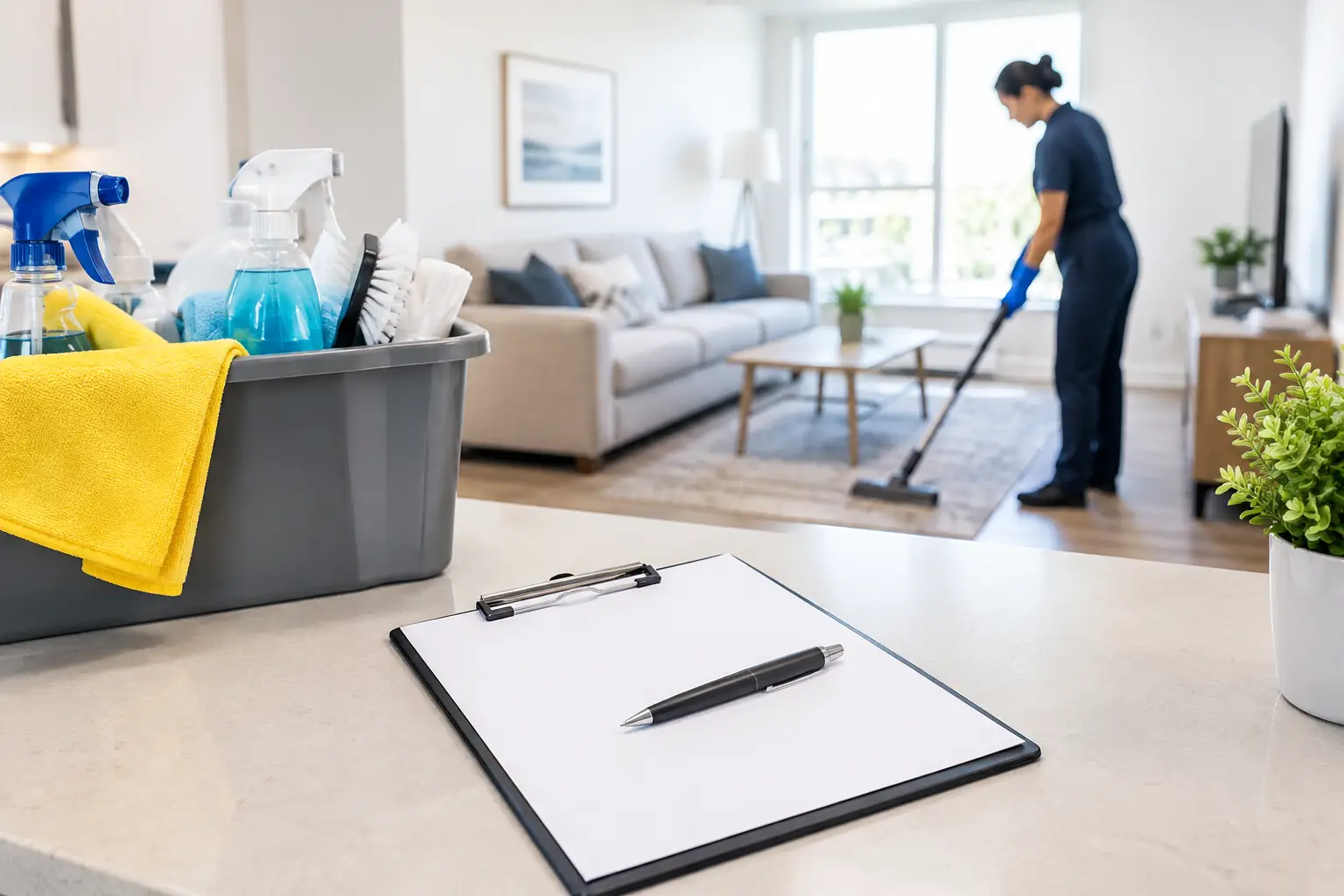
A missed trash room, an unclear definition of “common area,” or a task that was assumed to be included can quickly turn a routine cleaning visit into a property management problem. A clear cleaning scope template gives everyone the same reference point before service begins. It defines what will be cleaned, how often it will be addressed, who is responsible for access and supplies, and how concerns should be handled.
For office managers, HOA managers, and commercial property teams, this document is more than paperwork. It is the working plan behind consistent service. It also helps cleaning providers build a plan around the actual needs of a property instead of relying on a generic checklist that may not fit the space.
Why a Cleaning Scope Template Prevents Service Gaps
Cleaning expectations are rarely as simple as “clean the building twice a week.” A community clubhouse may need restroom service, floor care, and trash removal after scheduled events. An office may need daily touchpoint cleaning but only periodic interior glass cleaning. A multifamily property may have lobbies, elevators, mailrooms, fitness rooms, breezeways, and leasing areas with different traffic patterns and priorities.
Without written detail, the scope becomes open to interpretation. A manager may expect a cleaner to remove fingerprints from entrance glass at every visit, while the cleaning team may understand that task as a monthly detail item. Neither side is necessarily unreasonable, but the absence of a shared plan creates avoidable friction.
A well-built scope helps teams make better decisions about scheduling, staffing, materials, and inspections. It also makes it easier to adjust service when a property changes. A new tenant, expanded office hours, seasonal events, renovation work, or a higher volume of residents can all affect what “clean” needs to look like.
Start With the Property, Not a Generic Checklist
The most useful scopes begin with a walkthrough or a detailed review of the site. Before assigning frequencies, identify every area that will be included and how each space is used. Traffic, floor type, public visibility, hours of operation, and waste volume all matter.
For example, a polished concrete lobby has different care needs than carpeted office corridors. A high-use clubhouse restroom should not be scheduled like a rarely used meeting room. Exterior walkways may require litter pickup and spot attention, while pressure washing or larger exterior projects may need to be separately scheduled.
For properties with several buildings or locations, create a separate section for each site. Avoid combining all areas under broad labels such as “general cleaning.” Clear location names, room descriptions, and approximate quantities make the document easier to follow and easier to update.
Define Included Areas Clearly
List spaces by name and function. Rather than writing “clean common areas,” specify the lobby, elevators, hallways, mailroom, clubhouse, fitness center, restrooms, leasing office, breakroom, or trash enclosure as applicable.
The same approach works for offices. Identify reception areas, workspaces, conference rooms, kitchens, restrooms, stairwells, private offices, and storage rooms. If certain rooms are restricted, note that directly. This protects both the property team and cleaning provider from assumptions about access.
Separate Routine Work From Periodic Work
A cleaning scope should distinguish between work completed every visit and work completed on a weekly, monthly, quarterly, or as-needed basis. Routine work often includes trash removal, restroom cleaning, vacuuming, mopping, and surface wiping. Periodic work may include detailed baseboard cleaning, interior glass, high dusting, floor machine work, carpet cleaning, or post-event cleanup.
This distinction matters because a long list of tasks does not explain when those tasks happen. Frequency is what turns a list into an operational plan.
What to Include in Your Cleaning Scope Template
A practical template should be detailed enough to guide service but simple enough for a manager to review quickly. The following sections cover the information most commercial and property-managed locations need.
- Property and contact information: Include the property name, address, primary manager, after-hours contact, billing contact, and any onsite maintenance contact.
- Service schedule: State service days, expected service window, holiday procedures, and any rules around events, tenant move-ins, or restricted hours.
- Areas and task frequencies: Name each service area and identify the tasks completed daily, per visit, weekly, monthly, or as requested.
- Access and security instructions: Document keys, codes, alarm procedures, loading access, parking information, locked areas, and who to contact if access is unavailable.
- Supplies and equipment: Clarify whether consumables such as paper towels, toilet tissue, liners, soap, and disinfecting products are supplied by the property or the cleaning provider. Note any approved products or surface restrictions.
- Quality communication: Identify how completed work, concerns, damage, supply shortages, or service requests will be communicated and who will receive those updates.
- Exclusions and additional work: List tasks that are not part of routine service, such as construction debris removal, heavy floor restoration, pressure washing, biohazard cleanup, or excessive hauling. Those items may require separate planning and approval.
For a residential or move-out project, the same structure still applies, but the detail shifts. The scope may identify appliances, cabinets, blinds, interior windows, baseboards, bedrooms, bathrooms, and whether the home will be vacant or occupied. A property manager coordinating turnovers can use the template to create a consistent standard across units while allowing for condition-based add-ons.
A Copy-and-Use Cleaning Scope Template
Use this format as a starting point, then tailor it to the property:
Property: [Property name and address] Primary contact: [Name, phone, email] Service type: [Recurring office cleaning, HOA common-area cleaning, move-out cleaning, etc.] Service schedule: [Days and service window] Access instructions: [Keys, codes, entry point, parking, alarm details]
Included areas and tasks Lobby and entry: Empty trash, clean entrance glass as scheduled, dust accessible surfaces, vacuum or mop flooring, spot-clean visible marks. Restrooms: Empty trash, clean and disinfect fixtures, wipe dispensers, clean mirrors, mop floors, and report supply needs. Breakroom or kitchen: Empty trash, wipe counters and exterior appliance surfaces, clean sink, spot-clean cabinet fronts, and mop floors. Offices and conference rooms: Empty trash, vacuum or mop accessible floors, dust reachable surfaces, and straighten shared spaces as appropriate. Common areas: Address litter, floors, touchpoints, elevator interiors, mailroom surfaces, and other listed amenities according to the agreed frequency.
Periodic tasks: [Interior glass monthly, high dusting quarterly, carpet cleaning as scheduled, floor care as approved.] Exclusions: [List tasks outside routine service.] Communication process: [Service log, email contact, manager walkthrough, or other agreed method.] Approval: [Property representative and cleaning provider acknowledgment.]
The template is intentionally flexible. A smaller professional office may need only one page. A larger HOA or multi-building commercial site may need an area-by-area schedule with separate appendices. The right level of detail depends on the property’s complexity and how many people need to reference the document.
Build in Communication, Not Just Tasks
The best scope documents explain what happens when conditions change. If a restroom is closed for repair, a tenant event produces extra waste, or construction dust affects a hallway, the team should know who to contact and whether additional service needs approval.
Set a simple reporting process from the beginning. This may include service notes, a designated email contact, periodic walkthroughs, or a request procedure for additional work. The goal is not to overcomplicate communication. It is to ensure small issues are visible before they become recurring complaints.
For managers overseeing several properties, standardizing the template can save time while preserving flexibility. Keep the same core sections across locations, then customize service areas, frequencies, access instructions, and exclusions for each building. That approach makes reviews faster and helps new onsite contacts understand the arrangement.
Review the Scope as the Property Changes
A scope should be reviewed after the first few weeks of service and whenever the property’s use changes. A task may need a different frequency, an area may need to be added, or a previously included item may no longer be necessary. Adjusting the plan is not a failure of the original scope. It is how a cleaning program stays aligned with real conditions.
Call The Helper LLC works with property teams to develop cleaning plans around the spaces, schedules, and priorities that matter to their operations. For San Diego County offices, communities, and managed properties, a detailed scope creates a clearer path from the first walkthrough to day-to-day service.
A cleaning scope template cannot eliminate every unexpected need, but it gives everyone a practical starting point: clear expectations, clear communication, and a space that receives the attention it actually requires.


Comments are closed