



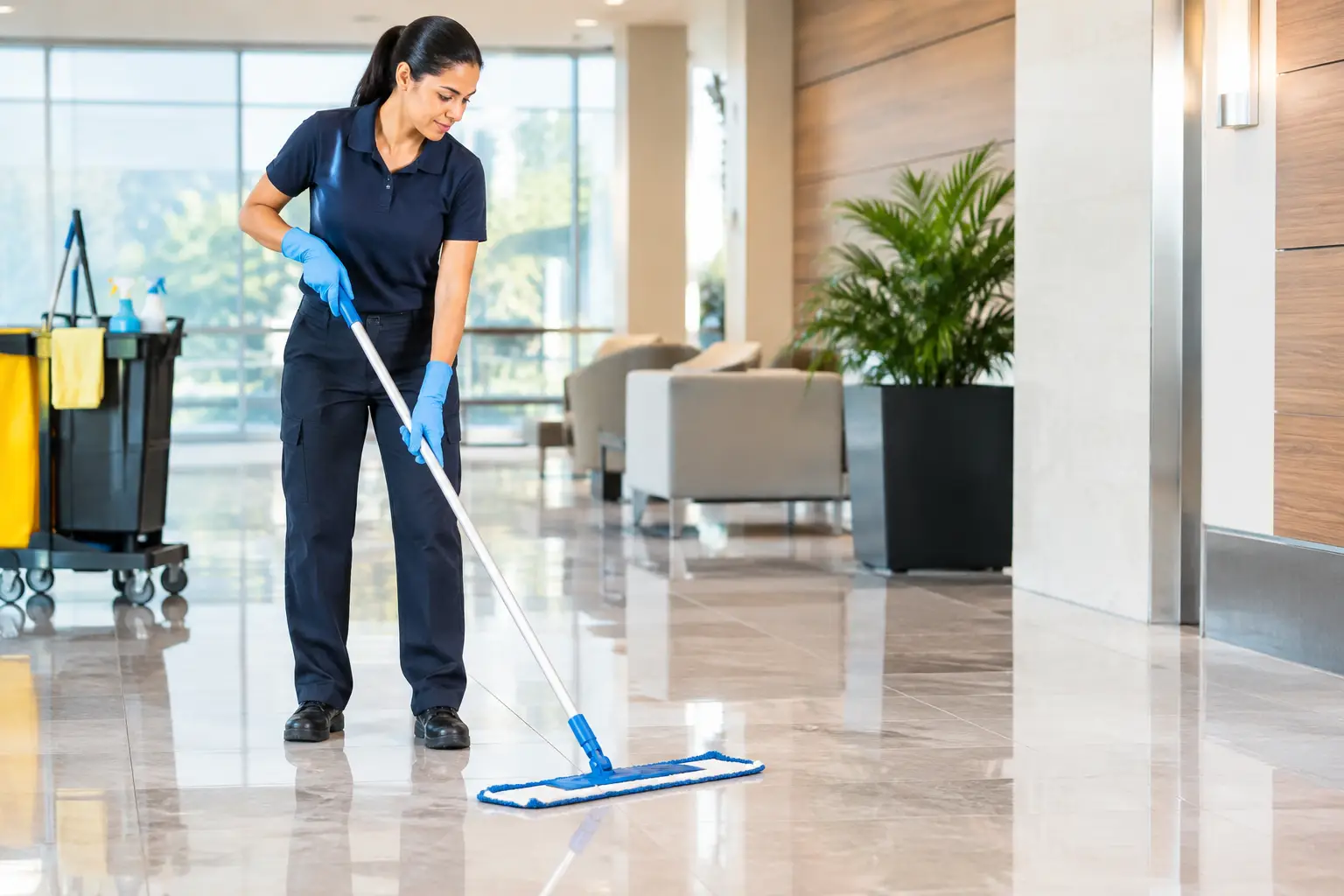
A dull lobby floor, sticky break room tile, or visibly tracked-in hallway changes how people read an entire property. Floor care is not a cosmetic extra for offices, HOAs, apartment communities, and facilities. It is a practical part of presenting a well-managed space, supporting daily traffic, and helping surfaces last longer between major replacement projects.
For property and facility decision-makers, the challenge is rarely deciding whether floors need attention. The challenge is determining what level of service each area needs, how often it should happen, and how to schedule the work without disrupting residents, staff, visitors, or tenants.
Floor Care Starts With the Space, Not a Checklist
A single cleaning routine rarely works across an entire property. An office entry may need frequent attention during wet weather, while a lightly used conference room may only need routine maintenance. A clubhouse can see concentrated weekend traffic, and a multifamily hallway may collect dust, pet hair, and debris every day.
The right plan considers the flooring material, foot traffic, soil type, layout, and expectations for the space. It also considers what happens after cleaning. A floor that looks good at 7 a.m. but becomes heavily soiled by noon may need better entryway maintenance, more frequent spot cleaning, or a schedule that matches peak use.
This is why customized service plans matter. They make it possible to place effort where it produces visible results instead of treating every room and corridor as if it has the same needs.
What Different Floor Surfaces Need
Floor materials respond differently to moisture, cleaning solutions, equipment, and abrasion. Using a one-size-fits-all approach can leave residue behind, reduce shine, or create wear that becomes more noticeable over time.
Hard-Surface Floors
Vinyl composition tile, luxury vinyl plank, ceramic tile, sealed concrete, and similar hard surfaces typically benefit from regular dust and debris removal followed by appropriate damp cleaning. Fine grit is especially damaging because it acts like sandpaper under shoes, chairs, carts, and rolling equipment.
High-traffic areas may need periodic deeper work to address embedded soil and buildup that routine mopping cannot remove. The timing depends on the surface, the finish, and how the area is used. A busy common-area entry may require more frequent attention than a back office, even if both have the same flooring.
Carpeted Areas
Carpet can hold dust, soil, and tracked-in debris below the visible surface. Routine vacuuming supports day-to-day appearance, but it does not replace periodic carpet cleaning. Hallways, office paths, and entry zones often show wear patterns first because they carry the most traffic.
The goal is not to over-clean carpet on a rigid calendar. It is to respond before traffic lanes become entrenched. Regular attention can help keep common areas, professional offices, and rental properties looking maintained between turnover or renovation work.
Natural Stone and Specialty Surfaces
Stone, polished concrete, wood, and specialty finishes require more careful planning. Products, moisture levels, and equipment should be chosen with the surface in mind. For these areas, property managers should share any available flooring specifications and communicate known concerns such as previous staining, worn finish, or problem areas near entrances.
When the material or finish is uncertain, starting cautiously is often the better operational choice. A cleaning plan can be adjusted after the surface has been assessed rather than making assumptions that may create unnecessary risk.
The Overlooked Role of Entryways
Many floor problems begin before visitors reach the lobby. Dirt, grit, moisture, and landscaping debris enter through exterior doors and spread quickly through a building. Entry mats and regular attention to the first few feet inside the door can reduce the amount of soil carried into hallways, elevators, offices, and community rooms.
For HOA and multifamily properties, this is especially relevant after rain, landscaping service, move-ins, or busy weekend use of shared amenities. For offices, it may be most noticeable during morning arrivals and after lunch.
A practical entryway routine may include debris removal, attention to mats, spot cleaning, and a quick review of corners and edges where soil gathers. These small steps often make the rest of the floor care program more effective because they address the source of the problem, not only the result.
Build a Schedule Around Traffic Patterns
Frequency should follow use, not just square footage. A compact lobby with constant activity can require more attention than a large meeting room used twice a month. Similarly, an apartment community may need regular service in shared corridors and elevators while reserving deeper work for clubhouses, leasing spaces, or community rooms after events.
A workable schedule often has three levels. Daily or regular maintenance addresses visible debris and routine soil. Periodic service handles areas that need more than a standard pass. Planned deep cleaning focuses on accumulated buildup, traffic lanes, and the refresh work that helps a property maintain a consistent appearance.
There is a trade-off in every schedule. Cleaning too infrequently allows soil to settle in and can make recovery more labor-intensive. Scheduling deep work too often can be unnecessary for lightly used areas. The most efficient approach is to review the space over time and adjust frequency based on what staff, residents, tenants, and visitors actually experience.
Coordinate Floor Work With Building Operations
Floor care is easier when it is treated as part of property operations rather than a task performed in isolation. Facility managers may need service timed around employee arrivals, events, tenant hours, deliveries, or building access. HOA managers may prefer common-area work scheduled outside peak resident use. Commercial properties may need separate routines for public-facing spaces and staff-only areas.
Clear communication helps avoid missed details. A cleaning team should know which areas are high priority, where equipment can be stored or accessed, whether furniture needs to be moved, and whether there are seasonal concerns such as rain, construction dust, or landscaping debris.
It also helps to identify spaces that require fast response when unexpected conditions arise. A spill near an entrance, a heavily used community room after an event, or a turnover deadline may require different timing than the normal schedule. Flexible planning does not mean every request can happen immediately, but it gives everyone a clear process for handling changes.
Signs Your Property Needs More Than Routine Mopping
Routine maintenance is essential, but it has limits. If floors continue to look cloudy shortly after cleaning, if grime collects along edges, or if traffic paths remain visibly darker than surrounding areas, the property may need a deeper floor cleaning approach.
Other signs include persistent odor around carpeted areas, residue that attracts new soil, scuff marks that do not lift with routine cleaning, and a noticeable difference between low-traffic and high-traffic sections. These conditions do not always mean the floor is permanently damaged. They do mean the current routine should be reviewed.
Property managers can make that review more productive by noting where the issue appears, when it becomes most visible, and whether it is connected to weather, events, move-ins, or a particular entrance. Specific observations lead to better adjustments than a general request to make the floor look cleaner.
Floor Care for Properties With Multiple Needs
A mixed-use property may have tile in the lobby, carpet in offices, resilient flooring in restrooms, and hard surfaces in a clubhouse or break room. Each zone serves a different purpose and needs a different level of care. Treating the building as a collection of use areas, rather than a single cleaning assignment, creates a more practical plan.
Call The Helper LLC works with commercial, HOA, and property management clients to develop cleaning plans around their spaces and operational schedules. For properties in San Diego County, that can include routine floor cleaning within recurring janitorial, office, common-area, or facility cleaning services, along with deeper carpet and floor cleaning when the property needs added attention.
The most useful floor care plan is one people notice without having to think about it. Residents enter a community room that feels ready for use. Employees begin the day in a maintained workplace. Visitors see clean, cared-for common areas instead of the evidence of yesterday’s traffic.


Comments are closed