



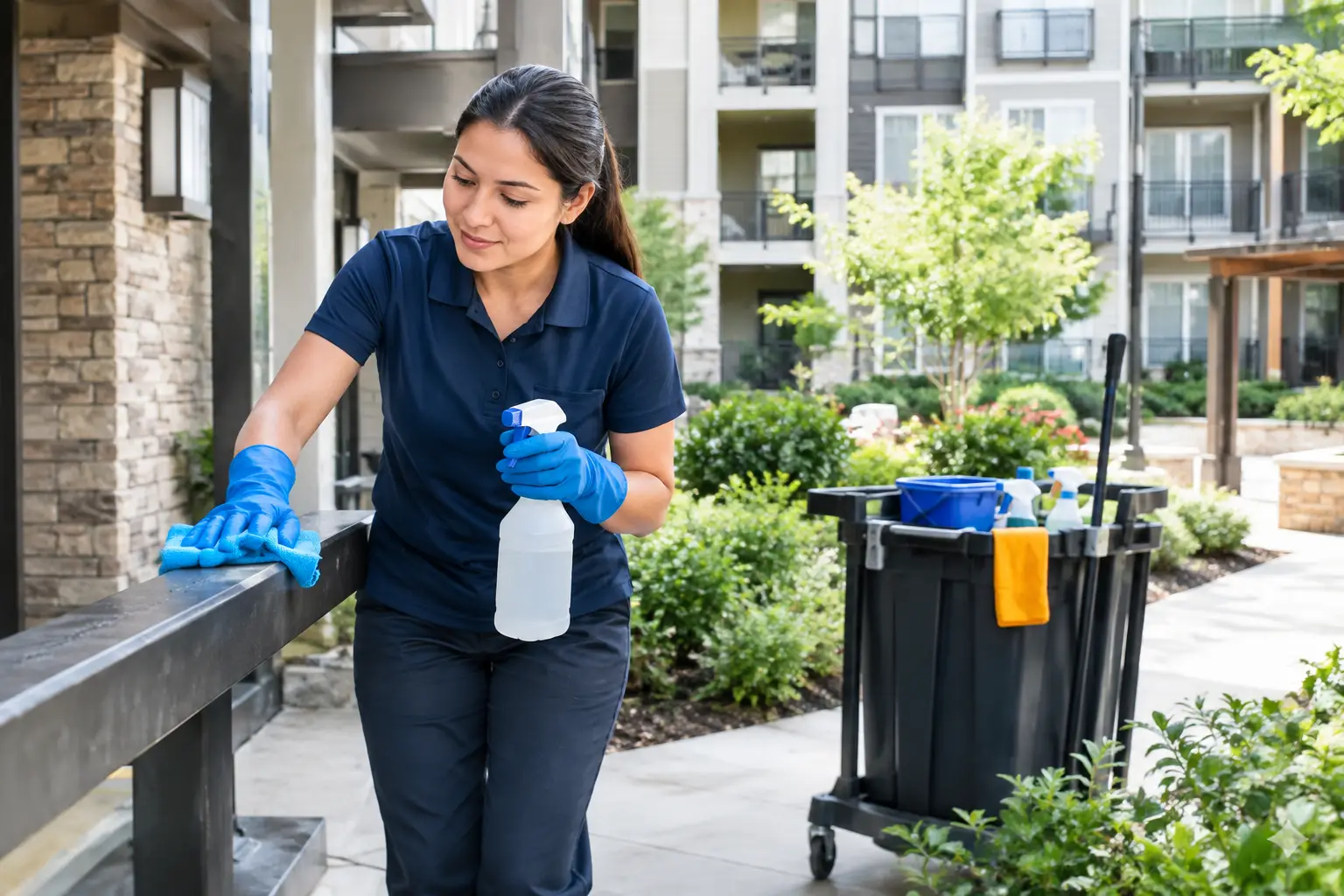
A resident walks through the lobby, a prospective buyer tours the clubhouse, and a board member notices the condition of the pool restroom. Those everyday moments shape how a community feels and how well it is managed. The question, what should HOA cleaners cover, is really a question about which spaces create the biggest impact, which tasks need consistent attention, and where a customized plan is more useful than a generic checklist.
For HOA managers and property management teams, the right scope should support clean, usable shared spaces without paying for unnecessary work. It should also be clear enough that everyone understands what happens at each visit, what requires periodic service, and what falls outside routine cleaning.
What Should HOA Cleaners Cover in Common Areas?
Common areas are usually the foundation of an HOA cleaning plan because they receive frequent traffic and are visible to every resident, guest, vendor, and prospective buyer. The goal is not simply to make a space look clean right after service. It is to maintain a consistently cared-for appearance between visits.
For building entrances, lobbies, hallways, elevators, stairwells, and mail areas, routine service often includes removing loose debris, vacuuming or mopping floors, wiping reachable surfaces, cleaning glass entry doors, and spot-cleaning walls or fingerprints where needed. Handrails, door handles, elevator buttons, and other high-touch points deserve regular attention, especially in busy communities.
The frequency depends on the property. A small, low-traffic building may only need common-area cleaning once a week. A larger condominium community, apartment-style property, or building with active shared amenities may need several visits per week. Traffic patterns matter more than a one-size-fits-all schedule.
Entryways and mail areas
Entryways collect dust, leaves, moisture, and debris before residents ever reach the interior of the property. Cleaners should address floors, doors, glass panels, mats, and visible touchpoints. Mail areas can also accumulate paper scraps, flyers, fingerprints, and dust around parcel lockers or counters.
These spaces benefit from detail work because they are often the first impression of the community. However, property managers should distinguish between cleaning and maintenance. A cleaner can remove surface dirt from walls or doors, but damaged paint, broken fixtures, and worn mats may require a separate maintenance response.
Hallways, stairwells, and elevators
Interior circulation areas should look orderly and feel safe to use. A practical scope can include vacuuming or mopping, wiping handrails, removing cobwebs from accessible corners, cleaning elevator interiors, and addressing visible smudges on doors and wall surfaces.
Carpeted hallways may need routine vacuuming plus periodic deeper carpet cleaning. Hard flooring may need sweeping and mopping during recurring visits, followed by scheduled floor care when buildup, dullness, or seasonal weather calls for more intensive work.
Clubhouses and Community Rooms Need Event-Ready Care
Clubhouses, meeting rooms, fitness rooms, leasing-style spaces, and community kitchens are not cleaned the same way as a hallway. They often need a combination of recurring upkeep and service timed around resident events, board meetings, rentals, or seasonal gatherings.
Routine clubhouse cleaning may include cleaning floors, emptying trash, wiping tables and counters, cleaning mirrors and glass, dusting accessible surfaces, and disinfecting high-touch areas. Restrooms should receive particular attention, including toilets, sinks, counters, mirrors, dispensers, and floors.
If the community room includes a kitchenette, the cleaning scope should be specific. For example, wiping exterior appliance surfaces and cleaning counters may be part of regular service, while interior oven cleaning, refrigerator cleanouts, or heavy grease removal may be scheduled separately. Clear expectations prevent last-minute surprises before an event.
Fitness rooms also need a thoughtful plan. Dust and debris can build up behind equipment, while mirrors, floor surfaces, and touchpoints show smudges quickly. Cleaning around equipment is different from moving or servicing it, so managers should identify access limitations and equipment areas in advance.
Restrooms, Pool Areas, and Other Shared Amenities
Restrooms can quickly affect resident perception of the entire property. A reliable HOA cleaning scope should cover cleaning and disinfecting fixtures, sinks, counters, mirrors, floors, and commonly touched surfaces. Emptying trash and checking visible cleanliness of dispensers are also common parts of recurring restroom care.
Outdoor amenities need their own approach. Pool decks, patio areas, barbecue zones, playground-adjacent seating, and outdoor furniture can collect leaves, dust, food debris, and spills. Service may include sweeping, trash removal, wiping tables, and spot-cleaning surfaces. Pressure washing or more intensive exterior cleaning may be useful periodically, but it is typically planned separately from routine janitorial visits.
Trash rooms and dumpster enclosures are another priority. Cleaners can remove loose litter, sweep reachable areas, and help maintain a more orderly appearance. Deep odor treatment, spill response, bin cleaning, and pressure washing may be added based on the condition of the area and the property’s needs.
Floor Care Should Be Written Into the Scope
Floors make up a large share of the visible surface area in an HOA property, yet they are often described too vaguely in cleaning agreements. “Clean floors” can mean very different things depending on whether the property has tile, vinyl, concrete, carpet, stone, or textured outdoor surfaces.
A useful scope identifies the routine method and the periodic method. Routine work may involve vacuuming, sweeping, mopping, or spot-cleaning. Periodic work may involve deeper carpet cleaning, machine scrubbing, detail cleaning around edges, or pressure washing exterior walkways.
Floor care also requires realistic expectations. A cleaner can improve the appearance of a maintained floor, but permanent stains, worn finish, cracked tile, or aged carpet may not be resolved by standard cleaning. When property managers document these conditions early, they can better separate cleaning needs from repair or replacement decisions.
Seasonal and As-Needed Tasks Matter Too
The best HOA cleaning plans leave room for conditions that do not happen every week. Windy weather can increase exterior debris. Rain can track dirt into entryways. Summer amenity use can raise the cleaning needs around pools, restrooms, and clubhouses. Event calendars can change the needs of a community room overnight.
Rather than adding every possible task to every visit, consider separating the plan into recurring services and as-needed services. This gives the property manager more control while allowing the cleaning team to respond to real conditions.
Examples of periodic or optional work can include post-event cleanup, interior window cleaning, deep cleaning of clubhouses, carpet cleaning, pressure washing, trash bin cleaning, and post-construction cleanup after approved property improvements. The right mix depends on the property layout, resident use, budget, and season.
A Clear HOA Cleaning Scope Prevents Missed Details
A strong cleaning scope does more than list rooms. It explains the expected result, frequency, and boundaries of the service. Property managers should identify which areas are included, how often each area is serviced, what supplies or access are required, and who should be contacted when the property needs additional attention.
It also helps to walk the property before finalizing the plan. A walkthrough can reveal overlooked spaces such as side entrances, storage-adjacent corridors, package areas, grill stations, stair landings, or outdoor seating. These are often the spots that residents notice when they are neglected.
Communication should be part of the working relationship. If a community has a special event, a temporary construction project, or a sudden increase in trash-room use, the cleaning plan may need an adjustment. A responsive provider can help property managers decide whether a one-time service, an added visit, or a revised recurring schedule makes the most sense.
For San Diego County communities, Call The Helper LLC can build HOA cleaning plans around the spaces residents use most, from common areas and clubhouses to shared facilities and community rooms. Start with the property’s daily reality, not a generic checklist, and the cleaning plan will be easier to manage and easier for residents to appreciate.


Comments are closed