



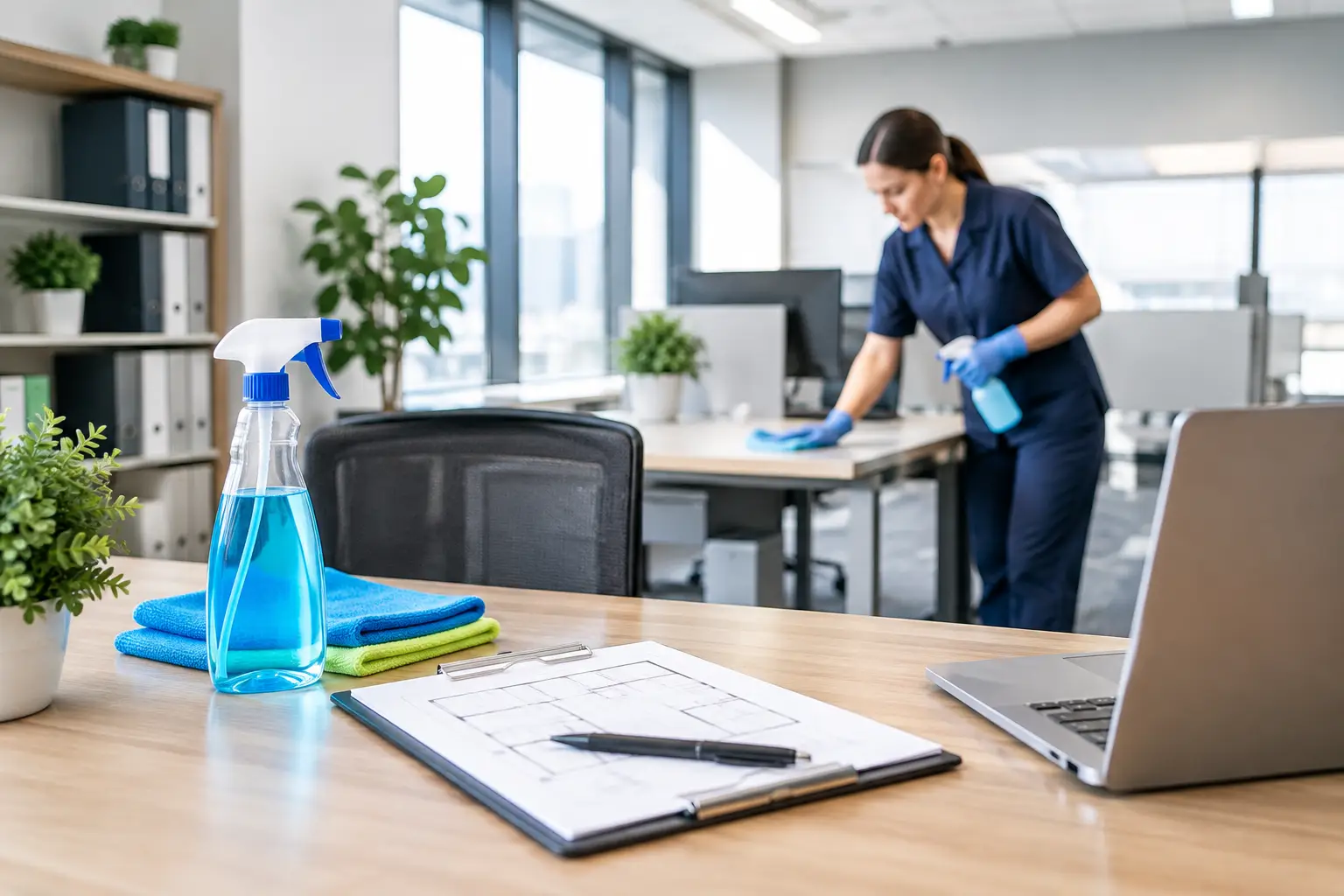
A sanitation plan often breaks down in the same place: the office looks clean at opening time, but high-touch areas, shared spaces, and supply levels are left to chance by midweek. Knowing how to plan office sanitation means building a repeatable operating routine, not simply adding more cleaning tasks. The right plan gives employees, visitors, property managers, and cleaning teams a clear picture of what needs attention, when it needs attention, and who owns the result.
For office managers and commercial property decision-makers, the goal is practical. Maintain a clean, orderly workplace without disrupting work, over-cleaning low-use areas, or discovering preventable issues after a client visit. A customized plan is usually more effective than a one-size-fits-all checklist because every office has a different layout, traffic pattern, and schedule.
Start With an Office Walkthrough
Before choosing products or setting frequencies, walk the office as people actually use it. Visit in the morning, during a busy work period, and near closing if possible. The goal is to identify where touch, traffic, waste, and visible mess build up.
Reception desks, door hardware, elevator buttons, conference rooms, break rooms, restrooms, copy areas, and shared workstations usually need closer attention than private offices with limited traffic. Also look beyond the obvious. A frequently used microwave handle, refrigerator door, water dispenser, printer keypad, or shared supply cabinet can become a missed detail when it is not assigned to a routine.
During the walkthrough, note the office’s access rules and working hours. A busy medical-adjacent office, traditional corporate suite, leasing office, or multi-tenant shared facility may all need different timing. Cleaning during business hours can be appropriate for restrooms and spills, while detailed work in conference rooms or open work areas may make more sense after staff leave. The best schedule balances appearance, access, and minimal interruption.
Define What Sanitation Means for Your Office
Cleaning, disinfecting, and sanitizing are often used as if they mean the same thing, but they are separate tasks. Cleaning removes visible soil, dust, debris, and residues from a surface. Sanitizing or disinfecting involves using an appropriate product according to its label directions and contact time. When surfaces are visibly dirty, cleaning first is generally necessary for the follow-up product to be used as intended.
Your plan should state which level of care applies to each area. For example, daily cleaning may be enough for low-use shelving and decorative ledges, while restroom fixtures, break-room counters, and shared touchpoints may call for more frequent attention. Do not assume every surface needs the same treatment. Overuse of products can create residue, affect certain finishes, and increase supply costs without improving the office experience.
Product selection should match the surface and the task. Keep manufacturer instructions available for flooring, counters, equipment, and furniture finishes, especially in newer offices with specialty materials. A reliable plan also identifies where products are stored, who replenishes them, and how staff should report a missing or damaged dispenser.
Create Cleaning Zones and Priorities
Dividing the workplace into zones turns an unclear responsibility into a manageable system. Rather than writing “clean office,” identify spaces with similar needs and establish the expected standard for each one.
A useful office sanitation plan commonly includes these zones:
- Entry and reception: Glass, entry handles, reception counters, seating, floors, and visible waste. These areas shape the first impression for clients and visitors.
- Work areas and conference rooms: Shared desks, tables, chairs, whiteboards, touchpoints, trash, and floor care based on room use and booking volume.
- Break rooms: Countertops, sinks, appliance exteriors, tables, cabinet pulls, waste, and floors. This is often one of the highest-traffic spaces in an office.
- Restrooms: Fixtures, partitions, dispensers, mirrors, waste receptacles, floors, and supply levels. Restrooms require frequent checks as well as scheduled full service.
- Support spaces: Copy rooms, storage areas, mailrooms, server-adjacent spaces, and supply closets. They may not be visitor-facing, but disorder here can affect daily operations.
For each zone, distinguish between routine cleaning, high-touch attention, periodic detailed work, and event-based tasks. Event-based tasks cover issues such as spills, an unusually busy meeting day, a move-in, construction dust, or a weekend function. This distinction prevents the team from trying to force every need into a daily checklist.
Set Frequencies Based on Use, Not Assumptions
Frequency should follow traffic and use patterns. A restroom used by a small staff may need a different service cadence than one used by multiple suites or visiting clients. A conference room booked all day needs more attention than one used twice a week. The same is true for break rooms, lobbies, and shared desks.
Begin by assigning daily, weekly, monthly, and as-needed tasks. Daily tasks usually focus on appearance, waste, floors, restrooms, and heavily used touchpoints. Weekly tasks can include more detailed dusting, spot treatment, interior glass, and attention to overlooked edges. Monthly or periodic work may include detailed floor care, vents, baseboards, upholstery, high dusting, and deeper attention to storage or low-traffic areas.
Then leave room for adjustment. If trash bins remain half-empty at the end of each day, collection frequency may be more than necessary in some areas. If the break room looks worn by midafternoon, a daytime reset may be worth adding. Good sanitation planning is responsive. It uses observation to improve the routine rather than treating the original schedule as permanent.
Build a Clear Supply and Equipment System
A plan is only as dependable as the supplies behind it. Running out of hand soap, paper products, liners, or cleaning solution creates an immediate service issue, even if the schedule is well designed. Set minimum inventory levels for essential consumables and decide who checks them.
Store supplies in a designated, organized area with products clearly labeled and separated from office materials. Use the right tools for the right surfaces, and avoid moving the same cloths or tools indiscriminately between restrooms, break rooms, and general office areas. Color-coding systems can help teams maintain consistency when they are practical for the site.
Equipment needs should reflect the office layout. Carpeted suites, hard-surface corridors, glass-heavy entryways, and large common areas all create different requirements. A facility with multiple floors or buildings may benefit from supply stations so staff are not losing time walking back and forth for basic materials.
Assign Ownership and Document the Routine
Office sanitation fails when everyone assumes someone else handled it. Assign ownership for regular cleaning, supply checks, spot issues, and quality reviews. If an outside cleaning provider handles recurring janitorial work, clarify what is included in the service scope and what should be reported by office staff during the day.
A checklist is useful when it supports accountability, not when it becomes paperwork no one reads. Keep it specific enough to be meaningful. “Restroom serviced” is less helpful than confirming fixtures, floors, mirrors, dispensers, waste, and supplies were addressed. For multi-tenant buildings, HOA facilities, or offices with rotating teams, a site-specific checklist helps preserve consistency across shifts and locations.
Create a simple process for reporting issues that fall outside the routine. This might include an email address, work-order platform, front-desk log, or designated contact person. The key is that employees know where to send requests and managers can see whether recurring problems point to a scheduling or supply gap.
Review the Plan After the First Month
The first version of an office sanitation plan should be treated as a working document. After several weeks, review what is happening in the space instead of relying on assumptions made during the initial walkthrough. Look for recurring complaints, overflowing waste, missed touchpoints, supply shortages, floor conditions, and areas that consistently need extra attention.
Ask a few practical questions: Are high-traffic spaces staying presentable between services? Are cleaning tasks interrupting employees? Are there tasks that can move to a different time or frequency? Has the office changed its schedule, staffing level, or use of shared spaces? Even small changes can affect sanitation needs.
For offices, property-managed facilities, and shared commercial spaces in San Diego County, Call The Helper LLC can help translate those observations into a cleaning plan tailored to the building’s layout, occupancy, and service schedule. The most useful plan is not the longest checklist. It is the one people can follow consistently, inspect clearly, and adjust when the workplace changes.


Comments are closed