



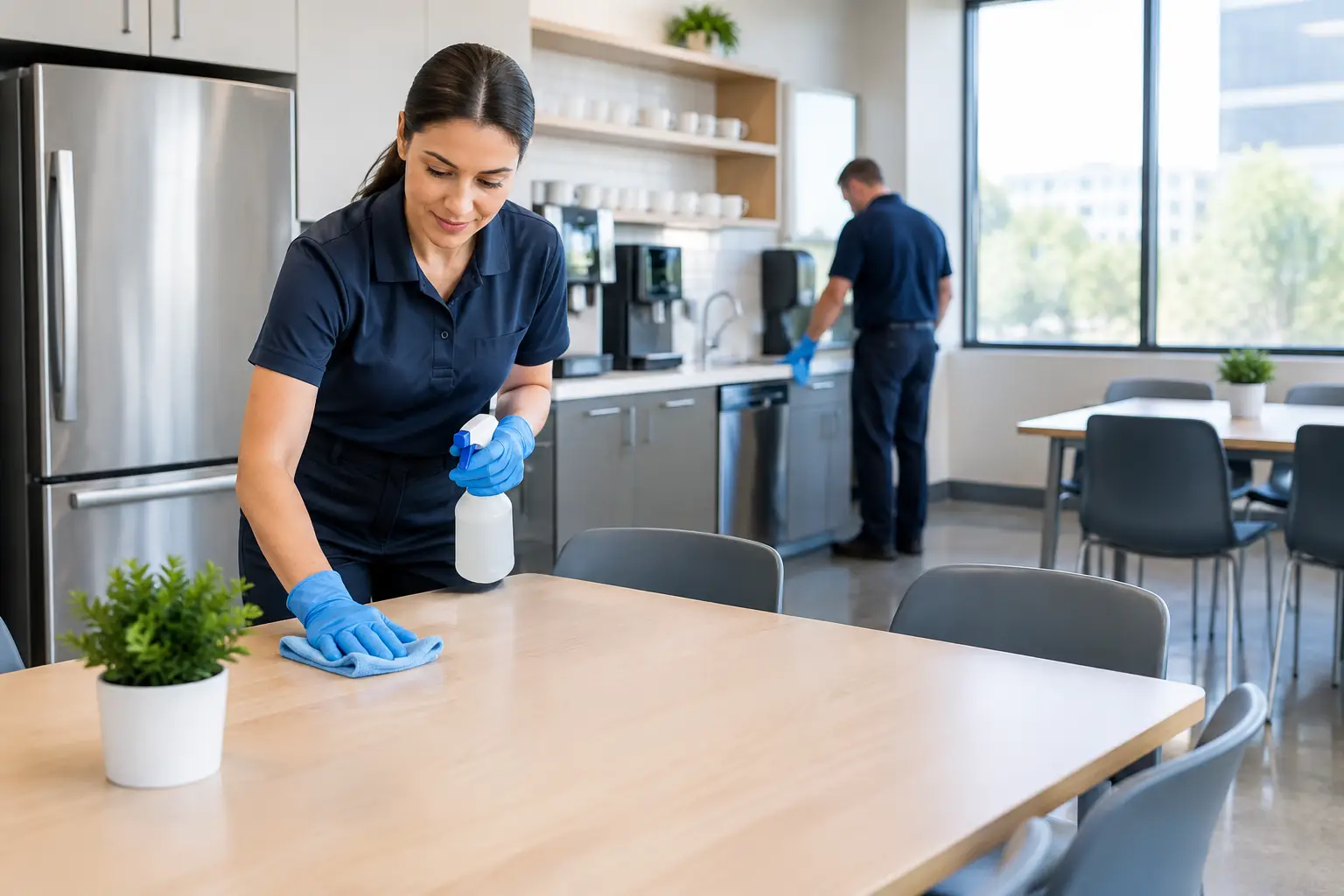
The office breakroom can look fine at 9 a.m. and feel neglected by lunchtime. Coffee drips harden around the machine, crumbs collect near the microwave, and one overlooked spill can turn a shared space into a source of complaints. Knowing how to clean office breakrooms means building a practical routine that keeps the room usable throughout the day, not just making it look presentable after hours.
For office managers, facility teams, and property managers, the goal is simple: a clean, comfortable breakroom that supports employees without disrupting their workday. That requires attention to high-touch surfaces, food-contact areas, odors, waste, and the small details people notice immediately.
Start With a Breakroom Cleaning Plan
A breakroom needs a different cleaning approach than a conference room or private office. Food, drinks, shared appliances, and frequent hand contact create more mess in a smaller area. The right schedule depends on employee count, how often the room is used, whether food is prepared onsite, and the number of shifts in the building.
A lightly used breakroom may need a detailed service once per day with quick spot checks. A busy workplace with multiple shifts may need trash removal, counter wiping, and table cleaning more than once daily. High-traffic properties also benefit from an assigned person or cleaning team that can respond to spills before they spread, stain, or create unpleasant odors.
Before cleaning begins, walk the room in a consistent order. Check tables and chairs, counters, sinks, appliances, cabinets, trash and recycling bins, floors, and touchpoints such as refrigerator handles and vending-machine buttons. This prevents the common problem of cleaning the obvious surfaces while missing the areas employees use most.
How to Clean Office Breakrooms Step by Step
Start with the least soiled areas and work toward messier tasks. This keeps crumbs, grease, and food residue from moving onto freshly cleaned surfaces. Remove trash first so there is room to clean the rest of the space without working around overflowing liners.
Clear Waste and Recyclables
Empty trash, recycling, and compost bins before wiping counters or cleaning floors. Replace liners as needed, and wipe the inside rim and exterior of each bin. A clean liner does not solve the problem if old residue or spilled liquid remains on the container itself.
Pay close attention to bins near coffee stations, sinks, and microwaves. These are frequent sources of odors. If a bin has leaked, clean the surrounding floor and baseboards as well. Leaving moisture under or behind the bin can create lingering smells and make the area look poorly maintained.
Clean Tables, Counters, and Shared Surfaces
Remove loose crumbs and debris before applying cleaner. Wipe tables, counters, chair arms, cabinet pulls, refrigerator handles, microwave buttons, faucet handles, and other commonly touched areas with products appropriate for the material and workplace use.
The breakroom counter often needs more than a fast pass with a cloth. Look for dried coffee, sticky drink rings, sugar packets, food splatter, and residue around small appliances. Allow the cleaner enough contact time according to its label, then wipe with a clean microfiber cloth. Reusing a dirty cloth can leave streaks and transfer food residue to another surface.
If the breakroom has stone, stainless steel, laminate, or specialty countertops, use a product suited to that surface. Strong degreasers may be useful around microwaves and cooking areas, but they can dull or damage certain finishes. When in doubt, test a small, inconspicuous spot or follow the manufacturer’s care guidance.
Address the Sink and Coffee Station
The sink area deserves focused attention because it combines moisture, food particles, and shared use. Remove visible debris from the drain area, clean the basin and faucet, and wipe backsplash surfaces where water and coffee frequently splash. Drying the faucet and sink edge after cleaning helps reduce water spots and leaves a more polished appearance.
At the coffee station, wipe the machine exterior, drip tray, surrounding counter, and wall area behind the equipment if accessible. Do not overlook the cabinet handles, sugar containers, and areas beneath the machine. Coffee residue becomes sticky quickly and can attract more dirt over time.
For appliances with internal cleaning requirements, such as coffee machines or water dispensers, follow the manufacturer’s directions and the office’s maintenance plan. Daily exterior cleaning and periodic equipment maintenance are separate tasks, and both matter.
Clean the Microwave and Refrigerator Carefully
Microwaves need frequent attention because splatters bake onto interior surfaces. Remove crumbs, wipe the door, handle, buttons, turntable, and interior walls, then dry the surfaces so no cleaner residue remains. For heavy buildup, allow a suitable cleaner to sit briefly before wiping rather than scrubbing aggressively.
Refrigerator cleaning requires coordination. Daily service can include wiping handles, exterior doors, and visible spills. A deeper interior clean usually works best on a scheduled basis, with employees given notice to remove expired or unwanted food. This avoids accidentally discarding personal items while still preventing forgotten containers from becoming an odor issue.
Finish With Floors and Final Details
Sweep or vacuum the floor after cleaning counters and appliances so fallen crumbs are captured at the end. Then mop hard floors with the appropriate solution, paying attention to corners, chair legs, and the areas beneath tables. Place wet-floor signage when needed and allow enough drying time before the breakroom becomes busy again.
For carpeted breakroom areas, vacuum thoroughly and spot-clean spills promptly. Food and beverage stains are easier to address when they are fresh. Periodic carpet cleaning may be appropriate in breakrooms with heavy traffic, but the frequency depends on the flooring type, use level, and visible condition.
Before leaving the room, do a final visual check. Straighten chairs, align supplies that belong in the space, remove cleaning materials, and make sure dispensers or paper products are addressed according to the client’s agreed scope. The difference between “cleaned” and “ready for employees” often comes down to these final details.
Set the Right Cleaning Frequency
Daily cleaning should typically cover trash, tables, counters, sinks, appliance exteriors, high-touch points, and floors. In larger offices, a midday touch-up can help prevent overflowing bins and sticky surfaces during peak use.
Weekly work can go further by cleaning cabinet fronts, baseboards, the exterior of larger appliances, chair legs, and hard-to-reach floor edges. A monthly or quarterly deep-cleaning plan may include refrigerator interiors, detailed microwave cleaning, wall spot cleaning, vents, and floor care beyond routine mopping or vacuuming.
The best frequency is not always the most frequent one. An office with a small team and limited breakroom use may not need multiple daily visits. A medical-adjacent office, call center, manufacturing facility, or multi-tenant commercial property may need a more structured schedule because the room stays active for longer periods. A customized plan should reflect actual use rather than a generic checklist.
Prevent Breakroom Problems Between Cleanings
Cleaning works better when the space is set up to stay manageable. Place trash and recycling bins where people naturally finish food or drinks, and make sure liners fit properly. Provide clear, simple reminders for employees to label refrigerator items, wipe spills, and avoid leaving dishes in the sink.
It also helps to establish responsibility for items outside the janitorial scope. For example, a cleaning team may wipe the refrigerator exterior daily, while an office administrator coordinates periodic food removal. Clear boundaries reduce confusion and prevent the breakroom from becoming a storage area for old containers, personal appliances, or unclaimed dishes.
Supply placement matters, too. Paper towels, hand soap, and basic cleanup materials should be easy to find without cluttering counters. When people can handle a small spill immediately, it is less likely to become a larger cleaning issue by the end of the day.
When Professional Breakroom Cleaning Makes Sense
Recurring office cleaning can take the pressure off internal teams, especially when breakrooms serve many employees or multiple shifts. A professional cleaning plan can be scheduled around office hours and tailored to the appliances, flooring, traffic level, and priorities of the property.
For San Diego County offices, Call The Helper LLC can help build commercial cleaning routines around the spaces employees use every day, including breakrooms, restrooms, offices, and common areas. Clear communication about service timing and scope helps keep daily operations moving while the workspace stays presentable.
A clean breakroom does more than remove crumbs and take out trash. It gives employees a place to reset, shows visitors that shared spaces are cared for, and prevents minor messes from becoming recurring maintenance problems.


Comments are closed