



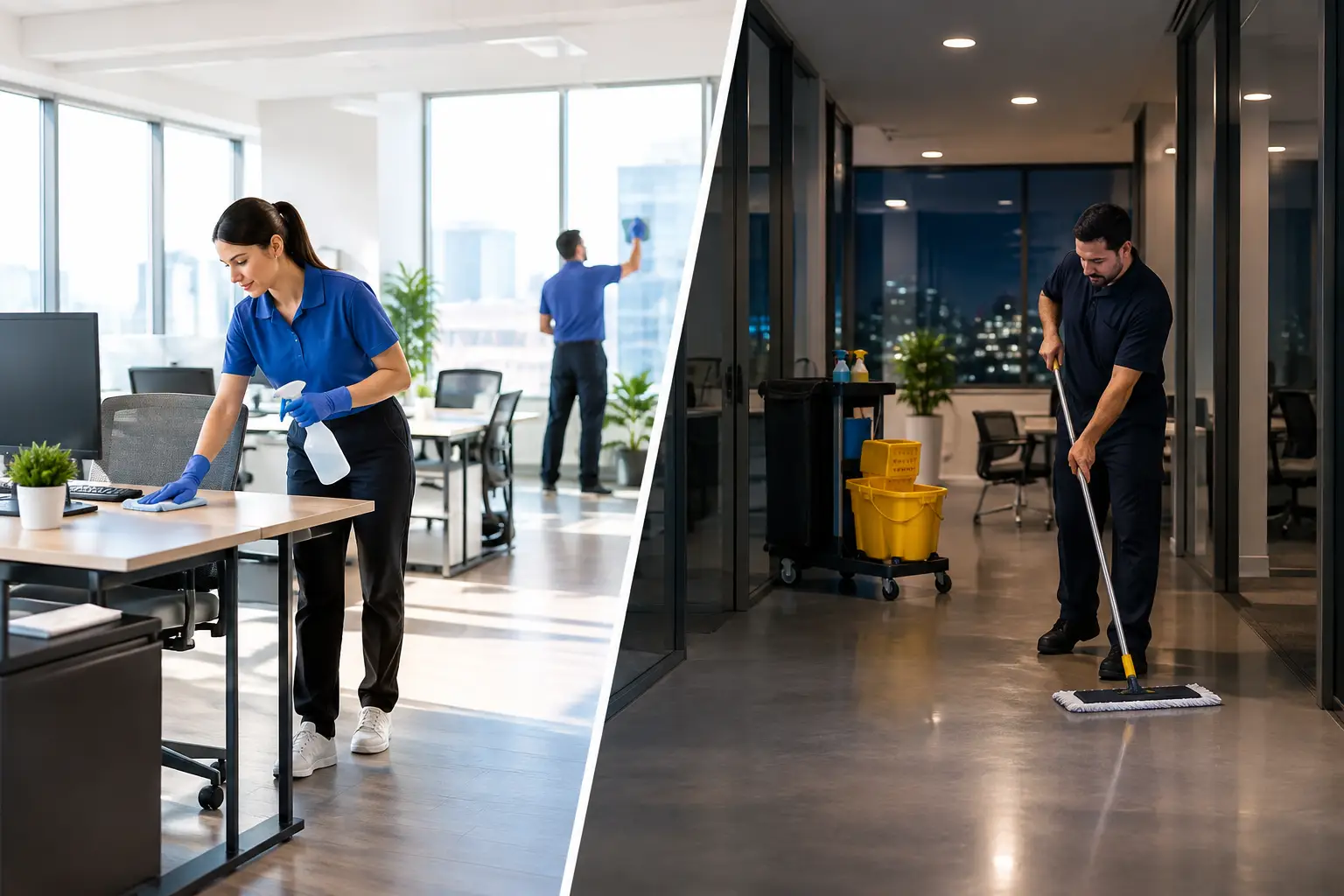
A cleaning schedule can affect far more than when floors are mopped and trash is removed. For a property manager, office manager, or HOA board, the decision between night cleaning versus daytime cleaning shapes tenant experience, building access, security procedures, staff coordination, and how visible cleaning activity is to the people using the space.
Neither option is automatically better. The right choice depends on how your property operates, when it is busiest, and which tasks need uninterrupted access. A thoughtful plan can also combine daytime attention for high-touch areas with after-hours work for detailed cleaning.
Night Cleaning Versus Daytime Cleaning: The Core Difference
Night cleaning is generally performed after employees, residents, visitors, or customers have left for the day. It is a familiar choice for offices, professional buildings, shared workspaces, and facilities where cleaning equipment or floor care could interrupt normal operations.
Daytime cleaning takes place while the property is active. This may mean a cleaner is present during business hours to refresh restrooms, remove spills, empty overflowing trash, clean entry glass, and respond to issues as they arise. For HOA communities and high-traffic commercial properties, daytime service can help common areas stay presentable between more thorough scheduled cleanings.
The question is not simply whether people will see the cleaning team. It is whether the schedule supports a clean, usable, and professionally maintained property without creating unnecessary disruption.
When Night Cleaning Makes Sense
After-hours cleaning works especially well when a team needs clear access to workstations, conference rooms, corridors, restrooms, or shared facilities. With fewer people in the building, cleaners can move through the space more efficiently and address tasks that are difficult to complete around daily activity.
For offices, this may include vacuuming open work areas, cleaning break rooms, disinfecting shared touchpoints, servicing restrooms, and removing trash without navigating meetings or foot traffic. Commercial facilities may also prefer nighttime scheduling for floor cleaning, pressure washing in appropriate areas, or detailed common-area work that requires space to dry before the next business day.
Night cleaning can create a strong first impression each morning. Employees and visitors arrive to emptied trash bins, refreshed restrooms, clean floors, and orderly shared areas. That reset is valuable for properties where the busiest period starts early and the appearance of the building reflects directly on management.
There are practical requirements, however. Access instructions need to be clear, including entry points, alarm procedures when applicable, elevator access, restricted rooms, and points of contact for unexpected issues. Managers should also consider whether the building has overnight security personnel, residents nearby, or noise limitations that affect equipment use. Reliable communication matters most when the property is largely unoccupied.
Where Daytime Cleaning Has an Advantage
Daytime cleaning is often the practical choice for spaces that need attention throughout the day, not just a reset after closing. A busy lobby can collect fingerprints, tracked-in debris, and litter within hours. Community restrooms may need checking more than once per day. A spill in a hallway, elevator, or clubhouse entrance should not wait until evening.
For HOAs, apartment communities, medical-adjacent professional offices, retail-facing commercial spaces, and buildings with frequent visitors, a daytime cleaning presence can protect the appearance of the property as activity happens. The work is visible, but that visibility can be reassuring when it is handled professionally and with consideration for residents, tenants, and guests.
Daytime cleaning also supports responsiveness. A property manager can point out a concern in real time, such as an event room that needs a refresh, a trash area that requires extra attention, or a wet floor near an entrance. This can be useful for shared facilities where needs shift based on weather, move-outs, vendor activity, or community events.
The trade-off is that daytime cleaners work around people. Tasks may need to be sequenced carefully to avoid interrupting meetings, blocking walkways, or cleaning a restroom during peak use. Some detailed tasks, including extensive floor care or deep cleaning, may still be better scheduled after hours.
Consider the Property, Not Just the Clock
A cleaning schedule should follow the real rhythm of the building. Start by looking at when people arrive, when traffic peaks, which areas become dirty fastest, and when rooms are available for service.
An office with most employees leaving by 6 p.m. may benefit from nightly janitorial service. A small professional office with limited evening access might prefer an early-morning or daytime schedule. A clubhouse that hosts evening meetings may need cleaning after events, while a multifamily community may need daytime common-area checks because entrances and package areas stay active all day.
For a multi-location business or property management portfolio, one standard schedule may not fit every site. A customized cleaning plan can assign different service windows based on each property’s occupancy, layout, and cleaning priorities. This is often more effective than choosing day or night service across every location simply for consistency.
High-Traffic Areas Need Different Thinking
Lobbies, restrooms, elevators, entrances, mailrooms, break rooms, and community rooms deserve separate consideration. These spaces usually create the strongest impression of a property, and they can need attention at different times from private offices or low-use rooms.
For example, an office may be thoroughly cleaned after hours while its lobby and restrooms receive a short daytime touch-up. An HOA clubhouse may receive detailed cleaning after a reservation, along with scheduled daytime checks of entryways and shared restrooms. This blended approach helps management direct cleaning time where it has the most visible impact.
Events, Tenants, and Seasonal Changes Matter
The best schedule can change. A property preparing for a board meeting, leasing event, open house, inspection, or tenant move-in may need a one-time daytime service or additional attention outside the normal plan. Rainy periods can increase the need for entryway cleaning, while seasonal events can place more demand on community facilities.
A responsive cleaning provider should be able to discuss these operational changes and help identify a workable service window. The goal is not to make the property adjust to the cleaning schedule. The schedule should support the property.
Cost and Efficiency Considerations
Cleaning costs should be evaluated based on scope, frequency, access, staffing needs, and the type of work required, rather than assuming one time of day will always cost less. A daytime team may have easier access to an on-site contact and may resolve issues quickly. After-hours work may allow more efficient completion of tasks because rooms and walkways are clear.
The most effective plan is the one that prevents avoidable service gaps. If daytime traffic regularly leaves restrooms, entrances, or trash areas looking neglected before evening service begins, a strictly nighttime schedule may not meet the property’s needs. Conversely, if daytime cleaning repeatedly requires staff to pause for meetings and tenant activity, after-hours service may provide better value for the work being performed.
Clear scopes are helpful here. Define which areas need daily service, which can be handled weekly, and which require periodic deep cleaning or floor care. This gives property managers a clearer basis for comparing schedules and adjusting service as occupancy or building use changes.
A Practical Way to Choose Your Schedule
Before setting a cleaning time, walk the property during its busiest and quietest hours. Notice the areas that lose their appearance first, identify spaces that must remain open during the day, and ask tenants or on-site staff where cleaning interruptions would be most noticeable.
Then consider the service itself. Routine restroom checks, lobby touch-ups, and spill response often fit naturally into daytime work. Vacuuming large office areas, detailed break room cleaning, trash removal throughout occupied suites, and floor care may be more practical after business hours. Some properties need one approach. Many need both.
For San Diego County offices, managed communities, and commercial properties, Call The Helper LLC can help build a cleaning plan around the actual use of the space, whether that means daytime support, evening janitorial service, or a combination of the two. The most useful schedule is the one that lets your property look cared for when it matters most, while giving occupants room to do what they came to do.


Comments are closed