



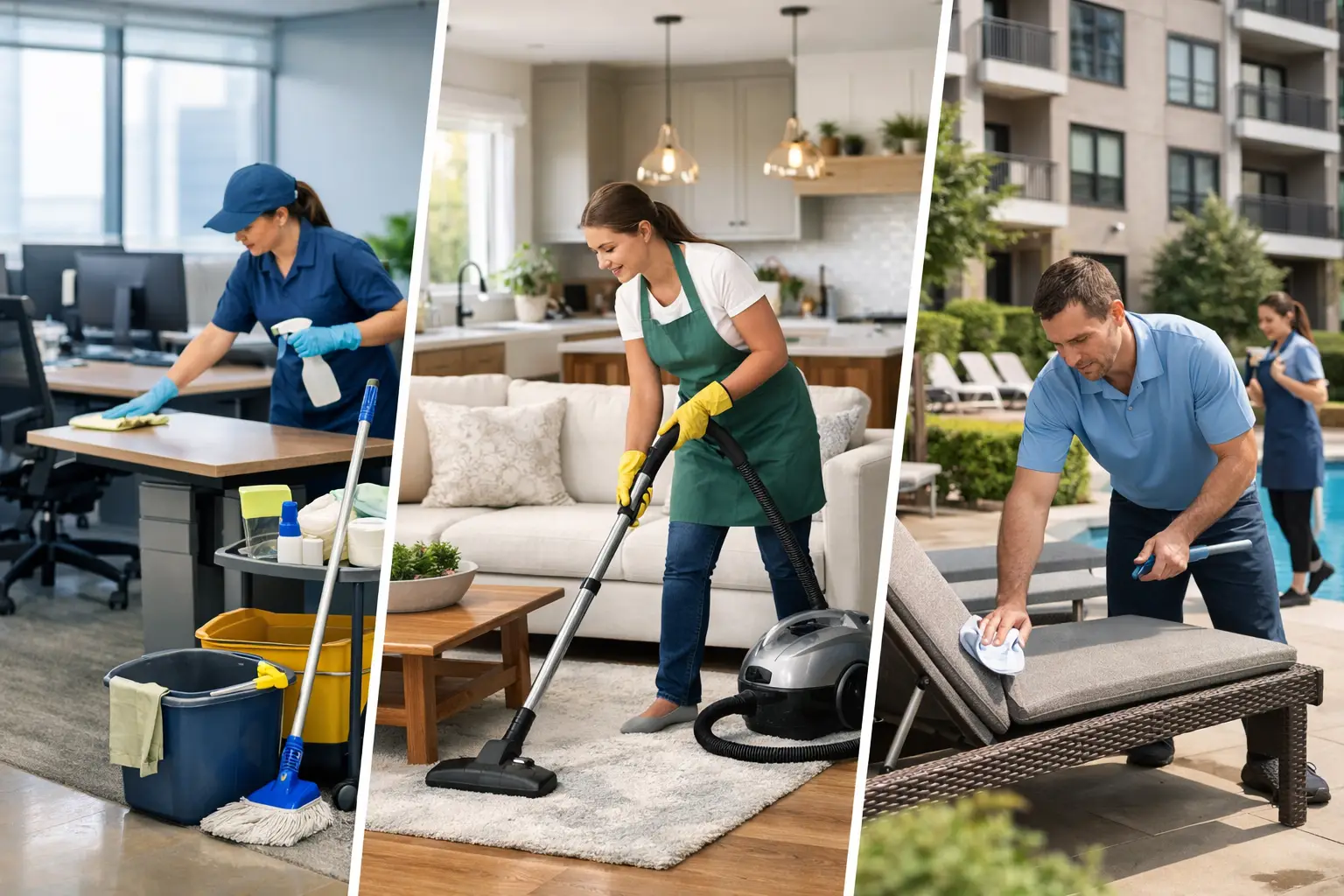
A lobby can look tidy at 8 a.m. and still tell residents, tenants, employees, or guests that the property is being overlooked. Dust along baseboards, fingerprints on entry doors, dull floors, grime around restroom fixtures, and buildup in break rooms tend to stand out over time. Deep cleaning addresses the details that regular service may not reach during a routine visit.
For offices, HOA communities, apartment properties, and homes, this work is about more than a fresh appearance. It helps reset high-use spaces, supports a more welcoming environment, and makes ongoing cleaning easier to maintain. The right scope depends on the property, the level of traffic, the surfaces involved, and whether the space needs a one-time reset or support alongside a recurring cleaning plan.
What Deep Cleaning Changes
Routine cleaning focuses on keeping a space presentable from day to day. It typically covers the tasks that need consistent attention, such as removing trash, cleaning restrooms, wiping frequently touched surfaces, vacuuming, mopping, and straightening shared areas.
Deep cleaning goes further into the accumulated details. It targets the dust, residue, scuffs, and grime that develop in corners, behind furniture, along edges, on doors and trim, and in other places that do not always fit into a standard service window. The goal is to improve the overall condition of the space, not simply make it look acceptable for the next few hours.
That distinction matters for property managers. A routine janitorial schedule can keep a clubhouse or office functioning well, but a periodic detailed service can restore the areas residents and visitors notice most. In a home, it can help prepare for guests, a change in season, or the start of recurring service. For a move-in or move-out, it can give the next occupant a cleaner starting point.
When a Property Needs a Deeper Reset
There is no single calendar rule for every building. A small office with limited foot traffic will have different needs than a busy community room, medical-style waiting area, leasing office, or multi-tenant common space. Still, certain signs indicate that a deeper service should be considered.
If floors remain dull after normal mopping, restroom details look worn despite regular care, or dust returns quickly around vents, ledges, and baseboards, routine cleaning may no longer be enough by itself. The same is true when kitchens and break rooms develop sticky cabinet fronts, appliance residue, or buildup around handles and edges.
Property transitions are another common trigger. Before a resident move-in, after construction or repair work, following a large gathering in a clubhouse, or when taking over a new office suite, deep cleaning helps establish a more polished baseline. It can also be useful before inspections, tours, owner visits, leasing events, or seasonal changes in occupancy.
High-traffic areas need closer attention
Entryways, elevators, hallways, restrooms, break rooms, conference rooms, and shared lounges collect the most visible wear. These areas are also where people form quick impressions of how a property is managed.
A detailed cleaning plan may include close attention to doors, glass, wall marks, corners, floor edges, fixtures, cabinets, and other surfaces affected by frequent use. The exact tasks should be confirmed in advance, especially for specialty flooring, delicate finishes, large facilities, or spaces with restricted access.
Deep Cleaning for Offices, HOAs, and Multifamily Properties
Commercial and community properties benefit most when the work is organized around how people actually use the space. A generic checklist can miss what matters at a particular site. For example, an office may need extra attention in its reception area, kitchens, conference rooms, and restrooms, while an HOA clubhouse may require detailed work in gathering spaces, fitness-adjacent areas, entry points, and shared kitchens.
For apartment and multifamily communities, common-area cleaning often has a direct effect on resident satisfaction and leasing presentation. Dusty stair rails, marked walls, neglected mail areas, and grimy common restrooms can make an otherwise well-managed property feel less cared for. A deep clean can help refresh these spaces between ongoing service visits or before a major property event.
The practical value is visibility. When floors are properly addressed, restroom fixtures are detailed, and high-contact surfaces are cleaned beyond a quick wipe-down, the property feels more intentional. That supports the work property managers and facility teams are already doing to keep operations moving.
One-time service or recurring support?
A one-time deep clean makes sense when a space has been neglected, recently renovated, newly occupied, or affected by an unusually busy period. It is also a practical starting point before beginning recurring office, HOA, or common-area cleaning.
For many properties, however, the best approach is a combination. Start with a detailed reset, then maintain the improvement with a schedule built around the building’s traffic and priorities. The frequency may be weekly, several times per week, or tailored around specific service days and areas. It depends on occupancy, operating hours, budget, and how quickly visible buildup returns.
What to Clarify Before Scheduling Deep Cleaning
A useful cleaning plan begins with a clear scope. Before scheduling, identify the rooms or common areas involved, the surfaces that need special attention, and the condition of the property. This helps prevent assumptions about what is included and gives the cleaning team a better picture of the time and equipment required.
For commercial sites, access and timing deserve equal attention. Cleaning may need to happen before opening, after hours, between events, or during quieter periods to avoid disrupting tenants, residents, staff, or visitors. Building access procedures, parking instructions, elevator use, alarm protocols, and areas that must remain open should be discussed ahead of time.
It is also helpful to separate general cleaning from specialty needs. Carpet and floor cleaning, pressure washing, post-construction cleanup, and trash bin cleaning may require different methods, scheduling, or site preparation. Asking about these needs early keeps the project organized and allows the scope to match the property rather than forcing the property into a standard package.
How to Get Better Results From a Professional Cleaning Visit
The strongest results come from clear priorities. If the leasing office must be visitor-ready first, if a conference room has an important meeting, or if the clubhouse is being prepared for an event, communicate that up front. A professional cleaning team can sequence the work around the areas that matter most that day.
For occupied offices and homes, remove confidential paperwork, fragile personal items, and clutter that prevents access to surfaces. This does not mean the space must be spotless before cleaners arrive. It simply makes it easier to focus the appointment on actual cleaning rather than sorting belongings or working around avoidable obstacles.
After a deep clean, protect the reset with simple habits. Address spills promptly, keep entry mats in place, empty shared trash before it overflows, and use recurring service to stay ahead of buildup. In high-traffic properties, a few focused touch-ups between detailed visits can make a noticeable difference.
A Cleaner Baseline Makes Property Care Easier
Deep cleaning is not a substitute for consistent maintenance, and recurring cleaning is not always enough to correct months of buildup. Each service has a different role. Together, they can help offices feel more professional, HOA facilities feel more welcoming, apartment common areas stay presentation-ready, and homes feel easier to enjoy.
For San Diego County property managers, business owners, and residents, the most useful plan is one built around the space you have, the traffic you manage, and the results people can see. Call The Helper LLC can help define a cleaning scope that gives your property the detailed reset it needs and a practical path to keeping it that way.


Comments are closed