



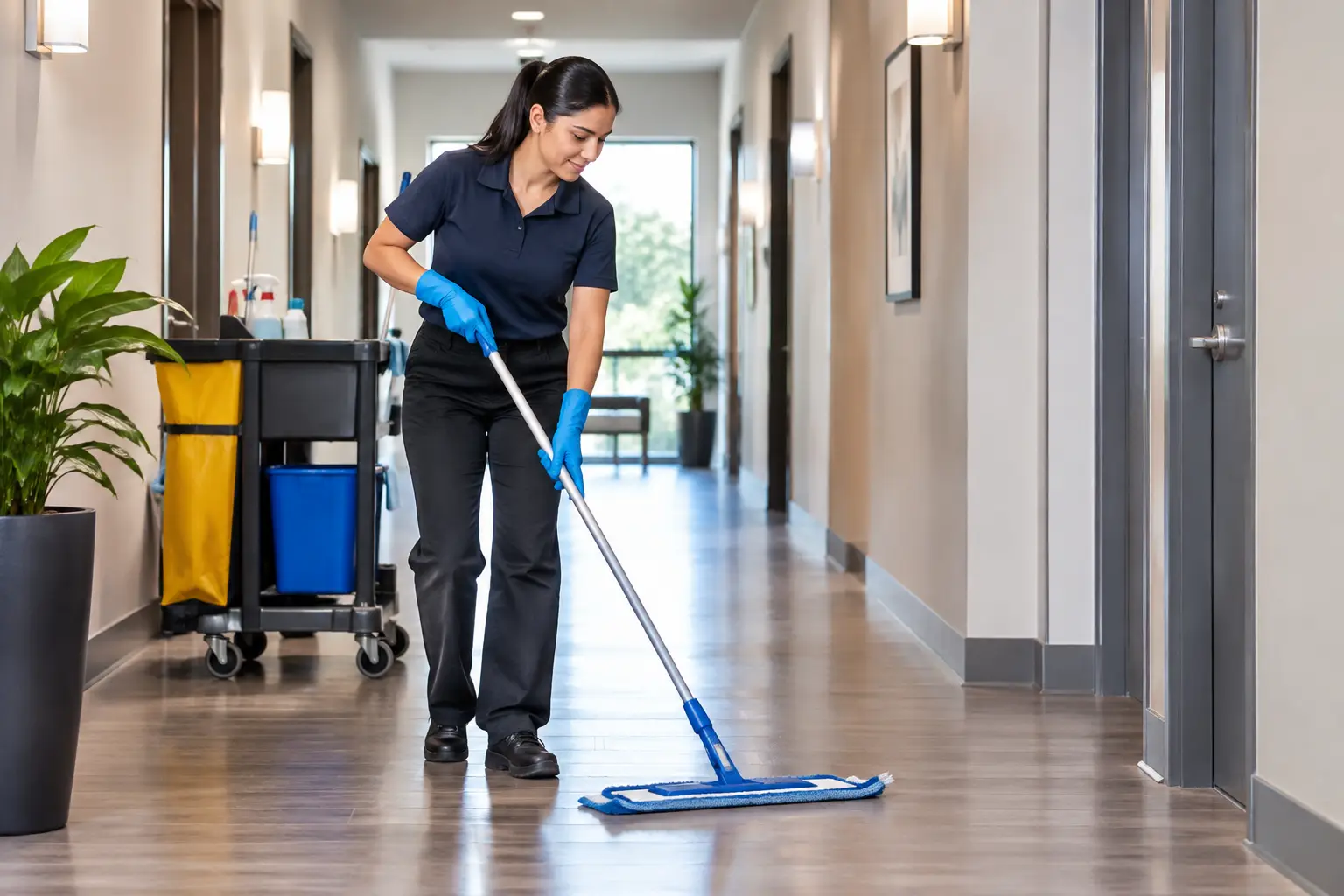
A hallway can look worn out again within hours of being cleaned. Residents track in moisture, dust settles along baseboards, elevator traffic leaves marks near doors, and trash-room odors can travel farther than expected. Knowing how to clean apartment hallways is less about one intensive cleaning day and more about building a consistent routine that keeps shared spaces presentable without making daily life difficult for residents.
For property managers and HOA teams, hallway cleaning affects more than appearance. It shapes move-in impressions, resident satisfaction, maintenance requests, and the overall condition of flooring and painted surfaces. A clear plan helps staff or a professional cleaning partner work efficiently while giving residents safe, accessible paths through the building.
How to Clean Apartment Hallways Step by Step
The right process depends on your flooring, building layout, resident traffic, and cleaning frequency. A carpeted interior corridor needs a different approach than an open-air walkway with concrete or tile. Still, the most effective routines follow the same order: remove loose debris, spot-clean visible messes, clean the floor thoroughly, and finish detailed areas that residents notice at eye level.
Start with a quick condition check
Before bringing out equipment, walk the hallway from end to end. Look for spills, wet spots, pet accidents, overflowing trash, scuff marks, and items that may block the route. Pay close attention to entries, elevator lobbies, stairwell doors, mail areas, and turns in the corridor. These high-contact zones typically need more frequent attention than low-traffic stretches of hallway.
This walkthrough also helps prevent avoidable problems. A small spill on tile may only need prompt mopping, while a stain on carpet may need immediate spot treatment before it sets. If there is a leak, pest issue, damaged flooring, or bulky item obstructing egress, document it and notify the appropriate property contact rather than trying to clean around a maintenance concern.
Remove dry soil before using moisture
Dry debris is easier to remove before mopping or shampooing. Sweep hard floors with a clean broom or use a vacuum designed for the flooring type. On carpet, vacuum slowly, including edges and corners where dust and hair collect. Use crevice attachments around baseboards, door thresholds, elevator tracks, and floor vents.
This step matters because wet cleaning over grit can create streaks, muddy residue, or abrasion. In buildings near the coast, sand and fine debris can be a recurring issue. In busy communities, dirt brought in from parking areas can quickly dull hallway flooring if it is not removed regularly.
Address stains, scuffs, and high-touch details
Spot treatment should happen before the full floor clean. Use a product appropriate for the surface and test an inconspicuous area when working with specialty flooring, painted walls, or delicate carpet fibers. Avoid using one strong chemical for every task. What removes a scuff from a painted door may discolor carpet or leave a slippery film on vinyl flooring.
Common detail work includes wiping fingerprints from glass panels, cleaning smudges around push plates, removing marks from door frames, and dusting ledges, signs, and fire extinguisher cabinets. These are small tasks, but they make a corridor look maintained rather than merely swept.
For walls, use the least aggressive method that works. Repeated scrubbing can damage paint, especially on textured surfaces. If hallway walls have recurring marks, it may be more practical to identify the cause, such as carts striking corners or frequent move-ins, and adjust protective measures or touch-up schedules.
Clean floors in manageable sections
For hard-surface hallways, damp mop rather than soak the floor. Use clean water and the correct floor solution at the recommended dilution. Too much product can leave a tacky residue that attracts more dirt, while too much water can create slip concerns and may damage certain floor materials.
Work from the far end of the hallway toward your exit point so no one needs to walk through a freshly mopped area. Place visible wet-floor signs at both ends of the active work area. In a long corridor, clean in sections and keep a clear route open whenever possible.
Carpeted hallways require regular vacuuming, prompt spot removal, and periodic deep cleaning. The schedule depends on traffic, weather, pets, and the color and condition of the carpet. Vacuuming may be needed several times a week in active buildings, while extraction or low-moisture carpet cleaning can be scheduled during lower-traffic periods. Deep cleaning too infrequently allows soil to settle into fibers, but using excessive moisture can extend drying time and inconvenience residents.
Build a Hallway Cleaning Schedule That Matches Traffic
A hallway plan works best when it separates daily appearance tasks from periodic detail work. Trying to complete every deep-cleaning task during each visit often wastes time and disrupts residents. On the other hand, only vacuuming or mopping can allow dust, marks, and odors to build up in the background.
For many multifamily properties, a daily or near-daily service routine focuses on visible debris, floor spot cleaning, trash-area checks, and entry touchpoints. Weekly service may include thorough vacuuming or mopping, baseboard dusting, door and glass cleaning, and removal of more noticeable scuffs. Monthly or quarterly work can include carpet extraction, floor machine work where appropriate, vent cleaning, light fixture dusting, and detailed treatment of corners and edges.
The correct frequency depends on the property. A small, quiet building may not need the same schedule as a larger community with elevators, shared amenities, pets, deliveries, and frequent visitor traffic. Seasonal weather also changes the workload. Rainy periods often mean more moisture and dirt at entrances, while dry, windy conditions can increase dust in open-air corridors.
Keep Residents Safe and Informed During Cleaning
Cleaning should improve a resident’s experience, not make access difficult. Whenever possible, schedule louder equipment and longer drying tasks during hours that fit the building’s normal activity pattern. Property teams may prefer early mornings, mid-day windows, or another period when hallway traffic is lower. The best choice depends on the community and should be communicated clearly.
Use clear signage whenever floors are wet or equipment is in use. Keep cords, hoses, carts, and supplies organized to one side without blocking doors, stairwells, elevators, or emergency routes. Never leave a cleaning cart unattended in a way that narrows a hallway or creates a trip hazard.
Communication also matters when deeper work is planned. A brief resident notice can explain the service window, remind residents to use caution around damp areas, and reduce frustration when carpet cleaning equipment or floor machines are present. This is particularly helpful for properties with limited alternate routes.
Do Not Overlook Odor Sources
A clean-looking hallway can still feel neglected if odors linger. The source is usually more important than the fragrance used to cover it. Check nearby trash rooms, floor drains, pet areas, carpet spots, elevator corners, and ventilation grilles. Addressing the cause may involve cleaning the affected surface, reporting a maintenance issue, or adjusting trash collection and cleaning frequency.
Heavy fragrances are not always the answer. They can be unpleasant for some residents and can make a shared space feel as though an odor is being concealed. A neutral, clean environment is generally the better goal.
Track Recurring Problems
A simple hallway checklist helps property managers identify patterns over time. If one entrance always has dirty floors, it may need more frequent service, a better matting plan, or a closer review of foot traffic. If scuffs repeatedly appear near a service elevator, maintenance carts or move-in activity may be contributing. If odors return in the same location, the issue may be operational rather than a standard cleaning need.
A customized cleaning plan can turn those observations into practical adjustments. Call The Helper LLC works with apartment communities, HOAs, and property managers to organize common-area cleaning around the property’s layout, traffic levels, and service priorities.
The most effective hallway routine is one residents barely notice because the space stays clean, dry, accessible, and ready for the next person walking through it.


Comments are closed