



A smudged glass entry, overflowing trash bin, or neglected restroom can shape someone’s opinion of a property before they ever reach an office, apartment, or community room. Building cleaning is not simply a behind-the-scenes task. It is part of how tenants, employees, residents, guests, and prospective clients experience the property every day.
For property managers and facility teams, the challenge is rarely deciding whether cleaning is needed. It is creating a dependable plan that matches how the building is actually used, addresses details before they become complaints, and adjusts when occupancy or priorities change.
Why Building Cleaning Is a Property Management Priority
A clean building supports the practical work of managing a property. Common areas stay more welcoming, high-touch surfaces receive regular attention, floors are easier to maintain, and staff spend less time responding to avoidable cleaning issues. Just as importantly, a consistent presentation helps reinforce the care put into the entire property.
The right scope depends on the building. An office with weekday traffic may need recurring restroom service, trash removal, break room cleaning, and attention to entryways. A multifamily community may need lobby, hallway, elevator, clubhouse, and shared-facility cleaning on a schedule that works around resident activity. A commercial property with several suites may require a mix of common-area care and service tailored to individual tenant needs.
There is no useful one-size-fits-all checklist. Cleaning a quiet professional office the same way as an active community clubhouse can lead to wasted effort in some areas and missed needs in others. A better approach starts with the property’s traffic patterns, hours, surfaces, and expectations.
What a Reliable Building Cleaning Plan Should Cover
A strong plan makes responsibilities clear without making property management more complicated. The goal is to establish the regular work that keeps the building presentable while leaving room for periodic tasks and changing priorities.
Start With the Spaces People Notice First
Entrances, lobbies, reception areas, hallways, elevators, and restrooms carry disproportionate weight. These are the places where visitors form quick impressions and where dirt, fingerprints, litter, and odors become immediately visible.
Cleaning frequency should reflect traffic, not assumptions. A small lobby with limited daily use may need a different schedule than an entry shared by several busy tenants. Restrooms, break rooms, and other heavily used spaces often need closer attention because conditions can change quickly throughout the day.
For managed communities, the same principle applies to clubhouses, fitness-adjacent spaces, mail areas, community rooms, and other shared facilities. When these spaces are ready for residents to use, property teams can focus on service rather than follow-up cleaning concerns.
Plan for the Work That Protects Surfaces
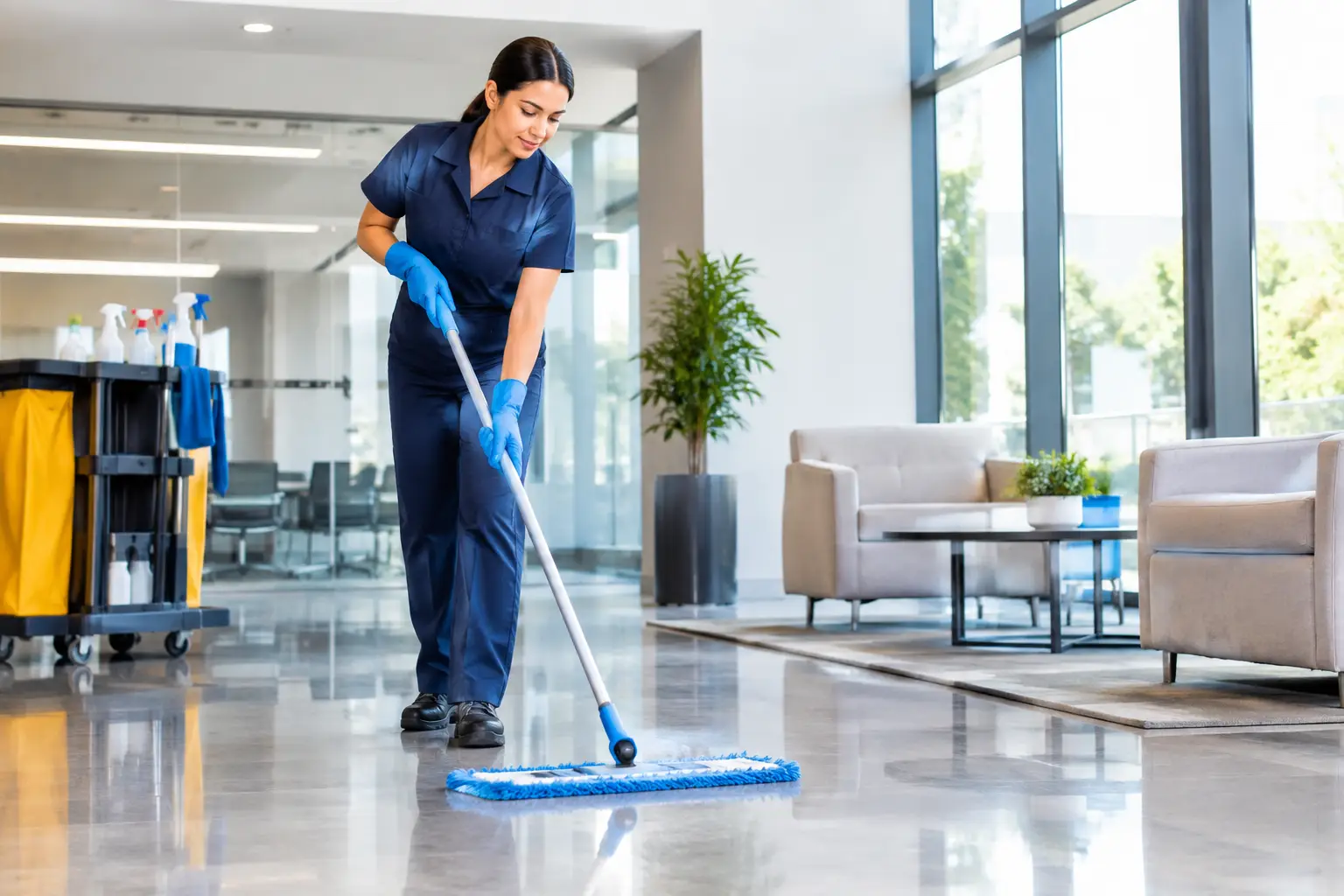
Visible tidiness matters, but building cleaning also includes work that helps maintain the materials throughout a property. Floors are a clear example. Routine vacuuming, mopping, and spot attention can keep dirt from building up, while periodic carpet and floor cleaning may be appropriate based on material, foot traffic, and condition.
The timing matters as much as the service itself. Scheduling more intensive floor care during a low-traffic window can reduce disruption. In contrast, waiting until flooring looks noticeably worn may mean the property has already spent weeks presenting below its standard.
Exterior-facing spaces deserve consideration as well. Walkways, patios, dumpster areas, and entries can collect dirt and debris that travels indoors. Depending on the property’s needs, pressure washing or trash bin cleaning can complement an interior program and help keep the overall environment more orderly.
Build in Periodic and Event-Based Service
Recurring cleaning handles the day-to-day baseline, but buildings also have moments that call for additional support. Tenant move-outs, construction work, seasonal events, inspections, community gatherings, and unexpected spills can all change the scope quickly.
A practical plan identifies these needs in advance where possible. Post-construction cleaning, apartment turnover cleaning, deep cleaning, and one-time service can be scheduled around property events rather than treated as an emergency at the last minute. That flexibility is especially valuable for management teams balancing multiple properties or shifting occupancy.
Communication Is Part of the Cleaning Service
Even detailed cleaning work can fall short when communication is unclear. Property and facility managers need to know what is being handled, when service is scheduled, and how to raise a concern or request a change. A cleaning partner should make that process straightforward.
Before recurring service begins, it helps to walk through the property and define priorities. Which areas need service every visit? Which require weekly, monthly, or as-needed attention? Are there access procedures, quiet hours, tenant-sensitive spaces, or events that affect timing? These details create a plan that fits the building instead of forcing the building to fit a standard routine.
Ongoing communication matters just as much. A new tenant may increase foot traffic. A community room may be booked more often. A wet-weather period may create additional work around entrances. When the cleaning plan can be adjusted promptly, the property remains ready without requiring the manager to repeatedly reset expectations.
How to Evaluate a Building Cleaning Provider
Price has a place in the decision, but it should not be the only question. The lowest quote may not account for the full scope, the frequency required, or the coordination needed for a managed property. Comparing service plans line by line gives a clearer picture of what the property will actually receive.
Look for a provider that asks useful questions before proposing a schedule. A thoughtful conversation about square footage, occupancy, shared spaces, floor types, access, and service timing is a positive sign. It shows that the provider is building the scope around the property’s needs.
It is also worth discussing how changes will be handled. Properties are not static. Managers may need additional attention before an event, a deep clean after a turnover, or a revised schedule after a tenant move-in. A responsive provider helps make those adjustments manageable.
For commercial and HOA properties in San Diego County, Call The Helper LLC can create customized cleaning plans for offices, common areas, community spaces, facilities, and recurring janitorial needs. The focus is practical: professional service, clear communication, flexible scheduling, and visible results that support the property’s daily operation.
Common Building Cleaning Gaps to Avoid
Many cleaning issues begin with small gaps in planning rather than a lack of effort. One common problem is treating every area with the same frequency. High-traffic entryways and restrooms often need more attention than low-use storage areas or private offices, so equal scheduling can leave the most visible spaces behind.
Another issue is overlooking transitions. A building may look clean after routine service but become untidy during move-ins, events, renovations, or busy leasing periods. Planning for these moments prevents the team from scrambling when standards matter most.
Finally, avoid leaving responsibilities vague. If a task is not clearly assigned, it can easily be missed. Define what the cleaning team handles, what onsite staff manages, and how special requests are communicated. Clear expectations protect both the property and the working relationship.
A Cleaner Building Makes Daily Operations Easier
The value of building cleaning is felt in ordinary moments: a resident entering a well-kept lobby, an employee using a clean break room, a prospective tenant touring a polished common area, or a manager avoiding another service complaint. Those moments add up.
The most effective cleaning plan is not necessarily the most elaborate one. It is the one that matches the building, stays consistent, and can adapt as the property changes. When cleaning is organized around real use and reliable communication, the space stays ready for the people who count on it.


Comments are closed