



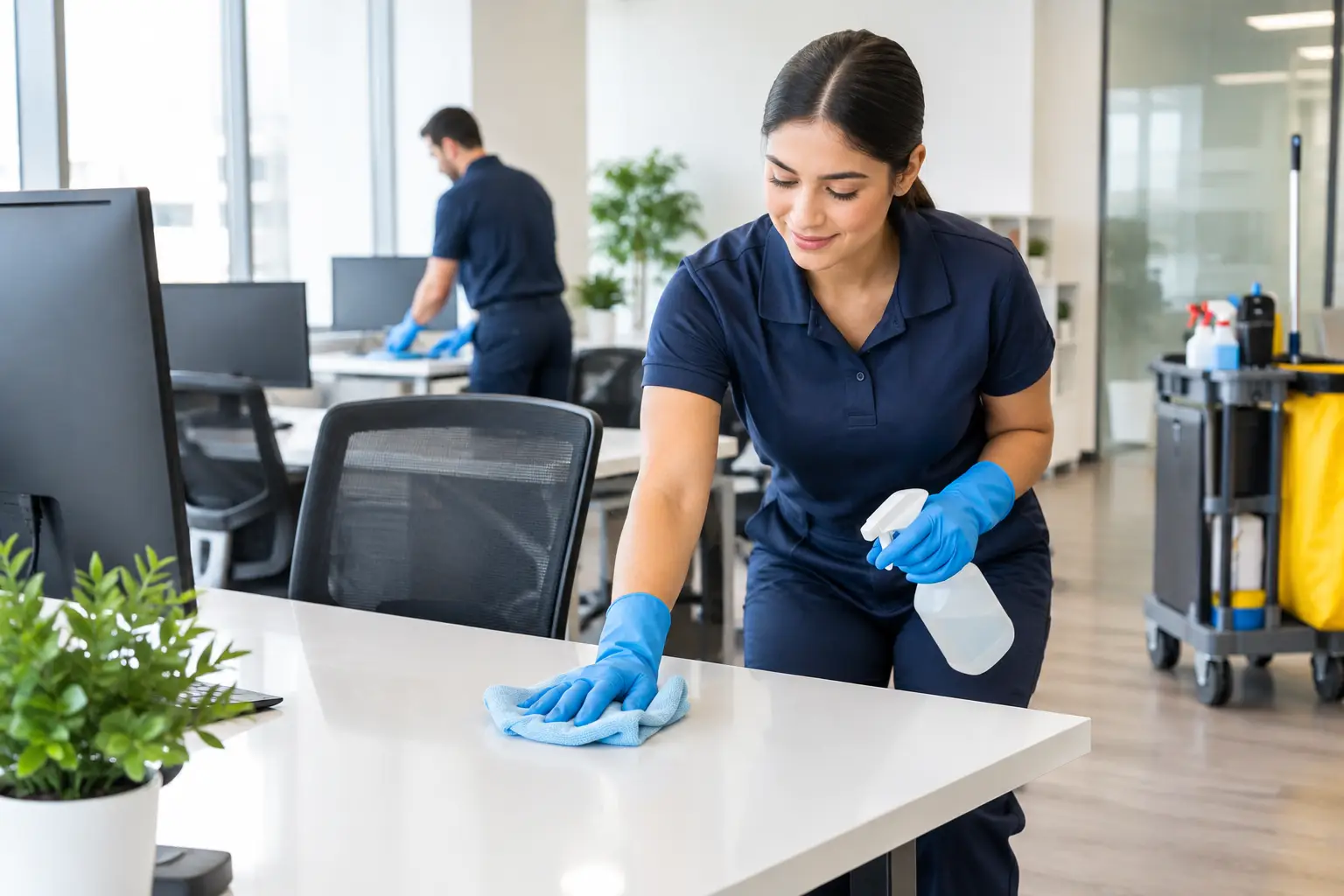
A lobby can look fine at 8:00 a.m. and feel neglected by noon. Trash fills up, fingerprints show on glass doors, restroom supplies run low, and floors collect the evidence of a busy property. That is why asking what does janitorial cleaning include is the right first step before hiring a recurring cleaning provider. Janitorial work is not one fixed checklist. It is a planned set of cleaning tasks designed around how a workplace, community, or shared facility is actually used.
For office managers, property managers, HOA boards, and facility teams, the goal is simple: keep high-use spaces consistently clean, presentable, and ready for employees, residents, visitors, and tenants. The details matter because a cleaning plan that works for a small office may not cover the needs of a multi-tenant building, clubhouse, or apartment common area.
What does janitorial cleaning include?
Janitorial cleaning usually includes recurring cleaning of the areas people see and use every day. This often covers restrooms, break rooms, offices, hallways, entryways, lobbies, elevators, common areas, and trash collection points. Service may be scheduled daily, several times a week, weekly, or on another cadence that matches the building’s traffic and operating hours.
The core work typically focuses on surface cleaning, waste removal, restroom care, floor maintenance, and touchpoint cleaning. Rather than treating every room the same, a thoughtful janitorial plan prioritizes the areas that affect the experience of the people in the building. A busy reception area may need attention every service visit, while a low-traffic conference room may need a lighter routine.
A professional team should also clarify what is included at the start. “Janitorial cleaning” can mean very different things depending on the property. Clear expectations prevent missed tasks, overlapping responsibilities, and the frustration of discovering that an assumed service was not part of the schedule.
The routine tasks most properties need
Restroom cleaning and supply attention
Restrooms are one of the clearest indicators of how a facility is maintained. Regular janitorial service generally includes cleaning and disinfecting toilets, urinals, sinks, counters, mirrors, partitions, dispensers, and frequently touched surfaces. Floors are swept and mopped, waste is removed, and visible buildup around fixtures is addressed.
Supply monitoring can also be part of the plan when a client provides the needed products. The right frequency depends on traffic. A small professional office may need weekly service, while a shared facility, clubhouse, or public-facing office often needs more frequent attention.
Trash and recycling removal
Emptying waste receptacles is a basic janitorial responsibility, but it requires more planning than it sounds. Service may include collecting trash from desks, break rooms, restrooms, common areas, and exterior-adjacent collection points, then replacing liners as needed. Recycling can be handled separately when containers and site procedures are clearly identified.
For property managers, the important question is not just whether trash is removed. It is whether the schedule prevents overflowing bins during high-traffic days, events, or tenant move-ins and move-outs.
Floors and entry areas
Floors take the most visible daily wear. Routine janitorial cleaning often includes vacuuming carpeted areas, sweeping hard surfaces, damp mopping appropriate flooring, and removing obvious debris from entrances and walkways. Entry glass, door handles, mats, and surrounding floor space deserve close attention because they form a visitor’s first impression.
Basic recurring floor care is different from periodic intensive floor work. Carpet cleaning, machine scrubbing, polishing, stripping, waxing, or specialized treatment may be scheduled separately depending on the material and condition of the floors. A good cleaning plan distinguishes between daily maintenance and the deeper work that protects the appearance of high-traffic surfaces over time.
Common areas, offices, and shared rooms
In offices and managed communities, recurring service typically addresses dusting accessible surfaces, wiping shared tables and counters, cleaning visible smudges, and straightening the appearance of common-use spaces. This can include reception desks, conference rooms, mail areas, elevator interiors, hallways, community rooms, and clubhouses.
The scope should be practical. Janitorial teams generally clean around personal work materials rather than reorganizing desks, handling confidential papers, or moving valuable equipment. If a property has special rooms, such as fitness areas, leasing offices, or event spaces, those areas should be identified in the cleaning plan rather than assumed to be included.
Break rooms and kitchenettes
Break rooms quickly collect crumbs, spills, fingerprints, and food waste. Janitorial cleaning commonly includes wiping counters, tables, sink areas, cabinet exteriors, appliance exteriors, and shared touchpoints. Floors are swept and mopped, and trash is removed.
Interior appliance cleaning is often a separate request. For example, cleaning inside a refrigerator, microwave, oven, or dishwasher may require additional time and should be discussed in advance. The same applies to heavy grease, neglected buildup, or a kitchen used for frequent catered meetings.
What is customized based on your property?
The strongest janitorial programs are built around the property, not a generic task list. A medical-style waiting room, a construction office, a law firm, a leasing center, and an HOA clubhouse all have different traffic patterns, surface types, and expectations. Even two office buildings with the same square footage can require different service levels.
A customized plan may account for building access, cleaning after business hours, tenant schedules, event calendars, pet-friendly common areas, multiple restrooms, or specific priorities such as lobby glass and elevator presentation. It can also set a rotation for detail work that does not need to happen every visit, such as high dusting, baseboard attention, interior glass, or spot cleaning walls and doors.
For multi-location businesses and property portfolios, consistency matters just as much as flexibility. Each site may need its own scope, but the tasks, communication process, and quality expectations should be easy for managers to understand across the portfolio.
Tasks that may not be included automatically
Janitorial service is recurring maintenance cleaning, not a catch-all for every cleaning need. Deep cleaning, post-construction cleaning, pressure washing, carpet extraction, detailed floor restoration, exterior window cleaning, and cleaning after a major event may require a separate scope. These services can be valuable, but they call for different equipment, timing, and labor than a standard nightly or weekly visit.
It also depends on the condition of the property. A facility that has gone months without consistent cleaning may benefit from an initial deep clean before beginning routine janitorial service. Starting with that reset can make recurring visits more effective because the team is maintaining a clean baseline rather than trying to catch up during every appointment.
Ask directly about special situations. If your building has biohazard concerns, unusually heavy debris, restricted-access areas, high ceilings, or surfaces requiring specialty products, those needs should be reviewed before service begins. A clear conversation protects both the property and the cleaning team.
How to build a useful janitorial checklist
Before requesting service, walk the property as if you were a visitor arriving for the first time. Notice the entrance, glass, floors, odors, restrooms, trash areas, break rooms, and shared spaces. Then consider what employees, residents, clients, or tenants use between cleaning visits.
A useful scope identifies the areas to be cleaned, the frequency for each task, the preferred service window, access instructions, and who should receive updates if something needs attention. It should also separate recurring work from occasional projects. That distinction helps property managers budget time appropriately and helps cleaning teams arrive prepared.
For example, an office may need trash removal and restroom cleaning three times per week, while a conference room receives a full reset once a week. An HOA community room may need routine care on a set schedule plus added cleaning after scheduled events. Neither approach is better by default. The right approach reflects the actual use of the space.
Reliable cleaning is visible in the details
A dependable janitorial partner does more than leave a pleasant scent behind. The work should support a clean arrival experience, orderly shared spaces, usable restrooms, and floors that look cared for throughout the service cycle. When issues arise, clear communication and a plan that can adapt to changing property needs make a meaningful difference.
For commercial properties, offices, and managed communities in San Diego County, Call The Helper LLC can help shape janitorial support around the spaces that need consistent attention. Start with the areas your visitors notice first, then build a schedule that keeps the rest of the property from falling behind.


Comments are closed