



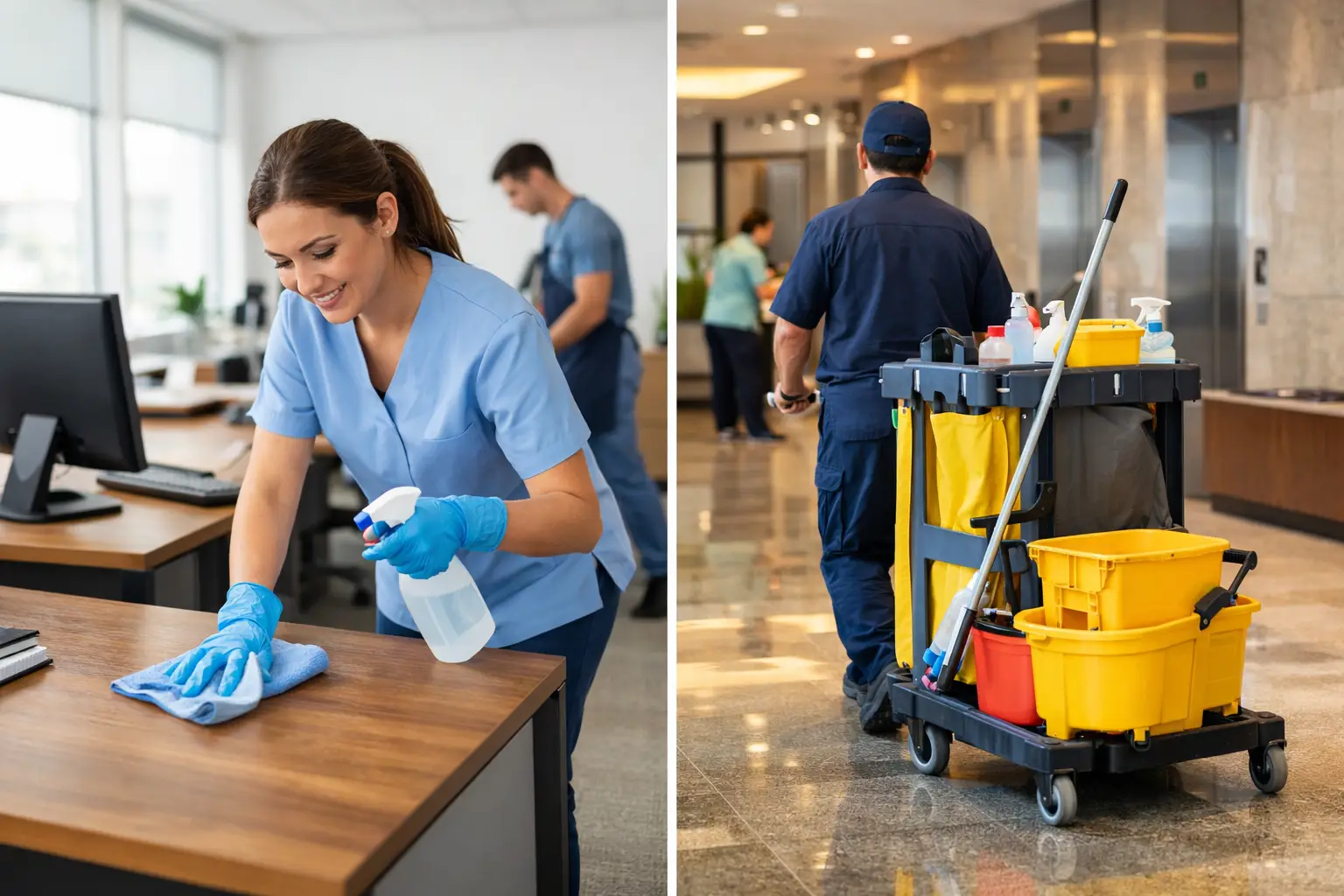
A cleaning plan can look excellent on paper and still miss the spaces people notice most. That is why the distinction between office cleaning versus facility cleaning matters for office managers, property managers, HOA teams, and multi-site operators. The right scope is not simply about how often a crew arrives. It is about matching the work to how your property functions, where traffic builds up, and what tenants, employees, residents, and visitors expect to see.
Office cleaning is designed around a workplace and its daily routines. Facility cleaning takes a wider view, often covering several types of spaces, larger common areas, and operational needs that change throughout the property. Understanding where one ends and the other begins makes it easier to request the right service, set clear expectations, and keep cleaning from becoming a recurring management headache.
What Office Cleaning Usually Covers
Office cleaning focuses on the areas where employees work, meet, eat, and welcome guests. The goal is a clean, orderly workplace that supports a professional impression and helps the workday run with fewer distractions.
A recurring office cleaning plan commonly includes dusting accessible surfaces, emptying waste bins, vacuuming carpeted areas, mopping hard floors, wiping breakroom surfaces, and cleaning and restocking-ready appearance of restrooms based on the supplies provided or service arrangement. Reception areas, conference rooms, private offices, open workstations, and employee kitchens are typically central to the schedule.
The scope is usually predictable because office traffic follows a regular pattern. A small professional office may need service two or three evenings per week. A busy office with frequent client visits, a shared breakroom, or higher restroom use may need daily attention. Some workplaces also need periodic deeper work, such as detailed floor cleaning, carpet care, or cleaning after an internal event.
Office cleaning is most effective when the provider understands the rhythms of the workday. Cleaning after hours may keep disruptions low, while daytime porter-style support can make more sense for a high-traffic reception area or office that hosts customers throughout the day. Neither approach is automatically better. The practical choice depends on access, occupancy, noise concerns, and how quickly the space needs to recover from daily use.
Office Cleaning Versus Facility Cleaning: The Main Difference
Facility cleaning is broader than office cleaning. It is intended for properties that include multiple zones, multiple users, or shared spaces that do not fit neatly into a traditional office layout. A facility may include offices, but its cleaning needs extend beyond desks and conference rooms.
For example, a commercial property may have lobbies, hallways, elevators, public restrooms, entryways, break areas, stairwells, community rooms, fitness-adjacent spaces, or exterior-adjacent common areas. An apartment community or HOA may need attention in a clubhouse, mail area, leasing office, shared corridors, and resident gathering spaces. A multi-location business may require a consistent plan across several addresses while still accounting for differences in layout and traffic.
The key difference is coordination. Facility cleaning often requires a site-wide plan that establishes priorities by area, timing, and condition. A lobby may need frequent touch-ups because it shapes a visitor’s first impression. A back hallway may only need scheduled service. A community room may need cleaning before and after reservations, which creates a schedule that changes from week to week.
Facility cleaning also tends to involve more communication with property stakeholders. A property manager may be tracking tenant concerns. An HOA board may need a common area ready for an upcoming gathering. A facility manager may need service coordinated around deliveries, maintenance activity, or restricted-access spaces. The cleaning scope needs enough structure to be dependable, but enough flexibility to respond when the property changes.
When an Office Plan Is the Better Fit
Choose office cleaning when the majority of the property is dedicated to employee workspaces and routine business operations. This is often the right fit for professional offices, administrative suites, sales offices, small corporate locations, and similar environments with a clear workday schedule.
A focused office plan can be more efficient because it concentrates labor on the rooms that receive the most daily use. It also makes standards easier to define. For instance, the team may prioritize clean restroom fixtures, orderly reception surfaces, crumb-free breakroom counters, and floors that look presentable before the next business day.
That said, a standard office plan can fall short when a property has a large public-facing footprint. If the office shares a building lobby, has multiple common areas, or hosts frequent meetings and events, those spaces should not be treated as an afterthought. They may need to be added to the scope or handled under a broader facility plan.
When Facility Cleaning Makes More Sense
Facility cleaning is generally the better fit when cleaning responsibilities span more than one environment or user group. This is common for property-managed buildings, HOA communities, apartment common areas, clubhouses, community rooms, mixed-use properties, and larger commercial sites.
Consider a facility approach if your property has changing occupancy, several entrances, recurring public traffic, or areas that require different frequencies. A restroom near a leasing office may need more frequent service than a staff-only restroom. A clubhouse may be spotless on Monday and need priority attention after a weekend event. A building entrance may require extra care during wet weather or high-traffic periods.
A facility plan helps prevent the common problem of treating every area the same. Equal service is not always the same as effective service. The most visible, heavily used, or complaint-prone areas often deserve the most attention, while lower-use spaces can follow a less frequent rotation.
Build the Scope Around Traffic, Not Assumptions
Whether you need office or facility cleaning, the best plan starts with an honest walkthrough of the property. Square footage matters, but it does not tell the whole story. A compact lobby used by hundreds of people can require more attention than a much larger room that stays mostly empty.
Start by identifying the areas that influence daily perception: entrances, lobbies, restrooms, breakrooms, elevators, corridors, conference rooms, and shared amenities. Then consider who uses them and when. Employees, tenants, visitors, residents, vendors, and event guests each create different patterns of use.
Next, separate routine work from periodic work. Routine work covers the items needed to keep the property presentable day to day, such as trash removal, restroom cleaning, floor care, and surface wiping. Periodic work may include carpet cleaning, detailed floor cleaning, pressure washing where appropriate, post-construction cleanup, or attention after a special event. Keeping these categories separate makes the recurring plan clearer and reduces confusion about what should happen every visit.
Finally, establish a practical communication process. If a spill, event, vacancy turnover, or unexpected high-traffic day changes priorities, the right cleaning partner should be easy to reach and able to discuss the next steps clearly. For property managers, that responsiveness can be as valuable as the checklist itself.
Questions to Ask Before Choosing a Service
Before approving a cleaning scope, ask how the provider will handle your busiest spaces, how service timing will work around occupants, and how requests outside the normal routine will be communicated. You should also clarify access procedures, areas that require special attention, and whether supplies or equipment have any property-specific requirements.
For multi-location or mixed-use properties, ask whether the plan can be customized by location rather than copied across every site. Consistency matters, but a community room, an office suite, and a shared building corridor do not need identical service. A tailored approach creates a cleaner result without directing effort toward the wrong tasks.
A Cleaner Property Starts With the Right Category
Office cleaning and facility cleaning are not competing labels. In many properties, office cleaning is one component of a larger facility strategy. The decision comes down to scope: clean the workplace when the workplace is the primary environment, and use a facility plan when common areas, multiple users, and varied spaces require coordinated attention.
Call The Helper LLC works with commercial and property-management clients to shape cleaning plans around real property needs, from offices and common areas to community spaces and recurring janitorial support. A clear walkthrough, a defined service scope, and a schedule built around traffic can turn cleaning from an item to chase into one less detail on your team’s list.


Comments are closed