



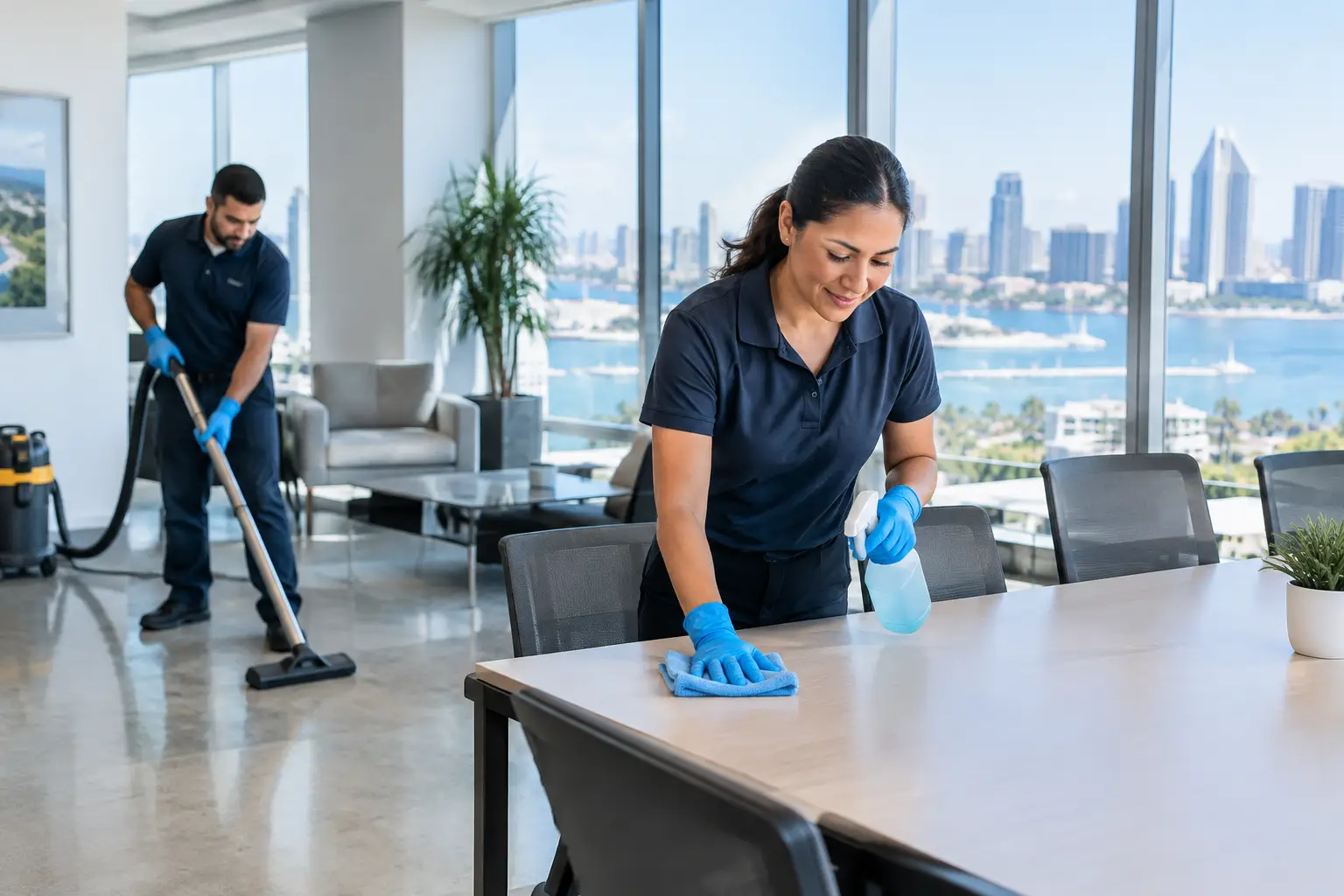
A facility can look acceptable at 8 a.m. and feel neglected by lunchtime. Foot traffic, restroom use, food spills, fingerprints, windblown debris, and overflowing trash all change how tenants, employees, residents, and visitors experience a property. This San Diego facility cleaning guide helps managers create a plan that keeps daily needs visible, recurring work organized, and service expectations clear.
For commercial buildings, office suites, HOA common areas, clubhouses, and multifamily properties, the goal is not simply to clean more often. It is to direct attention where it affects safety, appearance, and day-to-day operations most. A practical plan accounts for how people use the space, when traffic peaks, and which details create the strongest impression.
Start With How the Facility Is Actually Used
A cleaning plan should follow the life of the property, not a generic checklist. A quiet professional office may need detailed nightly cleaning and light daytime attention. A busy clubhouse may require focused service before and after events. An apartment community can need daily work in lobbies and elevators while reserving deeper cleaning for hallways, stairwells, and shared amenities on a rotating schedule.
Walk the property at the times it is busiest. Notice where people stop, wait, eat, enter, and leave. Entry doors, elevator buttons, reception counters, restroom fixtures, break room surfaces, and trash stations often need more frequent care than areas that simply look large on a floor plan.
It also helps to separate public-facing areas from back-of-house spaces. Visitors may never see a storage room, but employees use it every day. Both matter, yet they may require different frequencies and standards. This distinction keeps labor focused without overlooking the spaces that support operations.
Identify the high-impact zones
Most facilities have a handful of areas that shape nearly every visitor’s opinion. These are usually entrances, lobbies, restrooms, hallways, meeting rooms, and floors near doorways. For HOA and multifamily communities, add mailrooms, fitness areas, elevators, pool-adjacent restrooms, and clubhouses when applicable.
High-impact zones deserve a clear ownership plan. Determine what receives attention during regular visits, what is checked between visits, and who reports an issue that cannot wait. A sticky front door, marked glass panel, or full restroom trash bin can make an otherwise clean property feel unmanaged.
Build a Cleaning Schedule Around Frequency
The strongest facility cleaning schedules use layers. Daily work manages visible use. Weekly work catches buildup. Periodic service protects surfaces and handles jobs that do not fit into a standard janitorial visit.
Daily or each-service tasks often include emptying trash, cleaning restrooms, wiping high-touch surfaces, vacuuming or sweeping traffic paths, and resetting shared rooms. Depending on the property, this may also include cleaning entry glass, maintaining break rooms, and spot-cleaning walls or partitions.
Weekly work can address a broader level of detail: dusting ledges and vents, cleaning inside microwave areas, wiping baseboards in active spaces, treating carpet spots, and cleaning less-used conference rooms. The exact tasks depend on the building’s traffic and finishes. A medical-adjacent office or food-service setting may have more specific protocols, while a small office may need less frequent attention in low-use rooms.
Periodic work is where many facilities lose ground. Floor care, carpet cleaning, pressure washing, high dusting, detailed restroom restoration, and post-construction cleanup require separate planning. They should not be assumed to happen during ordinary service unless they are specifically included in the scope.
A simple schedule is useful only when it identifies frequency, areas, and expected condition. “Clean lobby” is open to interpretation. “Vacuum entry mat and lobby carpet, wipe glass at entry doors, spot-clean wall marks, remove trash, and clean reception counter” gives everyone a more workable standard.
Prioritize Floors, Restrooms, and Touchpoints
These three categories tend to drive both appearance and complaints because people notice them immediately. They also respond poorly to a one-size-fits-all approach.
Floor care is a maintenance decision
Carpet, vinyl, tile, sealed concrete, hardwood, and stone all need different care. Daily vacuuming may protect carpet appearance, but it will not remove embedded soil indefinitely. Hard surfaces may look fine after mopping while still developing scuffs or dullness near entrances.
Ask what is causing the wear. Sand and grit brought in from outside can abrade floors. Wet weather can increase tracked-in soil. Heavy rolling equipment can leave marks in hallways or office corridors. A facility plan should include entry mats, routine spot care, and periodic deep floor service appropriate to the material.
The trade-off is timing. Deep floor work may require limited access, drying time, or after-hours scheduling. Planning it before surfaces look visibly worn is usually less disruptive than reacting after a tenant or board member raises a concern.
Restrooms need repeatable checks
Restrooms are small spaces with high expectations. They need routine cleaning, but they also benefit from a clear inspection mindset: are fixtures clean, floors dry, waste removed, dispensers attended to, and obvious marks addressed?
Usage determines frequency. A private office restroom may be adequately maintained with regular nightly service. A clubhouse restroom used during community events may need attention before guests arrive, during longer events, and after the room is closed. Managers should account for those changes rather than treating every day as identical.
High-touch cleaning should follow traffic
Door handles, push plates, elevator buttons, handrails, shared tables, appliance handles, and reception counters receive frequent contact. The best frequency depends on occupancy and use. In a low-traffic suite, routine cleaning may be enough. In a busy common area, these surfaces may need additional daytime attention.
The goal is not to add unnecessary steps. It is to match the work to the places where hands, spills, and visible marks accumulate fastest.
Make Communication Part of the Scope
Facility cleaning succeeds when the service provider and property contact share the same picture of priorities. That starts before the first visit and continues as the property changes.
A useful scope clarifies service days, access instructions, areas included, areas excluded, supply responsibilities, and the process for reporting maintenance concerns. Cleaning teams often notice a leaking fixture, damaged dispenser, burned-out light, loose handle, or recurring moisture issue. A clear reporting path helps those observations reach the right person quickly.
It is also wise to define what counts as an add-on request. Event cleanup, tenant move-out work, post-construction cleanup, carpet extraction, pressure washing, and emergency spill response can be valuable services, but they require different staffing, equipment, or timing than routine janitorial work.
For managers overseeing multiple properties, consistency matters even more. Keep site-specific instructions for alarm procedures, access points, waste locations, floor types, and special-use rooms. Standardizing communication does not mean every property gets the same cleaning plan. It means every location has a dependable way to document what it needs.
Review the Plan Before Problems Become Patterns
A facility changes over time. A new tenant may increase break room use. A property may begin hosting more events. Construction nearby can create extra dust and debris. Seasonal rain can affect entrances and floors. A plan that worked six months ago may need a modest adjustment now.
Set regular walkthroughs around the areas that receive the most complaints or carry the highest visibility. Look for patterns instead of isolated issues. If a lobby floor repeatedly looks dull by midweek, the answer may be a different maintenance frequency, better entry mat coverage, or a scheduled floor-care service. If trash overflows after certain meetings, the issue may be timing rather than the size of the bins.
This is also the right time to ask whether the scope is realistic. A long task list completed too quickly can create inconsistent results. A focused plan with the right frequency is more useful than a broad plan that leaves visible work behind.
Choosing Support for Your Property
When evaluating facility cleaning support, focus on fit and communication as much as the checklist. A provider should be able to understand your building’s use, discuss priorities, accommodate a practical schedule, and explain how requests or issues will be handled.
Call The Helper LLC works with commercial properties, offices, HOAs, and shared facilities that need customized cleaning plans and recurring janitorial support. The right arrangement can include routine common-area cleaning, office cleaning, facility care, and periodic services such as carpet and floor cleaning or pressure washing when the property calls for it.
A clean facility is easier to manage when expectations are specific and service can adapt to real conditions. Start with the spaces people notice first, build frequency around actual traffic, and keep communication simple enough that small issues are addressed before they become the next complaint.


Comments are closed