



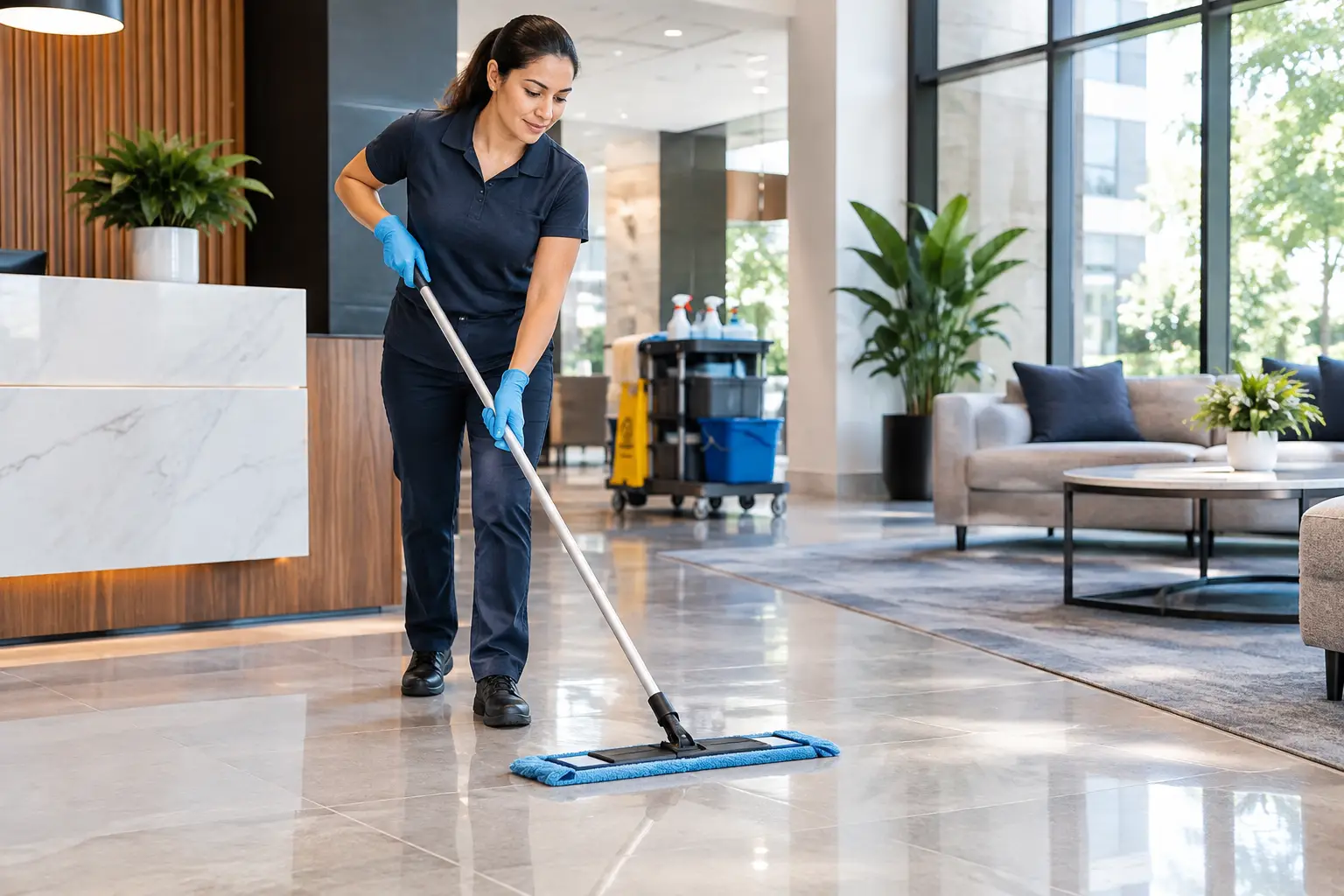
A lobby can look neglected long before it is technically dirty. Fingerprints on glass, grit collecting at entry mats, smudged elevator buttons, and a trash can nearing capacity all signal that common-area care is falling behind. This apartment lobby cleaning case study uses a representative multifamily scenario to show how property managers can turn inconsistent appearances into a practical, repeatable cleaning plan.
The details are intentionally generalized rather than tied to a specific property. The goal is not to promise a one-size-fits-all outcome. It is to show the operational decisions that often make the biggest difference in a busy apartment lobby.
The Property Challenge: A Lobby With Constant Traffic
Consider a mid-sized apartment community with a central lobby, parcel area, elevators, leasing-office entrance, mailboxes, and a small resident seating area. Residents pass through throughout the day. Delivery drivers roll carts across the flooring. Visitors arrive during leasing hours, and rainy days bring extra moisture and debris inside.
The manager’s concern was not that the lobby was never cleaned. It was that the space did not consistently look cared for during the hours residents and prospects saw it most. The floors were being addressed, but corners and edges held dust. Glass doors were cleaned, yet fingerprints reappeared quickly. The parcel area became cluttered after high-volume delivery days.
This is a common distinction in apartment and HOA cleaning: completing tasks is not the same as maintaining a presentable experience. A lobby needs a plan that accounts for where soil appears, when traffic peaks, and which details residents notice first.
What the Initial Walkthrough Revealed
A useful cleaning plan starts with observation, not a generic task list. During the walkthrough, the manager and cleaning provider identified the lobby’s high-touch and high-traffic zones: entry glass and handles, intercom panels, elevator call buttons, mailbox surfaces, seating-area tables, baseboards, and the floor paths between the entrance, elevators, and parcel lockers.
The floor was the most visible issue. Daily foot traffic left fine debris near the entry and darker marks around the elevator threshold. The existing approach treated the entire floor as one task. In practice, it needed different levels of attention in different areas.
The walkthrough also identified a scheduling issue. Cleaning occurred after hours, which made sense for access and resident convenience. But there was no defined response process for daytime spills, weather-related debris, or unexpected parcel-area overflow. The manager did not need a crew stationed in the lobby all day. They needed clear communication about what qualified for an additional touch-up and how to request it.
Building a Scope Around Visible Results
The revised scope separated routine service from periodic detail work. Routine visits focused on the work that supports a clean daily presentation: removing debris from entry points, cleaning glass and touchpoints, wiping common surfaces, emptying and relining receptacles, and cleaning the main floor paths.
Periodic work addressed the details that can undermine an otherwise clean lobby. This included baseboards, door frames, corners, elevator tracks where appropriate, wall marks, and more detailed floor care based on the flooring material and condition. For a tile or hard-surface lobby, that may mean targeted scrubbing or a scheduled floor-cleaning process. For carpeted areas, it may mean regular vacuuming supplemented by planned carpet cleaning when traffic patterns call for it.
This distinction matters because managers need a scope they can review and manage. If every task is labeled “clean lobby,” it becomes difficult to know what is expected at each visit and what requires a separate scheduled service.
A customized scope also protects the property from overcleaning or misdirected effort. Not every lobby needs the same frequency. A building with a staffed front desk and low resident turnover may need a different schedule than a property with heavy package delivery, multiple elevators, and frequent leasing traffic. The right plan depends on the property’s use, floor type, resident activity, and available budget.
Scheduling Around the Moments That Matter
The operational change was straightforward: routine cleaning was scheduled for a consistent time, with more detailed work assigned to planned intervals. The manager also established a simple communication process for exceptions, such as an entry spill, an event in the community room, or a weather-related buildup at the entrance.
Consistency was more valuable than trying to solve every issue through a longer single visit. When cleaning schedules change without notice, minor problems can sit long enough to become noticeable. A predictable cadence helps property teams understand what will be completed, when it will happen, and when to request additional service.
For apartment communities, timing is part of service quality. Early-morning service may support a polished appearance before leasing activity begins. Evening service may reduce disruption in a busy lobby. The best choice depends on resident routines, building access, security procedures, and the property manager’s priorities.
Apartment Lobby Cleaning Case Study: The First 30 Days
In this representative apartment lobby cleaning case study, the first month was used to refine the plan rather than assume the initial scope was perfect. The cleaning team and property manager reviewed the areas that became dirty fastest, the effect of delivery volume, and whether the selected timing matched the building’s traffic patterns.
The entry mats needed more attention than originally anticipated because they were collecting debris before it reached the main flooring. The parcel area required a clearer distinction between cleaning responsibilities and package organization. A cleaning provider can remove dust, debris, and surface grime from the area, but property staff may need to handle resident packages, abandoned items, or building-policy concerns.
That division of responsibility is easy to overlook. Clear boundaries prevent confusion and help both teams respond quickly when the space needs attention.
The manager also found that small visual details had an outsized effect. Clean entry glass, a fresh receptacle liner, debris-free corners, and well-maintained floors made the lobby look attended to even during a busy day. Those details do not replace deeper cleaning. They make routine care visible.
Lessons for Property and HOA Managers
The main lesson is that lobby cleaning works best as a managed system, not a vague recurring appointment. Property managers benefit from documenting the areas included in routine service, the periodic detail tasks, the preferred cleaning window, and the process for special requests.
Communication should be equally specific. If a resident reports a spill near the elevator, the request should identify the location, urgency, access considerations, and any relevant building contact. If a lobby floor begins showing recurring marks, the conversation should focus on the flooring type, traffic source, and appropriate care method instead of simply asking for it to be “cleaned better.”
It also helps to revisit the scope after seasonal changes or operational shifts. Rainy weather, a construction project nearby, increased occupancy, a new package-delivery setup, or more frequent community events can all change the cleaning needs of a common area.
A More Practical Standard for Common Areas
A well-kept apartment lobby does more than create a favorable first impression. It helps residents feel that shared spaces are being monitored and respected, gives leasing teams a more presentable environment, and reduces the chance that minor messes become larger complaints.
For managers overseeing apartments, HOAs, or mixed-use properties in San Diego County, Call The Helper LLC can help build a cleaning plan around the actual flow of the building. The most useful next step is usually a walkthrough: identify the traffic patterns, define the visible priorities, and set a schedule that gives the lobby the attention it needs without adding unnecessary work.
A lobby does not need to look untouched to look well managed. It needs consistent care, clear expectations, and a cleaning plan that responds to how people really use the space.


Comments are closed