



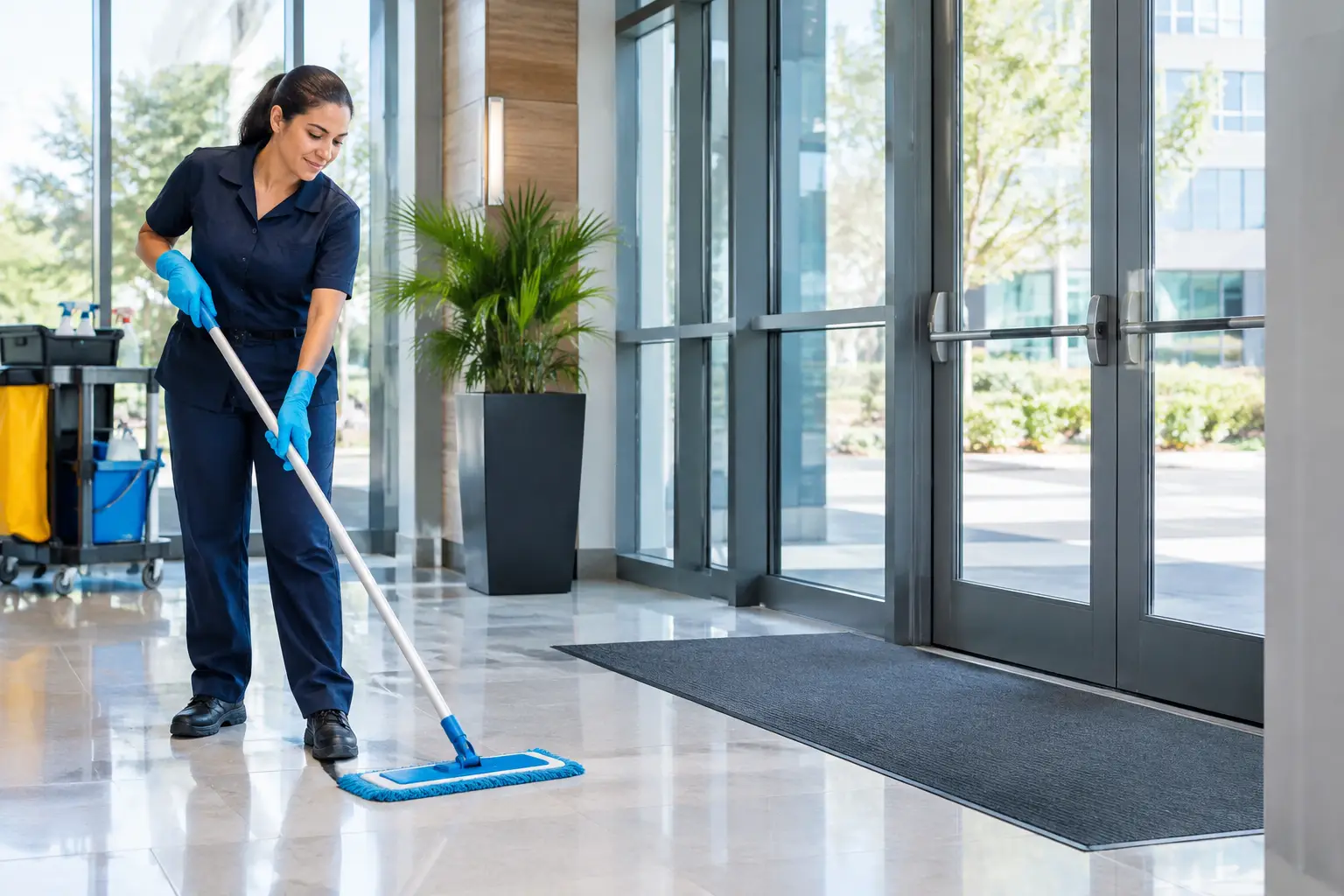
A busy entrance tells visitors what to expect before they reach the front desk, office, leasing center, or clubhouse. Commercial entryway cleaning is not simply a quick pass with a mop. It is a practical system for controlling the soil, moisture, debris, fingerprints, and clutter that build up where people come and go all day.
For property managers, facility managers, HOA teams, and business owners, the entryway is also where small cleaning issues become visible quickly. A dusty glass door, streaked floor, overflowing waste bin, or worn-down mat can make an otherwise well-maintained property feel overlooked. A consistent plan keeps the space presentable while helping protect flooring and supporting safer daily traffic.
Why Commercial Entryway Cleaning Deserves a Plan
Entryways take more abuse than most areas of a commercial property. Shoes bring in sand, dirt, leaves, water, and street residue. Delivery drivers, employees, residents, vendors, and visitors create repeat traffic throughout the day. In San Diego County, dry dust and tracked-in debris can be a frequent concern, while rainy days can quickly turn entrances into a moisture-management problem.
The right approach depends on the property. A medical or professional office may need a polished, quiet appearance during business hours. A multifamily community may need attention around mailrooms, elevators, and lobby doors. A retail storefront may require frequent touch-ups to glass and floors, while a clubhouse entrance might see heavier use before and after events.
Treating every entryway the same can lead to missed details or unnecessary service. The better question is: what does this entrance experience each day, and what does it need to stay clean between scheduled visits?
What a Commercial Entryway Cleaning Plan Should Cover
A useful cleaning plan starts at the exterior approach and continues through the interior threshold. Dirt does not stop at the front door, so the entryway should be viewed as a connected zone rather than one small patch of floor.
Start with the approach and door area
The exterior immediately outside an entrance affects what gets carried indoors. Sidewalk debris, leaves, litter, and dust near the doorway often migrate inside with foot traffic. Depending on the property and scope of service, this area may need sweeping, spot cleanup, or periodic pressure washing to keep the entrance looking orderly.
Door glass and handles also deserve regular attention. Smudged glass is highly visible in bright daylight, and fingerprints on handles can make a clean lobby appear neglected. Cleaning these high-touch, high-visibility surfaces helps the entry feel cared for without requiring an extensive project.
Use mats as a working part of the system
Floor mats do more than frame an entrance. They capture moisture and particles before they reach hard flooring or carpet. But mats only work when they are positioned correctly, kept flat, and cleaned often enough to release the dirt they collect.
A mat that is saturated, curled, or packed with debris can create its own problem. It may look unprofessional, allow soil to transfer to nearby floors, or become a trip concern. Routine vacuuming, shaking out, spot treatment, or scheduled replacement should be based on the mat type and level of traffic.
Clean floors for the material, not just the appearance
Entryway floors often include tile, vinyl, sealed concrete, carpet, stone, or a mix of surfaces. Each material responds differently to moisture, chemicals, abrasive grit, and repeated foot traffic. A rushed method may leave residue, dull the finish, or move dirt around instead of removing it.
Daily or recurring care may include vacuuming, sweeping, damp mopping, spot treatment, and edge detail work. Periodic floor care can be useful when routine cleaning no longer restores the appearance of the surface. The best schedule balances the floor’s condition, traffic volume, manufacturer guidance, and the time available for drying.
Address the details people notice first
Reception counters, call boxes, baseboards, window ledges, light switches, waste receptacles, and nearby seating all influence the perception of an entrance. These are small areas, but they collect dust, fingerprints, and debris quickly. When they are neglected, the entire space can look less clean than it actually is.
A detailed checklist is especially helpful for multi-tenant buildings, apartment communities, and HOA common areas. It gives property teams and cleaning providers a shared understanding of what belongs in the entryway scope and what should be handled separately.
Set Cleaning Frequency Around Real Traffic
There is no single frequency that works for every commercial entrance. A quiet office with a small staff may need scheduled service a few times per week, while a busy lobby, shared facility, or high-traffic community space may require daily cleaning and additional attention after peak activity.
Rather than choosing frequency based only on square footage, consider when and how people use the area. Morning arrivals, lunch traffic, tours, deliveries, resident move-ins, meetings, and events can all change the condition of an entryway. A property that looks fine at 8 a.m. may need a touch-up by midafternoon.
Weather should also shape the plan. During rainy periods, entrances may need more frequent mat care and floor checks. During dry, windy conditions, fine dust can accumulate around thresholds and corners faster than expected. Flexible scheduling is valuable because an effective plan should respond to the property, not force the property into a rigid routine.
Coordinate Cleaning With Building Operations
A clean entrance should not disrupt the people using it. For many properties, that means scheduling recurring janitorial work before opening, after business hours, or during lower-traffic periods. In other settings, daytime service may be appropriate if the work is limited to quick touch-ups and the cleaning process does not interfere with visitors.
Communication matters here. Facility and property managers should identify access procedures, alarm or lock-up expectations, event schedules, areas that must remain open, and any seasonal concerns. If a lobby shares space with a leasing office or reception area, the cleaning plan should account for privacy, customer interactions, and the team’s daily workflow.
For properties with multiple locations or common areas, consistency is just as important as frequency. A clear scope helps make sure each entryway receives the appropriate attention, even when layouts and traffic patterns differ.
Know When Routine Cleaning Is Not Enough
Recurring cleaning handles everyday buildup, but some conditions call for a more focused service. Floors that remain dull after mopping, stained carpet at a doorway, heavy buildup on exterior walkways, or post-construction dust around an entrance may need specialty floor care, carpet cleaning, pressure washing, or detailed cleanup.
The key is to address the cause as well as the visible result. For example, repeated dirt at the same threshold may point to inadequate mat coverage, a high-traffic route that needs more frequent service, or an exterior area that needs more attention. Solving that pattern can reduce the amount of corrective cleaning needed later.
This is where a customized plan is more useful than a generic checklist. It lets a cleaning provider adjust the service around actual property conditions, instead of treating every entrance like a standard office lobby.
A Better Standard for Your First Impression
Entryway cleaning works best when it is planned, consistent, and responsive to the way a building is used. The goal is not to make a lobby look freshly cleaned for one brief moment. It is to maintain an entrance that feels orderly and welcoming across the full day, while helping protect the floors and surfaces that carry the heaviest traffic.
Call The Helper LLC can help commercial properties, HOA communities, offices, and managed facilities build cleaning schedules around their entryways, common areas, and day-to-day operations. A clear scope and reliable communication make it easier to keep the first place people see from becoming the first problem they notice.


Comments are closed