



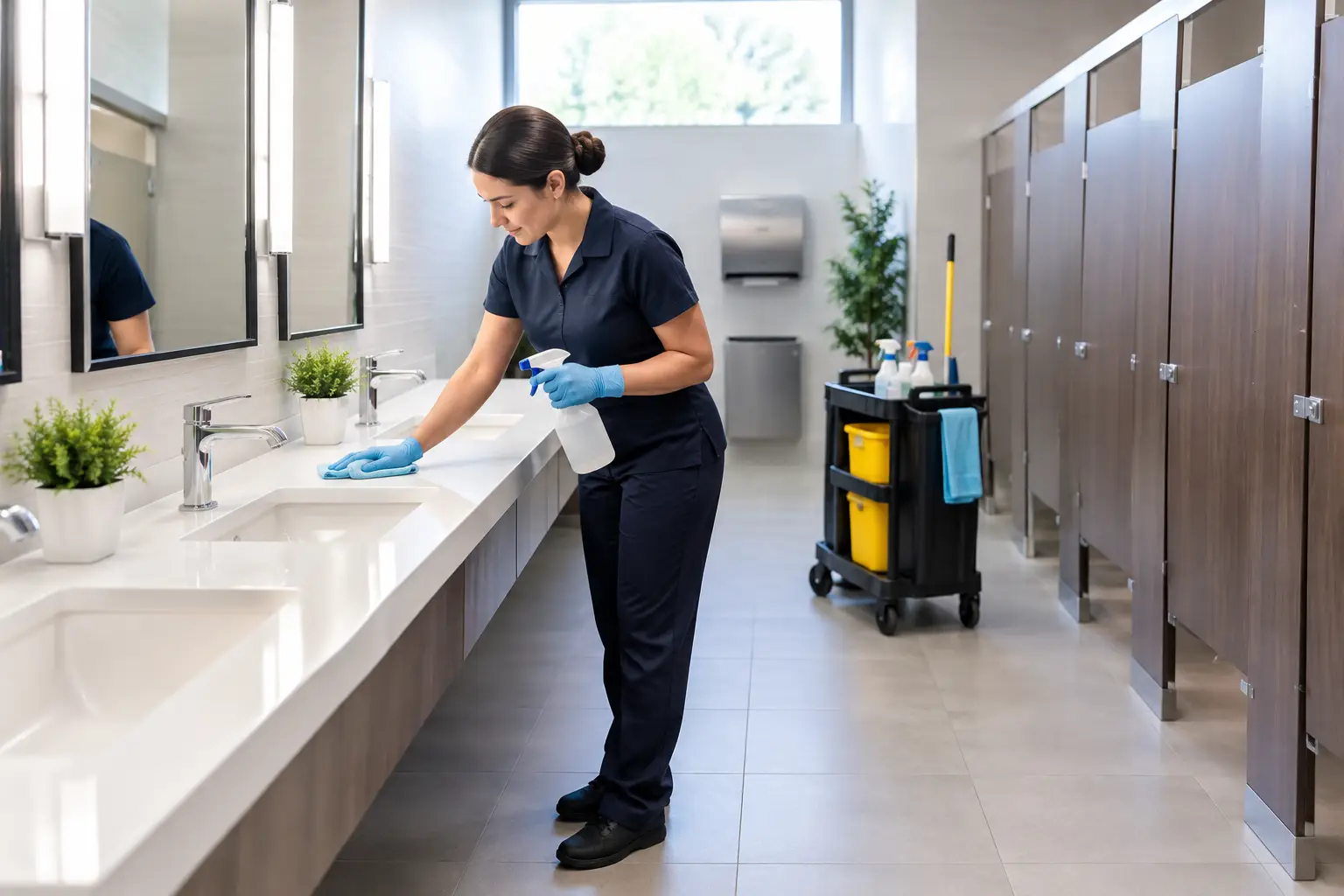
A restroom can be cleaned at 7:00 a.m. and still look neglected by noon if the plan does not match traffic, layout, and supply use. For property managers, office managers, and HOA teams, the best practices for commercial restrooms are less about a one-time deep clean and more about maintaining a space that works reliably throughout the day.
Restrooms are one of the few areas every visitor notices, even when they do not say so. Empty dispensers, wet floors, odor concerns, and overflowing trash can quickly shape how tenants, employees, customers, and guests view the entire property. A practical restroom program addresses those details before they become complaints or maintenance issues.
1. Build the Cleaning Schedule Around Actual Traffic
A fixed daily checklist is a useful starting point, but it is not always enough. A small professional office may only need one thorough service per day with an additional supply check. A busy clubhouse, multi-tenant building, retail property, or facility with public access may need several daytime touchpoints.
Start by identifying when restroom demand peaks. In offices, that may be before work, around lunch, and near the end of the day. At community amenities, traffic may rise in the evenings and on weekends. A cleaning schedule should reflect those patterns instead of treating every hour the same.
For high-use facilities, separate detailed cleaning from routine maintenance. Detailed cleaning can take place during scheduled janitorial service, while quick daytime checks focus on paper products, soap, trash, visible debris, mirrors, and floor conditions. This approach keeps the room presentable without interrupting users with a full cleaning process during busy periods.
2. Use a Consistent Top-to-Bottom Process
Consistency prevents skipped surfaces. A restroom should be serviced in a logical order that reduces cross-contamination and makes inspections easier. For example, begin with high surfaces and fixtures, clean mirrors and dispensers, address sinks and counters, service toilets and urinals, empty trash, then finish with the floor.
High-touch points deserve special attention. Door handles, stall latches, faucet handles, flush levers or buttons, dispensers, and grab bars are easy to overlook when a team is rushing. They are also the surfaces users interact with most often. Including them directly on the checklist helps turn attention to detail into a repeatable standard.
The products and tools used should match the surface and task. An overly aggressive product can damage finishes, while the wrong floor method can leave residue or create a slippery feel. Facility teams should follow manufacturer instructions for fixtures, dispensers, stone, tile, grout, and specialty flooring, especially in newer or recently renovated restrooms.
3. Treat Odor Control as an Operational Issue
Air freshener alone rarely solves a restroom odor problem. Persistent odors often point to a condition that needs to be cleaned, maintained, or reported. Common sources include trash buildup, soiled floor edges, grout and caulk lines, splash areas around toilets and urinals, floor drains, and plumbing concerns.
A good odor-control routine starts with cleaning the source. Waste should be removed before it becomes a problem, liners should be replaced when needed, and floors should receive attention around fixture bases and in corners. Urinals and toilets need more than a quick surface wipe, particularly in high-traffic locations.
If an odor remains after proper cleaning, document where and when it occurs. This helps distinguish a cleaning issue from a maintenance issue, such as a dry drain trap, leak, blocked vent, or fixture malfunction. Prompt communication between cleaning and maintenance teams prevents the problem from being repeatedly masked instead of resolved.
4. Keep Supplies Visible, Stocked, and Easy to Monitor
A clean restroom with an empty soap dispenser still creates a poor experience. Supply management should be part of every service visit, not an afterthought. Staff should check soap, toilet tissue, hand towels or hand dryers, seat covers if provided, feminine hygiene receptacles, and trash liners.
The right par levels depend on restroom traffic and delivery schedules. Properties with heavy use may benefit from keeping backup supplies in a secure, nearby storage area rather than relying on a distant janitorial closet. This reduces the chance that a restroom stays understocked until the next full service.
Dispenser selection matters too. Systems that are difficult to open, prone to jamming, or poorly positioned can create unnecessary work and frustration. Before changing products or dispensers across a property, consider accessibility, refill availability, cleaning requirements, and expected usage. The least expensive option is not always the most manageable over time.
5. Prioritize Floors and Spill Response
Floors communicate cleanliness quickly. Even when fixtures look polished, tracked-in debris, water around sinks, or stained grout can make the whole restroom feel poorly maintained. Restroom floors should be swept or vacuumed as appropriate before wet cleaning so loose debris is not spread around.
Wet floors require extra care. Cleaning should be scheduled during lower-traffic periods when possible, and caution signs should be used whenever floors are being mopped or remain damp. For properties with frequent splash or rain-related tracking, more frequent spot cleaning may be a better fit than a single extensive mopping session.
Pay close attention to corners, behind doors, around toilet bases, and along wall edges. These areas collect soil gradually and can become noticeable long before the center of the floor does. Periodic detail work for grout, baseboards, and hard-to-reach edges keeps routine cleaning from becoming a cycle of surface-level maintenance.
6. Create Clear Inspection and Reporting Habits
Commercial restroom cleaning works best when expectations are visible. A simple checklist can confirm that core tasks were completed, but inspections should also look for conditions that require follow-up. Cracked dispensers, loose grab bars, leaking fixtures, burned-out lights, damaged locks, and recurring odor concerns are not always cleaning problems, yet they directly affect restroom usability.
A clear reporting process helps the right person act quickly. The cleaning team should know who receives maintenance notices, how urgent concerns are communicated, and what information is useful to include. A short note identifying the room, fixture, issue, and time observed is often more helpful than a vague message that a restroom “needs attention.”
For multi-restroom facilities, use consistent naming for each location. Labels such as Building B, second floor, east hallway restroom make it easier for cleaning staff, maintenance teams, and property managers to discuss the same issue without confusion.
7. Adjust the Plan for the Property Type
There is no single ideal restroom schedule for every commercial property. Office restrooms typically need a polished, professional appearance that supports employee comfort and client visits. HOA clubhouses and community rooms may need service aligned with events, pool hours, and weekend activity. Multifamily common-area restrooms may need regular attention based on resident and guest use.
The layout also changes the plan. A restroom with multiple stalls, showers, locker areas, or outdoor access has different cleaning needs than a compact single-occupant restroom. Older buildings may require more frequent detail work around grout, ventilation, and fixtures, while newer spaces may need special care to preserve finishes.
Review the plan after changes in occupancy, events, tenant mix, or operating hours. A schedule that made sense six months ago may no longer reflect how the property is being used. Flexible adjustments are often more effective than waiting for complaints to reveal a gap.
8. Make Accountability Part of the Routine
Reliable restroom care depends on communication as much as cleaning technique. Property managers and cleaning providers should agree on service frequency, priorities, supply responsibilities, access procedures, and how urgent issues are handled. When those details are unclear, small problems can fall between teams.
Regular walkthroughs are useful, particularly at the start of a new cleaning arrangement or after a facility change. They allow managers to point out problem areas, confirm expectations, and identify practical improvements. The goal is not to make the process complicated. It is to create a routine that delivers visible results without requiring constant oversight.
For San Diego County offices, managed communities, and shared facilities, Call The Helper LLC can help shape a commercial cleaning plan around restroom traffic, property needs, and service timing. A well-maintained restroom is a quiet sign that the rest of the property is being managed with care.


Comments are closed