



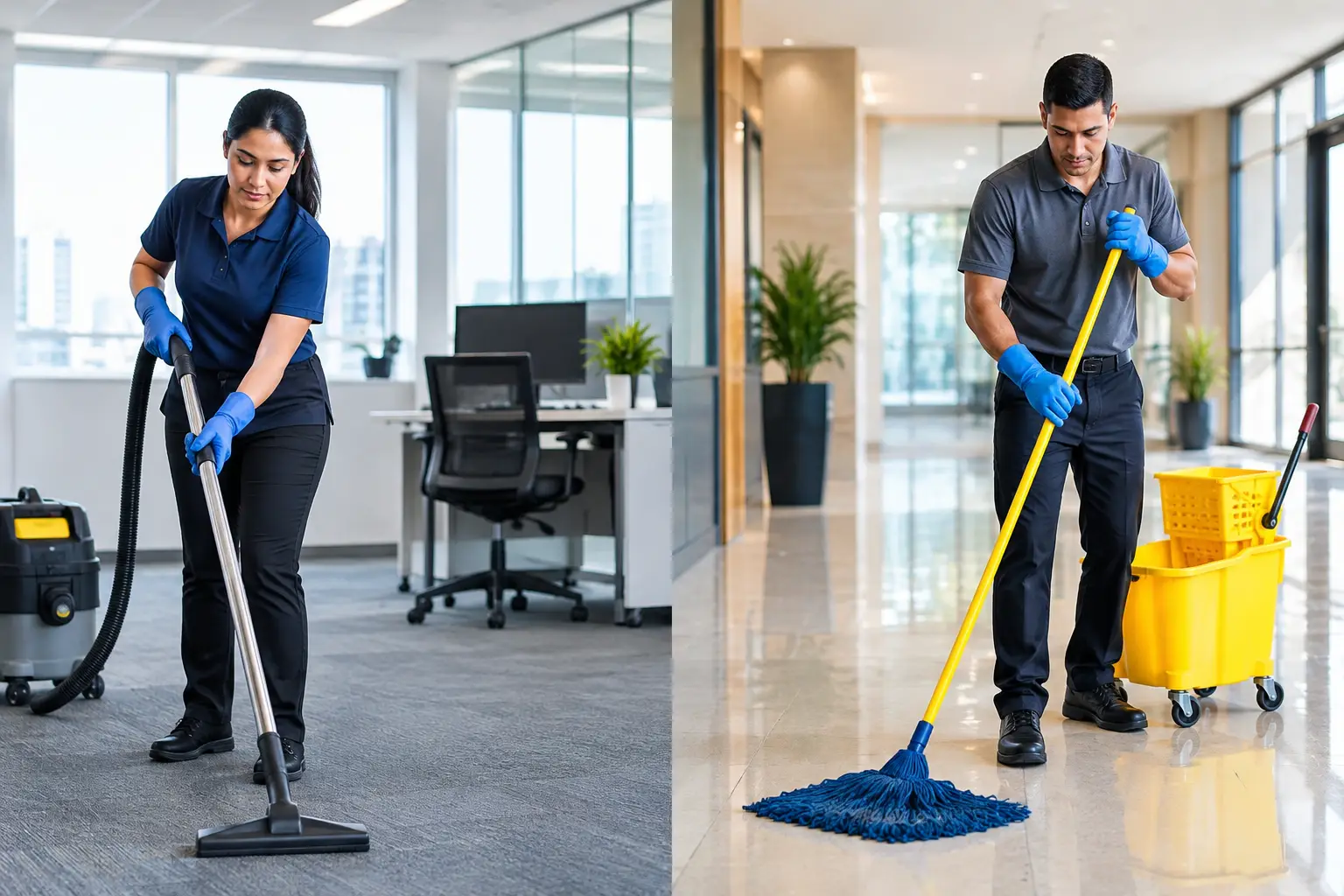
A manager asks for “janitorial service,” while a business owner requests “commercial cleaning.” Often, they are describing the same need: a clean, presentable property that supports employees, residents, visitors, and daily operations. Still, commercial cleaning versus janitorial service can mean different scopes of work, schedules, and expectations. Understanding the distinction helps you request the right plan from the start.
For offices, HOAs, apartment communities, and managed facilities, the question is less about choosing one label over the other. It is about defining what must be cleaned, how often it needs attention, and what a clean space should look like at the end of each service.
Commercial Cleaning Versus Janitorial: The Core Difference
Janitorial service usually refers to ongoing, routine cleaning that keeps a property functioning day after day. It is the recurring work that prevents restrooms from becoming neglected, trash from accumulating, floors from looking worn, and common areas from falling behind.
Commercial cleaning is a broader term. It can include recurring janitorial work, but it may also cover periodic or project-based services for a business or managed property. A commercial cleaning plan could involve office cleaning, community room cleaning, floor care, post-construction cleanup, pressure washing, carpet cleaning, or a detailed one-time reset before a new tenant or event.
The categories overlap. In fact, many properties need both. A recurring janitorial schedule maintains the baseline, while commercial cleaning services address larger, less frequent, or more specialized tasks. The useful distinction is not the terminology alone. It is whether your cleaning provider understands the daily needs of the property and the work required beyond the daily routine.
What Janitorial Service Usually Covers
Janitorial work is designed around consistency. A service schedule may be daily, several times per week, weekly, or tailored to the building’s traffic patterns. An office with employees on-site every weekday has different needs than a community clubhouse used primarily on weekends.
Typical janitorial duties include emptying trash, wiping high-touch surfaces, cleaning and restocking the appearance of restrooms, vacuuming or mopping floors, cleaning breakroom surfaces, and tidying entryways and shared spaces. The exact checklist should change based on the building, not follow a one-size-fits-all template.
For example, a medical office may prioritize reception areas and restrooms between busy periods, while a professional office may need conference rooms restored after meetings. In an HOA setting, the focus may shift to clubhouses, mail areas, fitness rooms, elevators, corridors, and other shared amenities. Janitorial service is most valuable when it reflects how people actually use the space.
A recurring schedule also gives managers a predictable operational rhythm. Instead of arranging cleanup only when conditions become noticeable, the property receives regular attention before minor issues affect residents, tenants, staff, or visitors.
What Commercial Cleaning Can Include
Commercial cleaning can be ongoing, but it often expands beyond standard maintenance. It is the category most useful when a facility has a specific condition, event, turnover, or cleaning requirement that does not fit a standard nightly checklist.
A commercial cleaning provider may be asked to complete a deep cleaning of an office after a busy season, clean carpets and floors that need more than routine vacuuming and mopping, or prepare common areas after construction work. Property managers may also need cleaning for vacant units, turnover-ready spaces, or community facilities before inspections, meetings, or resident events.
This broader scope matters because properties do not stay static. A lobby may look fine with routine service for months, then need focused floor care. A clubhouse may only require light weekly attention until a series of gatherings calls for more detailed cleaning. A commercial cleaning plan gives the manager room to add services as property needs change.
That flexibility should be discussed early. If a provider only receives a general request to “clean the building,” assumptions can lead to missed priorities. Clear scope prevents confusion about whether detailed baseboards, interior glass, floor treatment, pressure washing, or post-construction cleanup are part of regular service or scheduled separately.
The Right Choice Depends on Your Property’s Routine
A small office with predictable weekday traffic may primarily need janitorial support. A recurring checklist, clear service frequency, and dependable communication can cover most needs. Larger facilities, multi-tenant buildings, and active common areas often require a more layered approach that combines routine work with periodic projects.
HOA and apartment community managers usually benefit from thinking in zones. The clubhouse, leasing area, hallways, elevators, fitness room, pool-adjacent spaces, and restrooms may all have different traffic levels and cleaning requirements. Treating every area the same can waste effort in low-use spaces while leaving high-use areas under-serviced.
Commercial cleaning is also a practical choice for transitions. A move-out, renovation, new lease, seasonal event calendar, or inspection can create a short-term need that exceeds standard janitorial duties. Rather than interrupting the normal routine, managers can schedule an added project with a defined scope and timing.
For multi-location businesses, consistency becomes especially important. Each location may need a similar appearance standard, but each may have different hours, layouts, and visitor volume. A customized plan can establish core expectations while allowing for location-specific details.
How to Define the Scope Before Requesting Service
The most effective cleaning conversations begin with operational details, not just square footage. Square footage matters, but it does not explain how many people use the building, which areas create the most work, or what standards matter most to the people who enter the property.
Before requesting commercial cleaning or janitorial support, identify these four points:
- The spaces that need service, including restrooms, breakrooms, offices, lobbies, hallways, amenity areas, and exterior-adjacent common spaces.
- The traffic pattern, including daily employee activity, visitor volume, resident use, meetings, and events.
- The desired frequency for routine tasks and the conditions that trigger additional cleaning.
- Any access requirements, preferred service windows, building rules, or manager communication preferences.
These details make it easier to build a cleaning plan around the property rather than forcing the property into a pre-set package. They also make expectations easier to manage over time. If an event increases traffic in a clubhouse or an office expands its in-person schedule, the service plan can be adjusted with a clear understanding of why the change is needed.
Avoid the Lowest-Bid Scope Problem
When comparing cleaning proposals, the lowest price is not always the lowest total cost. A narrow scope can appear attractive until managers realize that trash removal, restroom attention, detail work, supply-related expectations, or periodic floor care were not included in the initial discussion.
The better comparison is scope against scope. Ask what is cleaned during each visit, how frequently each task occurs, which areas are included, and how requests outside the recurring checklist are handled. A clear proposal should help you see the difference between routine maintenance and additional project work.
This does not mean every property needs the most extensive service available. A lightly occupied office may not need daily attention, and an HOA may not need every amenity cleaned at the same frequency. The goal is appropriate coverage. Under-cleaning can affect appearance and tenant satisfaction, while over-scheduling can direct resources to areas that do not need them.
Build a Cleaning Plan That Can Change With the Property
The best plans are specific enough to create accountability and flexible enough to handle real property operations. A manager should be able to say, “These are our non-negotiable daily priorities,” while also having a simple way to request deeper or seasonal work when needed.
For San Diego County offices, managed communities, and facilities, Call The Helper LLC can help define recurring janitorial support alongside broader commercial cleaning needs. The practical starting point is a walkthrough or detailed conversation about the space, use patterns, schedule, and visible priorities.
A clean property does more than check off a maintenance task. It makes arrivals easier, supports the people who use the space, and gives managers one less operational issue to chase. Start with the routines your property cannot afford to miss, then build the cleaning plan around them.


Comments are closed