



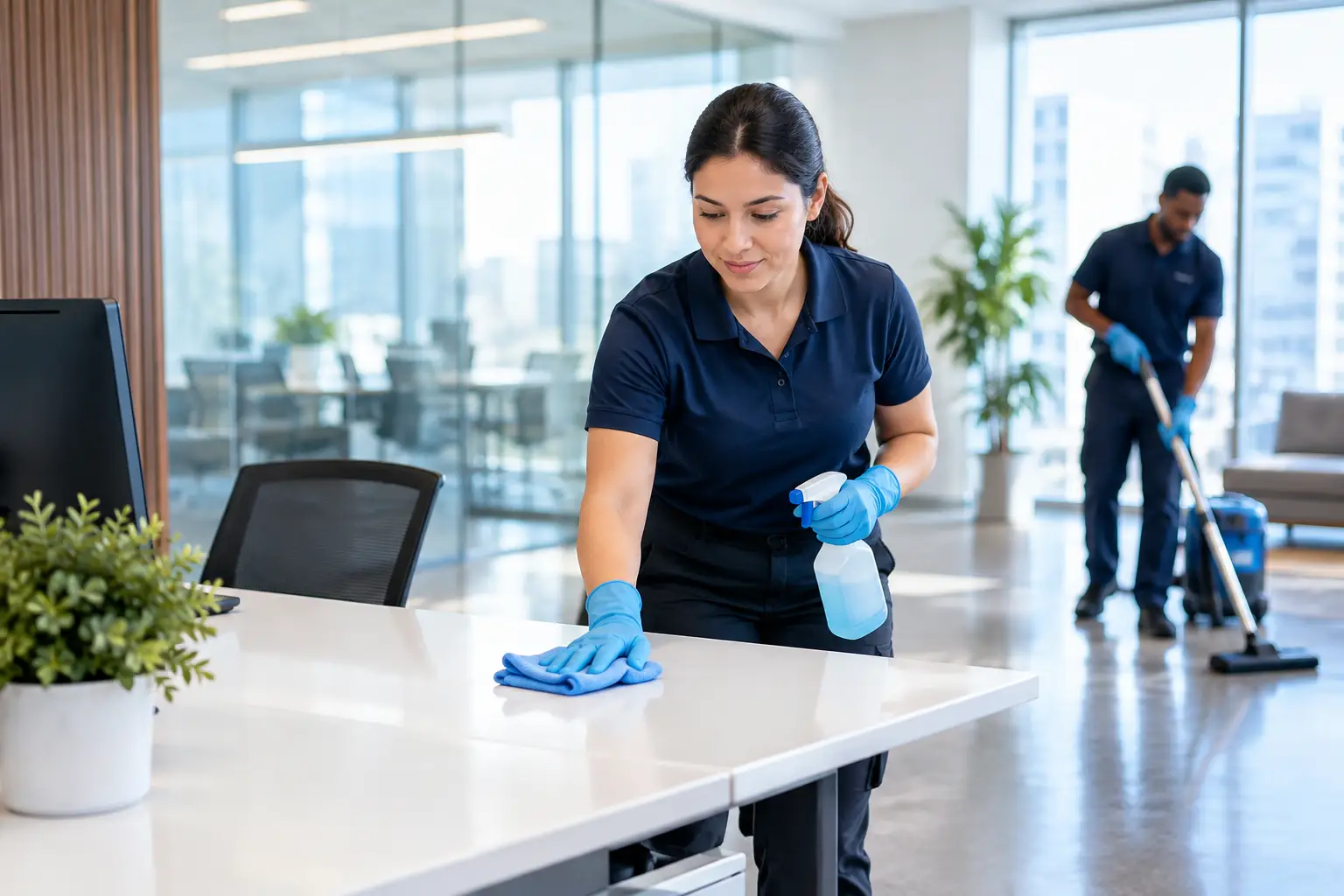
A lobby can look clean at 8:00 a.m. and feel neglected by noon. An office may have spotless desks while its break room, elevator buttons, or restroom floors tell a different story. That is why commercial cleaning trends are moving beyond a basic checklist and toward cleaning plans that respond to how people actually use a property.
For office managers, property managers, and HOA teams, the goal is not to chase every new product or buzzword. It is to make smart operational choices: where visible results matter most, when service needs to happen, and how a cleaning partner can adjust as occupancy, events, weather, and tenant needs change.
Commercial Cleaning Trends Shaping Property Care
Cleaning plans built around traffic, not square footage
Square footage still matters when planning service, but it does not tell the whole story. A lightly used 10,000-square-foot office can need less attention than a smaller suite with a busy reception area, shared kitchen, conference rooms, and daily client visits. The same applies to apartment common areas and HOA clubhouses, where traffic changes dramatically around weekends, holidays, pool season, and community events.
More commercial clients are asking for plans based on traffic patterns and priority zones. High-touch and high-visibility areas may need frequent attention, while low-use rooms can follow a different schedule. This helps direct time where it has the strongest impact without treating every corner of a building as if it has the same level of activity.
For a property manager, that may mean more frequent lobby and restroom care, with periodic detailed cleaning for stairwells, storage areas, or meeting rooms. For an office, it may mean focusing on entryways, break rooms, and shared workspaces after the busiest days of the week. A customized plan is more useful when it reflects the building’s real routine.
Day porter support and flexible service windows
Many workplaces no longer operate on one predictable schedule. Hybrid work has changed the rhythm of office cleaning, while retail, medical-adjacent offices, multifamily communities, and multi-location businesses often have their own peak hours. A cleaning schedule that worked two years ago may now leave the building unattended at the moments when it needs the most support.
Flexible scheduling is becoming a practical expectation. Some properties benefit from cleaning after business hours, while others need daytime attention for restrooms, spills, trash removal, or common-area presentation. The right choice depends on foot traffic, privacy needs, building access, and the level of disruption a business can accommodate.
This is also where communication matters. Managers need a provider who can respond when a conference is added, a community room is booked, a tenant moves out, or weather tracks dirt into an entryway. Flexibility does not mean an undefined scope. It means having a clear plan, clear priorities, and a process for adjusting service when property needs change.
Visible detail is becoming a management priority
Commercial decision-makers increasingly evaluate cleanliness through the details people notice immediately. Smudged glass doors, overflowing trash, dusty baseboards, stained elevator thresholds, and neglected corners can affect how tenants, visitors, employees, and prospective residents perceive the property.
This does not mean every service visit should become a deep-cleaning project. It means recurring cleaning should account for the presentation points that shape first impressions. Entry glass, floors, restrooms, reception surfaces, clubhouse furniture, and break room counters often deserve more attention than areas that remain out of public view.
For HOAs and multifamily properties, visible detail is especially tied to resident satisfaction. A clean clubhouse before an event, a refreshed community room after heavy use, and consistently maintained common areas show that the property is being cared for. These results come from routine attention, not last-minute scrambling before a walkthrough or inspection.
Technology Is Improving Accountability, Not Replacing People
Technology is influencing commercial cleaning, but its most valuable role is often simple: helping managers communicate and helping cleaning teams stay aligned. Digital work orders, service notes, issue reporting, and scheduling tools can make it easier to document requests and track recurring priorities across a property.
For multi-location businesses and management companies, this is particularly helpful. A manager may be responsible for several offices, apartment communities, or shared facilities without being physically present at each one. Clear communication creates a more reliable handoff between the property team and the cleaning provider.
Still, technology is not a substitute for attentive service. No dashboard can notice that a lobby rug is holding onto moisture after rain, that a trash enclosure needs attention before a weekend, or that an event left a community room outside its normal condition. The best approach combines organized communication with people who understand the scope and pay attention to the space.
Equipment choices are becoming more purpose-specific
Commercial clients are also paying closer attention to whether the equipment and methods match the surface and setting. Carpeted office corridors, hard floors in common areas, glass entryways, concrete walkways, and shared restrooms each require a different approach. Using the same process everywhere can be inefficient and may leave visible issues behind.
Floor care is one area where planning makes a noticeable difference. Routine maintenance can help preserve the appearance of hard surfaces, while periodic detailed service may be appropriate for high-traffic areas. The timing depends on the material, volume of use, weather exposure, and the expectations of the property owner or tenant.
This trend is less about buying the newest machine and more about matching the work to the property. Before adding a specialized service, managers should consider whether it solves a recurring issue, improves presentation, or reduces the need for disruptive catch-up cleaning later.
Sustainability Is Becoming More Practical
Sustainable cleaning is no longer limited to a broad preference for green products. Commercial clients are asking more practical questions: Can supplies be selected with the building’s needs in mind? Can waste be managed thoughtfully? Can cleaning methods avoid unnecessary product use while still delivering a well-maintained space?
The answer depends on the property, its surfaces, tenant expectations, and any existing facility requirements. A busy restaurant-adjacent office, a clubhouse with frequent events, and a low-traffic professional suite will not have identical needs. The most useful conversations focus on what can realistically be incorporated into the cleaning plan rather than making vague promises.
Waste reduction can also be operational. Properly planned supply use, sensible scheduling, and preventive attention to floors and high-traffic areas may reduce the need for repeated corrective work. For managers, sustainability is strongest when it supports a cleaner-looking property and a workable long-term maintenance routine.
Commercial Cleaning Trends Also Favor Preventive Care
Reactive cleaning costs time. A property team that waits until floors are visibly worn, common areas are heavily soiled, or move-out needs pile up may face more disruption than a team that schedules preventive attention. This is why recurring janitorial service, floor care, and periodic detailed cleaning are increasingly planned together rather than treated as unrelated tasks.
Preventive care does not require over-servicing a space. It requires reviewing what happens between visits. Are entryways getting dirty after rainy days? Are break rooms busiest on specific days? Does a clubhouse need a reset after recurring meetings? Do apartment turnovers create predictable pressure points for the maintenance team?
When those patterns are identified, a cleaning plan can be adjusted before small appearance issues become larger operational problems. This is especially valuable for property management teams balancing tenant expectations, vendor coordination, and limited time for site walkthroughs.
Putting These Trends Into a Workable Cleaning Plan
The strongest commercial cleaning plans are not built around trends alone. They begin with a property walkthrough, a candid conversation about priorities, and a schedule that fits how the space is used. A manager should be able to explain what needs attention every visit, what should be handled periodically, and what situations require an added service request.
It also helps to define communication expectations early. Who submits requests? How are urgent concerns handled? What areas are off-limits or require coordination? How should the team prepare for a tenant event, a move-out, or a higher-than-usual traffic week? These details create fewer surprises for everyone involved.
For San Diego County offices, HOAs, apartment communities, and commercial properties, Call The Helper LLC can build cleaning plans around recurring needs, common areas, facility use, and scheduling requirements. The right scope may include regular janitorial support, office cleaning, clubhouse cleaning, floor care, or periodic detailed service based on the property rather than a one-size-fits-all package.
A well-run cleaning plan should make the property easier to manage. When the work reflects real traffic, real priorities, and clear communication, managers can spend less time reacting to visible problems and more time maintaining a space people are comfortable using.


Comments are closed