



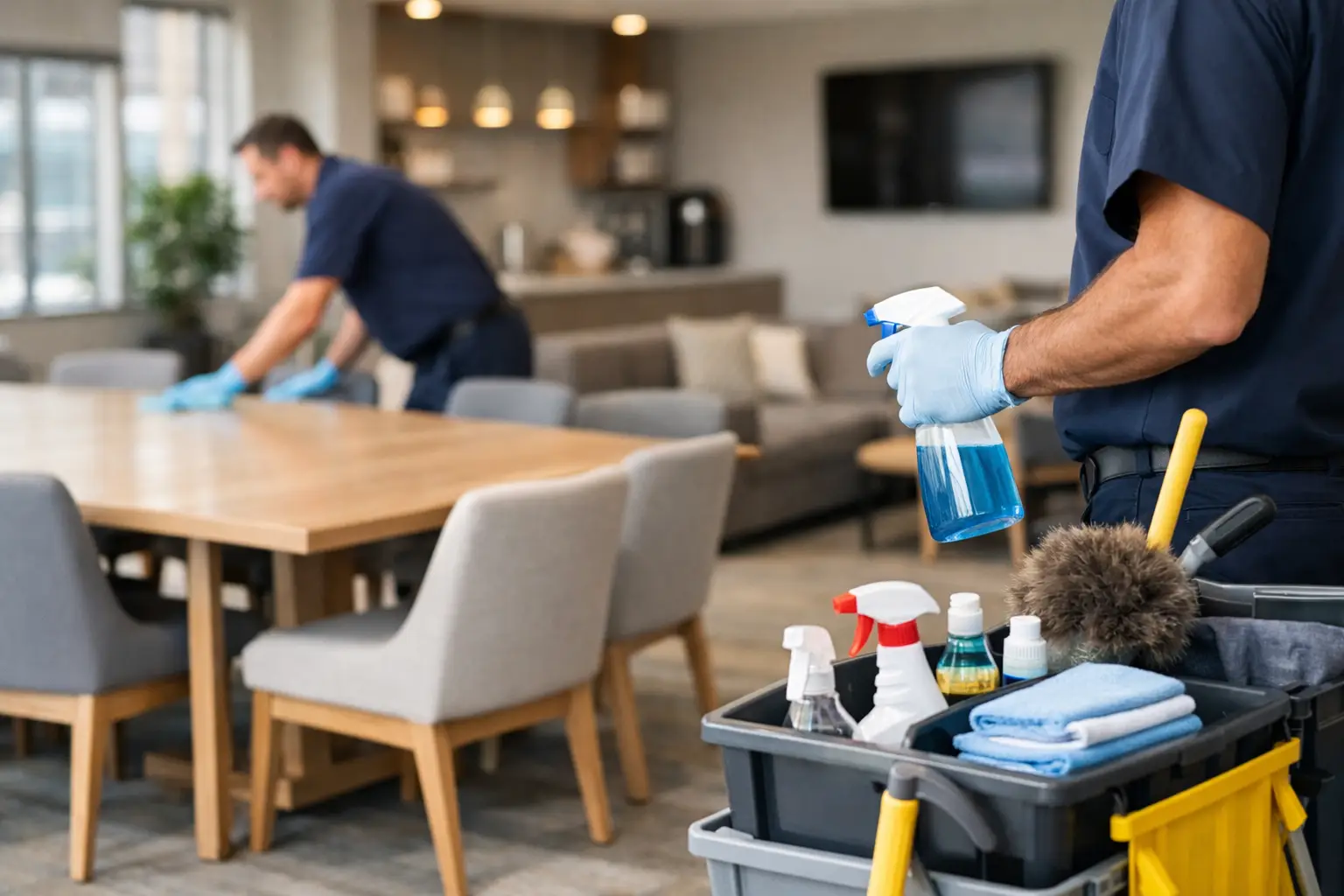
A community room can look perfectly fine on Monday morning and feel neglected by Friday afternoon. A few meetings, children’s activities, private reservations, and rainy-day foot traffic can quickly change the condition of floors, restrooms, tables, and entryways. The question, “how often clean community rooms,” is really a question about how your shared space is used and what residents expect when they walk in.
For HOA boards and property managers, the right schedule is not always a simple weekly or monthly decision. It should protect the appearance of the space, support day-to-day usability, and prevent small issues from becoming visible complaints. The most effective approach combines a dependable baseline routine with additional cleaning around events and busy periods.
How Often Should You Clean Community Rooms?
Most community rooms need attention at least once a week, even when they are not heavily booked. A weekly service keeps dust, fingerprints, restroom buildup, tracked-in debris, and surface clutter from accumulating. However, weekly cleaning alone may not be enough for an active clubhouse or reservable room.
A practical schedule often includes four levels of service:
- Daily or several times per week: High-traffic rooms, spaces with frequently used restrooms, fitness-adjacent facilities, and clubhouses with regular programming.
- Weekly: Lightly used community rooms, meeting rooms, and shared indoor areas with limited reservations.
- After each event or reservation: Rooms used for parties, classes, board meetings, resident gatherings, or catered functions.
- Monthly or quarterly detail service: Baseboards, vents, interior glass, detailed floor care, high ledges, and areas that do not need constant attention but still affect the room’s overall condition.
The best frequency depends on occupancy, not just square footage. A small room used every day can require more care than a larger room that is booked twice a month. Property managers should also consider whether the room connects to a lobby, pool area, playground, or other common area that brings in dirt and moisture.
Start With a Weekly Baseline
For many HOA community rooms, weekly cleaning is the minimum sensible starting point. This visit can include vacuuming or mopping floors, wiping tables and counters, cleaning restrooms, removing trash, dusting reachable surfaces, and addressing fingerprints on doors and glass.
A consistent weekly routine gives the room a maintained appearance between reservations. It also makes inspections easier. When the space is cleaned on a predictable schedule, it is much simpler to identify a spill, damage, or supply issue that needs attention.
If the room includes a kitchenette, a weekly visit should also focus on sink areas, appliance exteriors, counters, cabinet fronts, and visible crumbs or residue. Kitchenettes tend to make a room feel unclean faster because even minor messes stand out.
Add Post-Event Cleaning for Reservable Spaces
Reservations change the cleaning equation. A room may receive a full weekly service and still need immediate attention after a Saturday birthday party or a weekday evening meeting. Waiting until the next scheduled visit can leave the next group walking into a space with sticky floors, overflowing trash, marked tables, or restroom issues.
Post-event cleaning does not have to be identical every time. A small board meeting may only require trash removal, table wiping, restroom touch-up, and a quick floor check. A larger social event may call for more extensive floor cleaning, kitchen cleanup, spot treatment, and attention to entry doors and restrooms.
This is where a customized plan is useful. The schedule should reflect the type of event, expected attendance, food service, event duration, and turnaround time before the next reservation. A room booked back-to-back needs a faster response than one with several open days between events.
Use Traffic Patterns, Not Assumptions
Cleaning schedules often fall short because they are based on what a room is supposed to be used for rather than what actually happens there. Review room calendars, resident activity patterns, and maintenance reports over several months. You may find that the busiest periods are not the obvious ones.
For example, a community room may see heavy use during summer pool season, holiday gatherings, annual meetings, school breaks, or rainy weeks when residents spend more time indoors. In San Diego County, seasonal outdoor activity can also bring dust, sand, and debris into clubhouses and shared rooms, particularly near pool decks, patios, and coastal communities.
Pay attention to these practical indicators:
- How often the room is reserved and how many people attend
- Whether food and drinks are commonly allowed
- How frequently restrooms are used by residents who are not part of a reservation
- The amount of foot traffic entering from outdoor common areas
- Whether complaints tend to increase before meetings, weekends, or holidays
These details help a property manager avoid both under-cleaning and over-scheduling. Cleaning too infrequently can affect resident confidence in the property. Cleaning more often than the room requires can strain an operating budget without delivering a meaningful improvement.
What Each Community Room Cleaning Should Cover
Frequency matters, but the scope of service matters just as much. A room may be cleaned every week and still appear unfinished if the work only focuses on the center of the floor and visible tabletops.
A dependable community room routine should address the areas residents notice first: entry doors, handles, glass, seating, tables, floors, trash receptacles, restrooms, and any kitchenette or serving area. High-touch points need regular attention because fingerprints and smudges create an immediate impression that the room has been overlooked.
Floors deserve special consideration. Hard floors may need routine mopping plus periodic deeper care to remove dullness and residue. Carpeted spaces can benefit from frequent vacuuming, prompt spot treatment, and scheduled carpet cleaning based on traffic and event use. Entry mats should also be checked regularly, since they collect debris before it spreads through the room.
Restrooms should never be treated as an afterthought. Even a lightly used community room can generate complaints if restroom fixtures, mirrors, dispensers, or floors are not checked often enough. In a busy facility, restroom touch-ups between full services may be the right answer.
Build Flexibility Into the Cleaning Plan
A fixed schedule is useful, but community spaces are rarely fixed in their needs. A strong plan includes room for extra service after a large event, before an important HOA meeting, or during a period of increased resident activity.
This flexibility is particularly valuable when property management teams oversee multiple common areas. Rather than treating every clubhouse, lounge, mailroom, and meeting room as identical, assign service frequencies based on real use. The main clubhouse may need several visits per week, while a smaller conference room may only need weekly service plus event support.
Communication is part of the plan. Cleaning teams should know which rooms are reserved, when access is available, and whether there are special setup or cleanup concerns. Property managers benefit from a clear point of contact who can adjust service when community calendars change.
Call The Helper LLC can help property managers and HOA communities create a cleaning plan that fits regular use, event schedules, and the visible standards residents expect from shared facilities.
Review the Schedule Before Complaints Start
Do not wait for resident complaints to determine whether a community room is being cleaned often enough. A short monthly walk-through can reveal patterns before they become a larger issue. Look at floor edges, corners, door handles, restroom condition, odor, trash capacity, and the overall presentation of the room at different times of day.
If the room consistently looks clean immediately after service but declines quickly, the answer may be more frequent touch-ups rather than a larger weekly cleaning. If it looks acceptable most of the time but appears worn at the edges, periodic detailed cleaning may be the missing piece. The goal is not to create an excessive schedule. It is to make sure the room is ready when residents need it.
A well-kept community room quietly supports the whole property. When residents can walk into a clean, orderly shared space without wondering who used it last, the community feels better managed – and that is worth planning for.


Comments are closed