



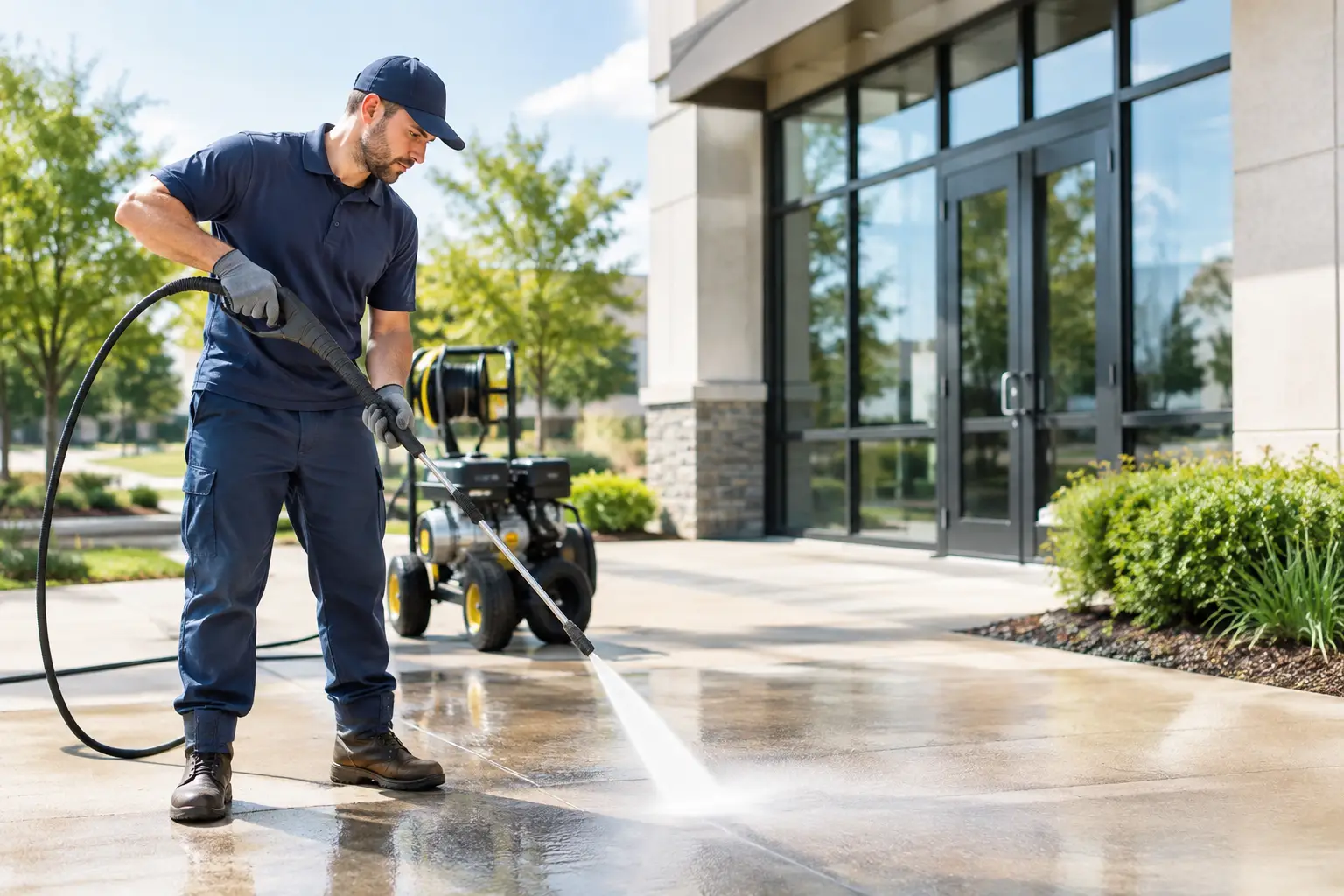
A stained entryway or slippery-looking walkway can change how residents, tenants, employees, and visitors view an entire property before they step inside. Pressure washing is a practical way to address built-up dirt, dust, tire marks, leaves, and outdoor residue in the areas people see and use most. For property managers and facility teams, the goal is not simply a brighter surface. It is a cleaner, better-presented property that can be maintained without creating unnecessary disruption.
Why Pressure Washing Matters for Managed Properties
Exterior surfaces carry the visible effects of daily use. Sidewalks collect foot traffic and debris. Dumpster pads can develop grime and odors. Clubhouse patios, breezeways, parking areas, storefront entrances, and pool-adjacent walkways may all need attention at different intervals.
Ignoring these surfaces until they look heavily soiled can make a property feel neglected, even when interior common areas are well maintained. A planned exterior cleaning approach gives managers a more organized way to address visible buildup before it becomes the first impression.
Pressure washing can also support routine property care after landscaping work, construction activity, tenant turnover, seasonal weather, or a large community event. The right timing depends on the property, its traffic patterns, nearby trees, and the type of surface being cleaned.
Pressure Washing Is Not One Setting for Every Surface
The term pressure washing can suggest that more force is always better. In reality, the correct approach starts with the surface. Concrete may handle a different cleaning method than painted siding, composite decking, stucco, pavers, exterior furniture, or delicate stonework.
High pressure can be effective on durable concrete where ground-in dirt and tire marks are the issue. But excessive pressure can damage mortar, loosen paint, etch softer materials, disturb joint sand between pavers, or force water into areas where it does not belong. A cleaning plan should account for surface condition, age, coatings, stains, drainage, and nearby landscaping.
Some exterior areas benefit from lower-pressure washing paired with an appropriate cleaning solution and a thorough rinse. This is often the better choice for building exteriors and other materials that need cleaning without aggressive force. The method matters as much as the equipment.
For multifamily communities and commercial sites, a walkthrough before service helps identify problem areas. It also helps clarify which stains may improve with cleaning and which may be permanent discoloration, worn coating, rust, oil penetration, or damage requiring a separate maintenance decision. Clear expectations prevent a routine cleaning project from becoming a surprise.
Build Exterior Cleaning Around Property Operations
A well-managed pressure washing service should fit the property’s schedule rather than interrupt it. A busy office entrance may be best handled outside normal operating hours. A community clubhouse might need service between reservations. At an apartment community, crews may need to work around resident traffic, parking access, deliveries, and landscaping schedules.
Before work begins, managers should confirm the service area, access points, water availability, parking requirements, and any sections that need to remain open. It is also helpful to identify exterior outlets, windows, door thresholds, drainage points, sensitive landscaping, and items that should be moved or protected.
Communication is especially important for HOA and common-area work. Residents and guests should know when pathways, patios, or parking sections may be temporarily affected. A simple notice can reduce confusion and help keep the work area clear. For commercial properties, coordinating with tenants and on-site teams keeps daily operations moving while cleaning is completed.
Call The Helper LLC can tailor exterior cleaning support to the scope and scheduling needs of residential, commercial, HOA, and property-managed spaces in San Diego County. The most useful plan is one that considers how a space is actually used, not just how it looks on a checklist.
Where Pressure Washing Often Delivers the Most Visible Value
For many properties, the highest-impact areas are the places that frame arrival and shared use. Entry sidewalks, front steps, breezeways, courtyards, common patios, dumpster enclosures, garage approaches, and community room exteriors often influence the overall appearance of the property.
Concrete walkways are a common priority because they show dust, spills, leaf tannins, and dark traffic patterns quickly. Cleaning these areas can make landscaping, signage, and building fronts appear better maintained without changing the property itself.
Dumpster and trash enclosure areas may need separate attention because the soil load is different. Grease, residue, loose debris, and odors can require more preparation than a standard sidewalk. Cleaning should be paired with practical site habits, such as prompt trash removal and regular bin cleaning, when those services are part of the property’s maintenance plan.
Parking surfaces are another case where expectations should be realistic. Pressure washing can improve many marks and general grime, but deeply absorbed automotive fluids may not fully lift from porous concrete or asphalt. Treating the cause of repeated spills is often as important as cleaning the visible result.
Set a Schedule Based on Conditions, Not Guesswork
There is no single pressure washing schedule that works for every building. A high-traffic retail entrance may need more frequent service than a low-use office patio. A coastal property can face different environmental conditions than an inland community. Trees, irrigation overspray, construction dust, pets, and the number of people using a space all affect how quickly surfaces become soiled.
Property managers can use routine inspections to decide when cleaning is warranted. Look for darkened pathways, visible buildup around entries, residue near waste areas, slip-prone-looking sections, or exterior spaces that no longer match the condition of the interior. Scheduling before a major inspection, leasing event, resident gathering, or seasonal transition can also be practical.
Recurring service is useful when a property has predictable needs, but one-time pressure washing may be the right fit after construction work, landscaping projects, a move-out period, or an unusually messy event. The better option depends on the condition of the property and the maintenance resources already in place.
Choose a Provider Who Plans for the Details
Price and availability matter, but they should not be the only considerations for exterior cleaning at a managed property. Ask how the provider evaluates surfaces, handles access coordination, protects adjacent areas, and communicates if conditions on site differ from the original scope.
A clear scope helps avoid missed areas. It should identify the sections to be cleaned, the timing of service, any access restrictions, and whether the work is a one-time project or part of a broader janitorial and common-area cleaning plan. Photos or a property walkthrough can be useful when the site has multiple buildings, separate courtyards, garages, or amenity spaces.
Responsiveness matters after the work is scheduled, too. Property needs can shift because of weather, resident events, vendor access, or an unexpected maintenance issue. A provider that communicates clearly makes it easier for managers to adjust plans without losing track of the details.
A Cleaner Exterior Supports the Whole Property Experience
Pressure washing is most effective when it is treated as part of ongoing property presentation, not as a last-minute response to a visibly dirty surface. Thoughtful scheduling, surface-appropriate methods, and clear coordination can help preserve the appearance of the spaces people notice first.
When an entry, walkway, courtyard, or shared facility begins to look worn down, addressing it early gives the property team more control over the outcome and keeps routine cleaning from turning into a larger catch-up project.


Comments are closed