



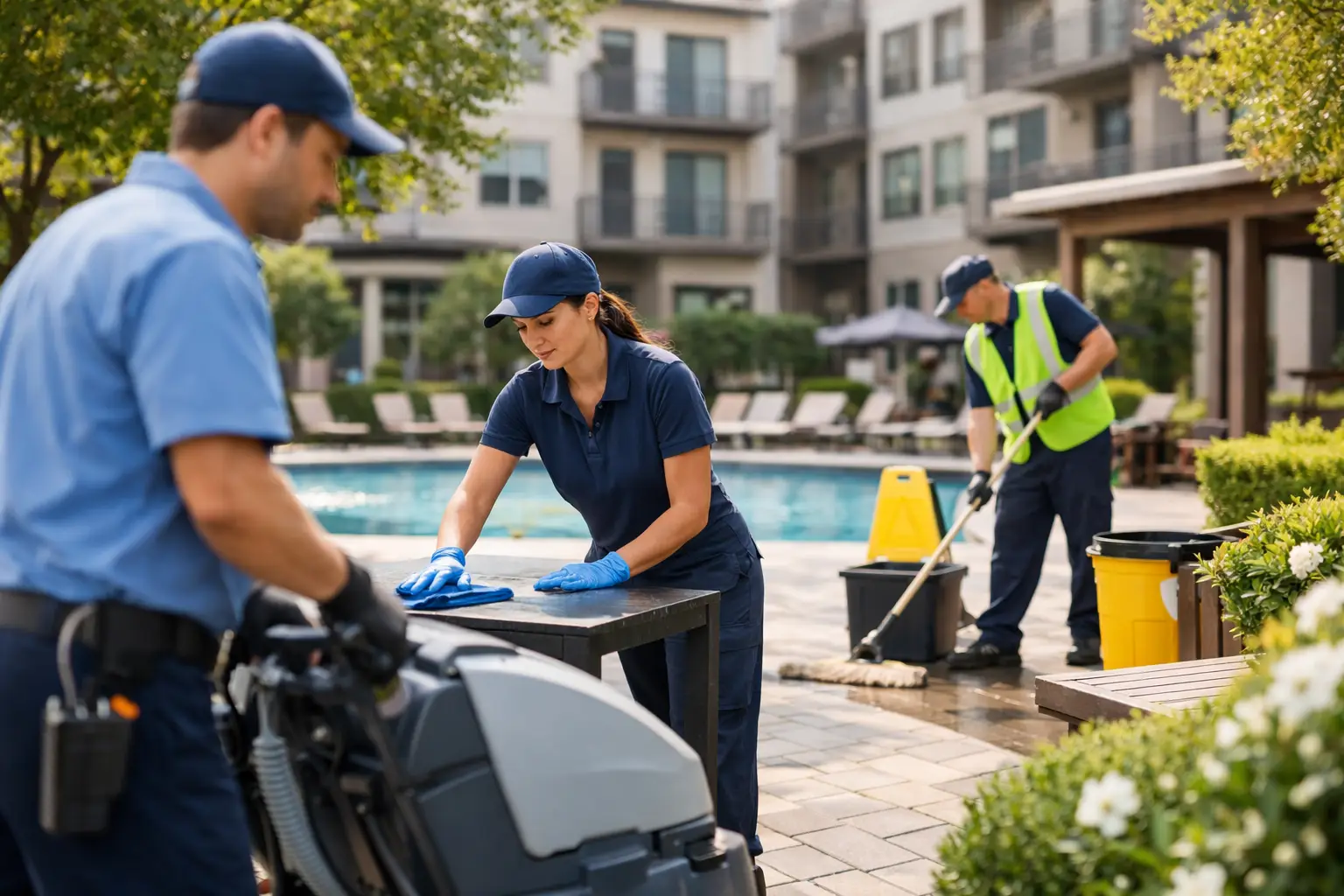
A clubhouse can look fine at 8:00 a.m. and feel neglected by late afternoon. A few fingerprints on glass doors, overflowing trash, tracked-in debris, and a restroom that needs attention can quickly change how residents view the entire community. This HOA cleaning case study uses a representative property-management scenario to show how a clearer cleaning plan can improve common areas without creating more work for the board or manager.
The situation is familiar in managed communities: the cleaning team was coming regularly, but the results did not always match the pace of the property. High-use areas needed attention at different times, communication was inconsistent, and recurring details were easy to miss. The solution was not simply to add more cleaning hours. It was to match the service plan to how the community actually operated.
The Property Challenge
This representative HOA managed a community with a clubhouse, community room, fitness area, restrooms, entryways, mail area, and outdoor gathering spaces. Resident activity changed throughout the week. Weekends brought private events and heavier foot traffic. Mornings saw gym use and package pickups. Seasonal gatherings increased pressure on restrooms, floors, trash areas, and touchpoints.
The prior approach treated every visit the same. The cleaner completed a standard checklist, but that checklist did not account for the spaces residents noticed most often. The entry glass might be cleaned on one day, while the community room was given the same level of attention even after a busy evening event. When an issue was reported, the manager had to explain it again instead of relying on a documented, repeatable process.
For an HOA board, the concern was not just cleanliness. Shared spaces represent the community. A poorly maintained clubhouse can affect resident confidence, create friction around reservations, and leave property staff handling avoidable follow-up requests.
What the HOA Cleaning Case Study Changed
The first step was a walk-through focused on use patterns rather than square footage alone. The property manager identified where residents entered, waited, exercised, gathered, and disposed of trash. That made it easier to separate daily visual priorities from less frequent detail work.
The revised plan organized cleaning around three practical levels of attention. High-visibility areas such as entrances, lobby surfaces, restrooms, and clubhouse floors received consistent attention during each scheduled visit. Event-sensitive spaces, including the community room and kitchen areas, were addressed before and after reservations when scheduling allowed. Detail items such as baseboards, vents, interior glass, and corners were assigned to a rotating schedule so they would not disappear behind daily tasks.
This distinction matters. A sparkling baseboard does not offset an unclean restroom during a resident event. At the same time, only addressing the obvious surfaces eventually creates a tired-looking facility. A dependable HOA cleaning plan needs both: immediate presentation and a cadence for deeper upkeep.
A schedule built around resident activity
Instead of relying on a one-size-fits-all routine, the manager and cleaning provider established service windows that reflected the property calendar. A weekday visit supported regular traffic, while planned attention around larger gatherings reduced the chance that a booked amenity would be handed off in poor condition.
Not every community needs the same frequency. A smaller association with limited amenity use may need fewer visits and more focused periodic cleaning. A busy property with a fitness center, active clubhouse, or frequent reservations may need a more regular schedule. The right plan depends on foot traffic, available facilities, event volume, and the standard residents expect from shared spaces.
Clear scopes prevented missed details
The work scope was written in plain, observable terms. Rather than saying a room would be “cleaned,” the plan identified the results expected: floors free of visible debris, restroom fixtures wiped and refreshed, trash removed, mirrors and entry glass checked, and common touchpoints attended to.
That level of clarity helps everyone. Property managers can see what belongs in each visit. Cleaning teams know which details carry the most weight. If the property changes, such as a new amenity opening or an increase in event reservations, the scope can be updated without confusion.
Communication Became Part of the Service
Cleaning quality is easier to maintain when communication has a structure. In this scenario, the property manager had one point of contact for routine scheduling questions, special event needs, and reported concerns. The cleaner also had a way to flag visible issues that were outside the regular scope, such as a leaking dispenser, damaged fixture, or unusually heavy mess after a gathering.
This did not mean every minor issue required a long email chain. It meant the property manager received useful, timely information and could decide what needed action. When a community room reservation ran late or a maintenance project created extra dust, the cleaning schedule could be adjusted with less disruption.
For HOA boards and management companies, responsiveness is part of the value of a cleaning relationship. A team may do excellent work on the floor, but the service can still feel unreliable if nobody knows who to contact or whether a request was received. Consistent communication keeps small concerns from becoming recurring complaints.
Visible Results Residents Could Notice
The strongest outcome was not a dramatic before-and-after moment. It was consistency. Residents entered a cleaner-looking facility more often. Restrooms and clubhouse areas were maintained with fewer visible lapses. The property manager spent less time revisiting basic expectations because the cleaning priorities were defined in advance.
The community also benefited from better readiness around amenity use. When an event was scheduled, the team knew which spaces needed special attention. When no event was planned, the service could focus on the regular upkeep that keeps a property looking cared for day after day.
That is the practical standard for HOA cleaning. The goal is not to make a facility look staged once a month. It is to help the property remain presentable, functional, and welcoming through normal resident use.
Lessons for HOA Boards and Property Managers
A cleaning provider should not need to guess what matters at your property. Start by identifying the areas residents see first and use most. Entrances, elevators, mailrooms, restrooms, clubhouses, fitness rooms, and hallways often carry more visual weight than their size suggests.
Next, look at the calendar. If your community has recurring meetings, private reservations, pool-season activity, or weekend traffic, the cleaning schedule should account for those peaks. A standard recurring plan can work well, but it should leave room for planned adjustments when property use changes.
Finally, make accountability easy. A defined scope, reliable scheduling, and a straightforward way to communicate special needs are more useful than vague promises. Managers should be able to explain what is included, what requires an added request, and who will respond when a concern arises.
A More Practical Approach to Shared-Space Care
For San Diego County communities, HOA cleaning often needs to account for outdoor dust, high resident activity, and amenity spaces that stay in use throughout the year. Call The Helper LLC works with property managers and HOA communities to create customized plans for clubhouses, community rooms, shared facilities, and common areas based on the property’s real needs.
The best time to improve a cleaning plan is before resident complaints become the main source of feedback. A thoughtful walk-through, a schedule built around the community, and clear expectations can turn cleaning from a recurring management headache into one less detail your team has to chase.


Comments are closed