



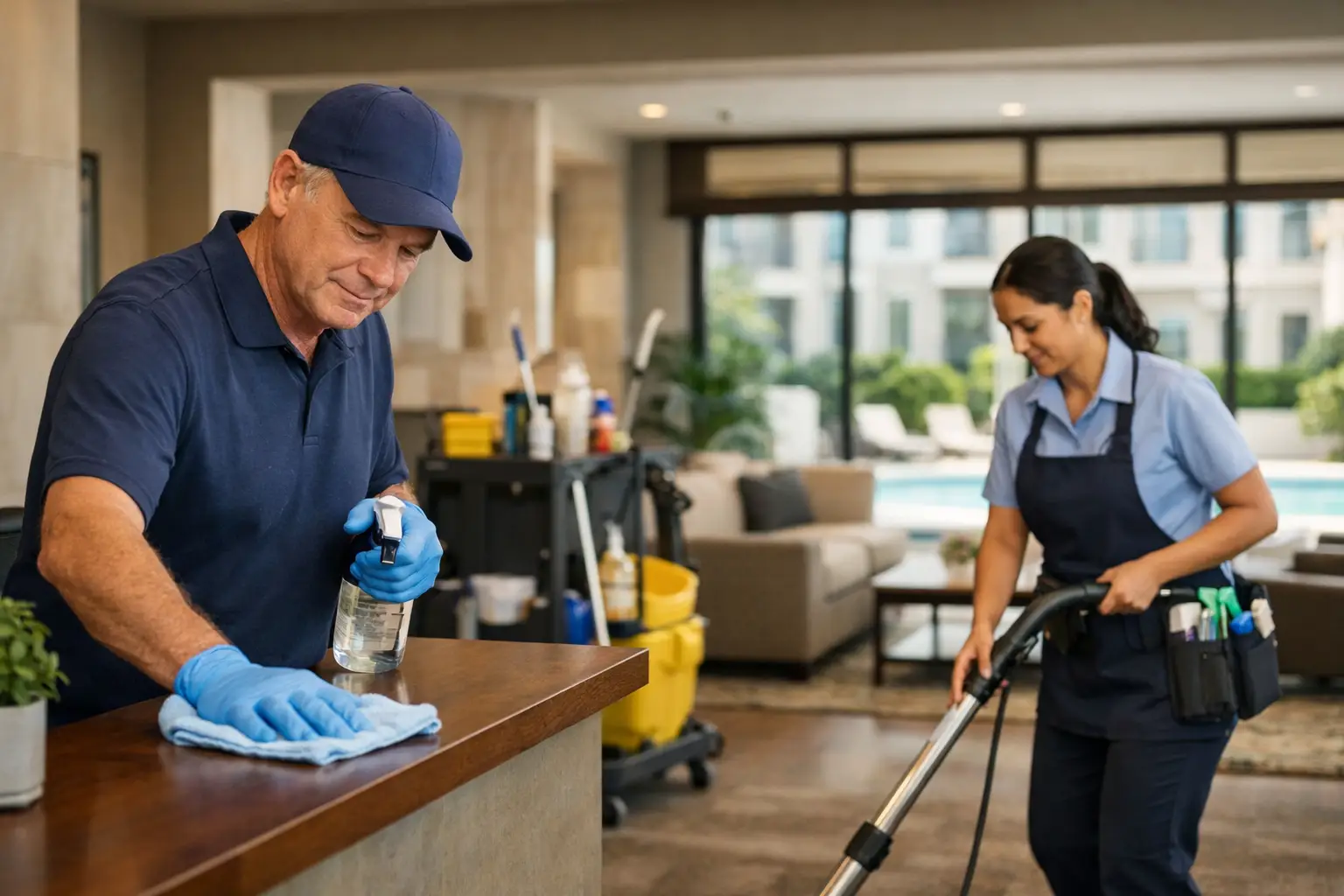
A stained clubhouse entry, overflowing trash enclosure, or dusty elevator lobby can become a board issue quickly. So, who cleans HOA common areas? In most communities, the HOA is responsible for making sure shared spaces are cleaned and maintained, but the day-to-day work is usually handled by a property manager, onsite staff, or a professional cleaning company.
The exact arrangement depends on the community’s governing documents, budget, amenities, staffing model, and expectations. What matters most is that responsibility is clear. When cleaning duties fall into a gray area, small problems become visible frustrations for residents, guests, and prospective buyers.
Who Cleans HOA Common Areas in Practice?
The HOA board is generally responsible for setting the standard and approving the budget for common-area care. That does not mean board members should be expected to inspect every restroom, sweep every walkway, or manage supply closets. Their role is oversight: deciding what the community needs, reviewing service options, and holding the management team or vendors accountable to the agreed scope.
A property management company often serves as the operational bridge. The manager may coordinate cleaning schedules, report concerns, communicate with vendors, approve routine work within established limits, and update the board. In a larger community with onsite management, the manager may also conduct regular walkthroughs and address issues before residents need to report them.
The actual cleaning may be performed by one of several parties. Some communities have maintenance or janitorial staff who handle daily basics. Others hire a dedicated HOA cleaning company for recurring service. A mixed approach is also common: onsite staff may empty trash or handle quick touch-ups, while a professional crew completes detailed cleaning of clubhouses, restrooms, fitness areas, lobbies, floors, and high-touch surfaces.
Residents have a role, too, but it is different. They are expected to follow community rules, clean up after themselves and their guests, and report issues they notice. Residents are not usually responsible for routine cleaning of shared facilities unless the association’s rules specifically assign a task, such as removing personal items after reserving a community room.
Common Areas That Usually Need Cleaning
“Common area” can mean much more than a front lobby. In a condominium building, it may include corridors, elevators, entry doors, stairwells, mailrooms, laundry rooms, trash rooms, parking areas, and shared restrooms. In a planned community, the list may extend to a clubhouse, leasing or management office, pool-adjacent restrooms, fitness center, community kitchen, playground seating, gates, and outdoor gathering spaces.
The right cleaning plan depends on how often each area is used. A small community room reserved once or twice a month needs a different schedule than a busy fitness center or a lobby that sees residents, delivery drivers, and visitors all day. Cleaning every space on the same frequency can waste budget in low-use areas while leaving busy areas below standard.
High-touch surfaces also deserve attention. Door handles, elevator buttons, handrails, call boxes, tables, restroom fixtures, and shared equipment show wear quickly. Regular attention helps the property look cared for and gives residents confidence that their association is managing shared spaces responsibly.
Cleaning Responsibilities Should Start With the Scope
Many HOA cleaning issues are not caused by poor effort. They start with an unclear scope of work. A contract that simply says “clean common areas weekly” leaves too much open to interpretation. Which areas? What does clean mean? Are trash rooms included? Is floor care limited to vacuuming, or does it include mopping, spot treatment, and periodic deep cleaning?
A useful scope identifies the areas to be serviced, the tasks required, and the intended frequency. For example, a recurring service plan may cover lobby floors, glass entry doors, restrooms, community room surfaces, trash area touch-ups, and clubhouse kitchen cleaning. Less frequent services might include carpet cleaning, pressure washing, detailed floor care, or post-event cleaning.
It also helps to define what is outside the regular visit. Biohazard cleanup, major spills, construction debris, pest-related cleanup, and damage caused by misuse may require separate coordination. Clear boundaries prevent frustration for both the association and the cleaning team.
Frequency Is a Budget and Experience Decision
There is no universal answer to how often an HOA should clean. A high-rise with elevators, common hallways, and heavy foot traffic may need service several times per week or daily. A smaller gated community with a modest clubhouse may be well served by weekly cleaning plus additional service after events.
Seasonality matters as well. Pool areas, clubhouses, and outdoor facilities may need more attention during warmer months or holiday periods. Rain can create extra work around entries and stairwells, while community events can leave restrooms, kitchens, and gathering areas needing prompt turnover.
The best schedule reflects actual use, not just habit. Property managers can identify patterns through resident feedback, walkthroughs, reservation calendars, and recurring trouble spots. If the same complaint appears every Monday, the community may need a weekend service adjustment rather than another reminder email.
How Boards and Managers Can Keep Standards Consistent
A cleaning provider works best when the association gives clear priorities and maintains an easy communication path. A regular point of contact, a defined method for reporting issues, and periodic reviews make it easier to address concerns early.
Walkthroughs are especially valuable after a new cleaning plan begins. They allow the manager and cleaning provider to confirm details that may not be obvious in a written scope: where supplies are stored, which doors require access coordination, how trash enclosures are used, what surfaces need special care, and which areas residents notice first.
Consistency also depends on documentation. A simple cleaning checklist can help confirm that recurring tasks are completed and identify work that needs to be scheduled separately. This is not about creating unnecessary paperwork. It gives boards and managers a practical way to connect the approved scope with the visible condition of the property.
When an issue arises, the response should be specific. “The clubhouse was not clean” is harder to act on than “The community room floor had debris after Saturday’s event, and the restroom supplies were low by Sunday morning.” Specific observations help the right person solve the right problem.
Choosing Between Onsite Staff and a Cleaning Company
Some associations prefer onsite staff because they are already present and can respond to small needs during the day. This can work well for properties with steady activity and a broad maintenance team. The trade-off is that cleaning can become secondary when staff are pulled into repairs, resident requests, vendor access, or emergencies.
A professional cleaning company provides dedicated time for cleaning tasks and can build a schedule around the property’s priorities. This approach is often useful when a community needs reliable recurring service, detailed clubhouse care, floor maintenance, or support after events. The key is matching the provider’s scope and availability to the community’s actual needs.
For many HOAs, the strongest approach is shared responsibility. Onsite staff handle quick daily observations and immediate concerns, while a cleaning crew takes care of planned recurring cleaning and deeper work. That division keeps urgent needs from disrupting the quality of routine service.
Call The Helper LLC supports HOA and property-managed communities with customized cleaning plans for shared facilities, clubhouses, community rooms, and common areas. The goal is straightforward: give managers and boards a dependable cleaning plan that reflects how their property is actually used.
When Residents Ask Who Is Responsible
Residents often ask who to contact when they see a dirty hallway, neglected restroom, or overflowing bin. The best answer is usually the property manager or designated management contact, not an individual board member or a cleaning crew onsite. Management can determine whether the issue belongs in the regular cleaning schedule, needs a same-day response, or involves another service such as maintenance or waste removal.
Boards can reduce confusion by clearly communicating how residents should report common-area concerns. A consistent process helps the association spot recurring issues, protect shared amenities, and respond without turning every cleaning concern into a public debate.
A well-kept common area is one of the most visible signs of a well-managed community. Clear roles, a realistic scope, and responsive communication make it easier to keep those shared spaces ready for the people who use them every day.


Comments are closed