




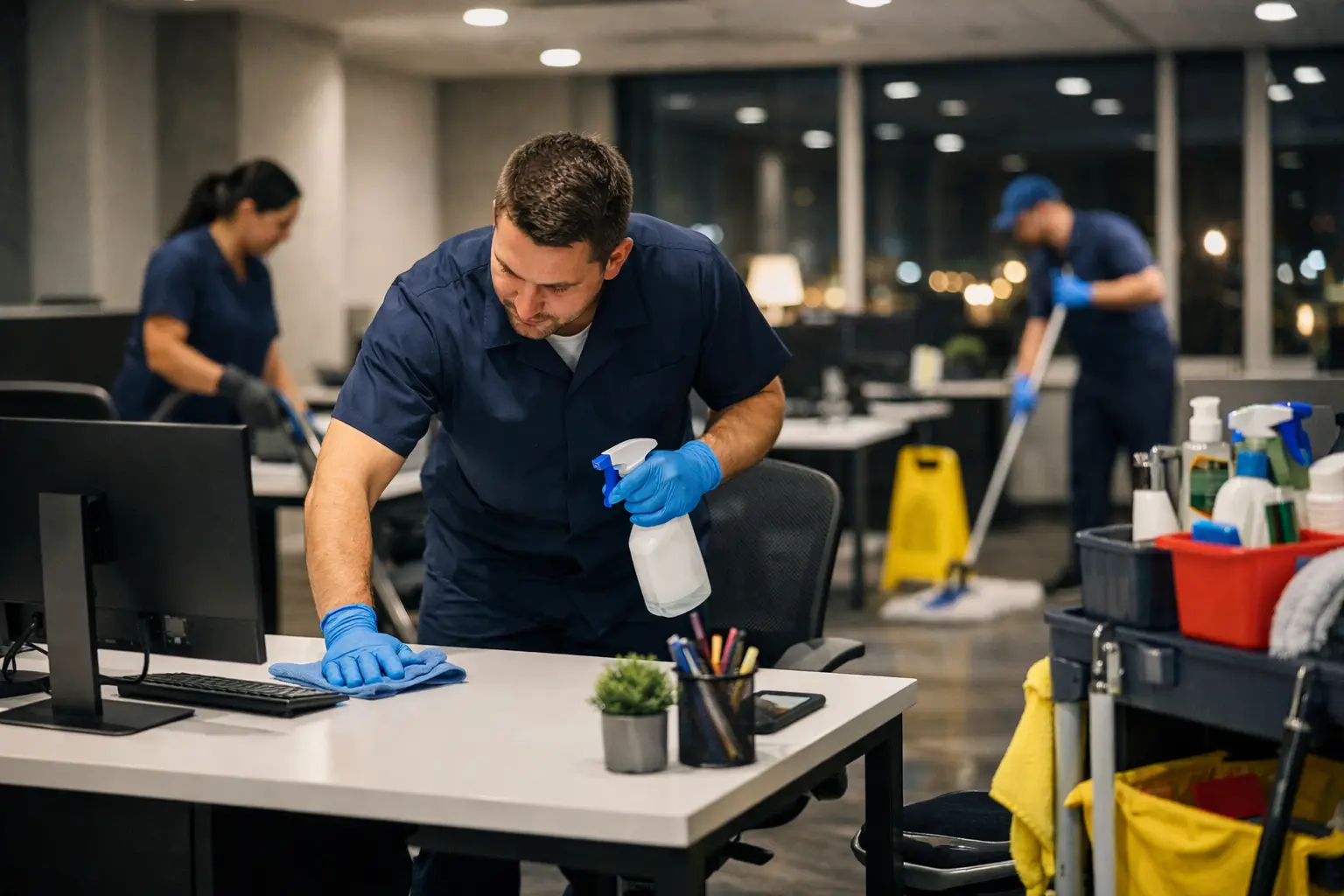
The last employee has logged off, the lights are lower, and the day’s traffic is finally out of the way. That is often the best time to reset an office. Office cleaning after business hours gives your team a clean place to return to without disrupting calls, meetings, focused work, or customer visits during the day.
For office managers, facility managers, and local business owners, the right schedule is not just about convenience. It affects how reliably cleaning gets completed, how your workplace looks when the doors open, and how easily your team can stay productive. A thoughtful after-hours plan makes the cleaning feel almost invisible – except for the visible results the next morning.
Why after-hours office cleaning makes practical sense
Daytime cleaning can work in small, low-traffic workplaces, especially when tasks are limited to quick touch-ups. But in a busy office, cleaning around active employees creates unavoidable compromises. Vacuuming competes with phone calls. Restroom cleaning may need to wait for availability. Common areas can be dirty again minutes after they are serviced.
After business hours, a cleaning team has clearer access to desks, break rooms, restrooms, conference rooms, entryways, and shared surfaces. Floors can be cleaned without people walking through wet areas. Trash can be removed without interrupting a meeting. The result is a more complete reset rather than a series of rushed tasks performed around the workday.
This schedule also gives businesses more control over the customer experience. Whether you manage a professional office, medical-adjacent administrative space, sales center, or shared commercial building, your first visitors should see an orderly lobby, clean floors, and well-maintained restrooms. Those details shape an impression before a conversation even begins.
Still, after-hours service is not automatically the right answer for every workplace. A small office with a few staff members may prefer early-morning cleaning, while a facility that operates around the clock may need cleaning divided into carefully planned service windows. The best choice depends on your traffic patterns, security procedures, building access, and the areas that need the most attention.
What office cleaning after business hours should include
A useful cleaning plan starts with the reality of your workspace, not a generic checklist. A client-facing office may need extra attention in its lobby and meeting rooms. A busy team kitchen may need more frequent care than private offices. A building with multiple restrooms, break areas, or shared corridors may need recurring janitorial support that keeps up with daily use.
For many offices, after-hours service centers on emptying trash and replacing liners, cleaning and restocking the appearance of restrooms using supplies provided on site, vacuuming carpeted areas, mopping hard floors, wiping high-touch shared surfaces, and cleaning break room counters and sinks. Entry glass, conference tables, and reception surfaces often deserve regular attention because they are among the first things employees and visitors notice.
The level of detail should also change by frequency. Daily or several-times-weekly cleaning usually focuses on maintaining a consistently presentable space. Weekly service may include more complete floor care and detail work. Periodic deep cleaning can address buildup in overlooked areas, such as baseboards, corners, interior glass, and floor edges.
A professional cleaning plan should make those distinctions clear. If every task is expected at every visit regardless of the time available, the outcome can become inconsistent. It is better to establish daily priorities, scheduled detail tasks, and a process for adding seasonal or one-time services when the facility needs extra care.
Start with the areas people use most
Not every square foot of an office carries the same impact. Reception areas, restrooms, kitchens, conference rooms, and hallways often have the highest visibility and the most daily traffic. These should be the foundation of the cleaning scope.
Private offices may require a lighter routine unless they receive frequent client visits. Storage rooms may need periodic rather than nightly service. This does not mean less-visible spaces should be ignored. It means the schedule should reflect how the office actually operates, so the work supports both presentation and cleanliness without wasting time on low-priority tasks every evening.
Plan for floors with care
Floor care is one of the biggest advantages of cleaning after hours. Vacuuming, mopping, and targeted spot cleaning can be completed with fewer interruptions and less risk of a freshly cleaned floor being immediately tracked over.
Different flooring needs different treatment. Carpeted offices may require regular vacuuming and occasional deeper carpet cleaning. Hard-surface floors may need frequent mopping, while entrances can require added attention during periods of heavy foot traffic or wet weather. A cleaning provider should understand the materials in your space and use a plan that protects their appearance rather than relying on the same approach everywhere.
How to make after-hours service reliable
A good cleaning schedule depends on clear communication long before the first visit. The cleaner needs to know when employees leave, which areas are off-limits, where supplies are stored, and how to handle building entry and exit. The office manager needs to know what will be completed, when service takes place, and who to contact if needs change.
Access is a central consideration. Some businesses provide keys, while others use controlled building access, lockboxes, or on-site procedures. Whatever method you use, establish it in writing and keep it simple. Include instructions for alarms, parking, elevator access, lights, and any doors that must be secured at the end of service.
It also helps to identify a single point of contact for routine questions. When an office manager, property manager, or designated team lead can communicate updates directly, it is easier to adjust service around holidays, late meetings, office events, construction work, or changes in occupancy.
A dependable cleaning partner should be responsive when the plan needs to change. A last-minute board meeting, a busy hiring week, or a spill in a common area can create needs that were not on the original schedule. Clear expectations make those situations easier to handle without confusion.
Create a scope that fits your office, not someone else’s
The most common mistake in commercial cleaning is choosing service based only on square footage. Size matters, but it is not the whole story. A compact office with a large staff, customer traffic, and a busy break room can require more frequent attention than a larger office with few daily occupants.
When building your plan, consider the number of people using the space, the number of restrooms, the volume of visitors, the flooring types, food and beverage areas, and whether the office shares common spaces with other tenants. Also consider the moments when presentation matters most. If clients arrive early on Mondays, for example, the prior cleaning visit should leave your reception area and meeting spaces ready for that first impression.
For property managers and HOA management teams overseeing office-like facilities, clubhouses, community rooms, or administrative spaces, the same principle applies. Cleaning should follow actual usage. A room that hosts evening meetings may need attention after the event, while a lightly used administrative area may be best served on a recurring schedule that balances appearance and budget.
Call The Helper LLC can help San Diego County businesses shape office cleaning around their hours, space, and priorities. The goal is straightforward: arrive to a workplace that feels cared for and ready for the work ahead.
Questions to settle before scheduling service
Before choosing office cleaning after business hours, walk through the space at the end of a typical workday. Notice where trash accumulates, where fingerprints show, which floors look worn first, and which rooms employees use most. Those observations are more valuable than a one-size-fits-all request for “basic cleaning.”
Discuss what happens when your office stays open late, hosts an event, or closes for a holiday. Decide whether cleaning should move to another night, be skipped, or be adjusted to focus on only the areas that need attention. It is also wise to clarify who provides consumable supplies and how supply shortages should be reported.
Finally, review the plan after the first few weeks. An office cleaning routine should be stable, but it should not be rigid. Employee counts change, seasons bring different floor-care needs, and a growing business may need more frequent service over time.
A clean office should not require your staff to work around the cleaning process. With the right after-hours schedule and clear expectations, the work happens quietly in the background, leaving each new business day with a space that is orderly, welcoming, and ready to support the people inside it.


Comments are closed