



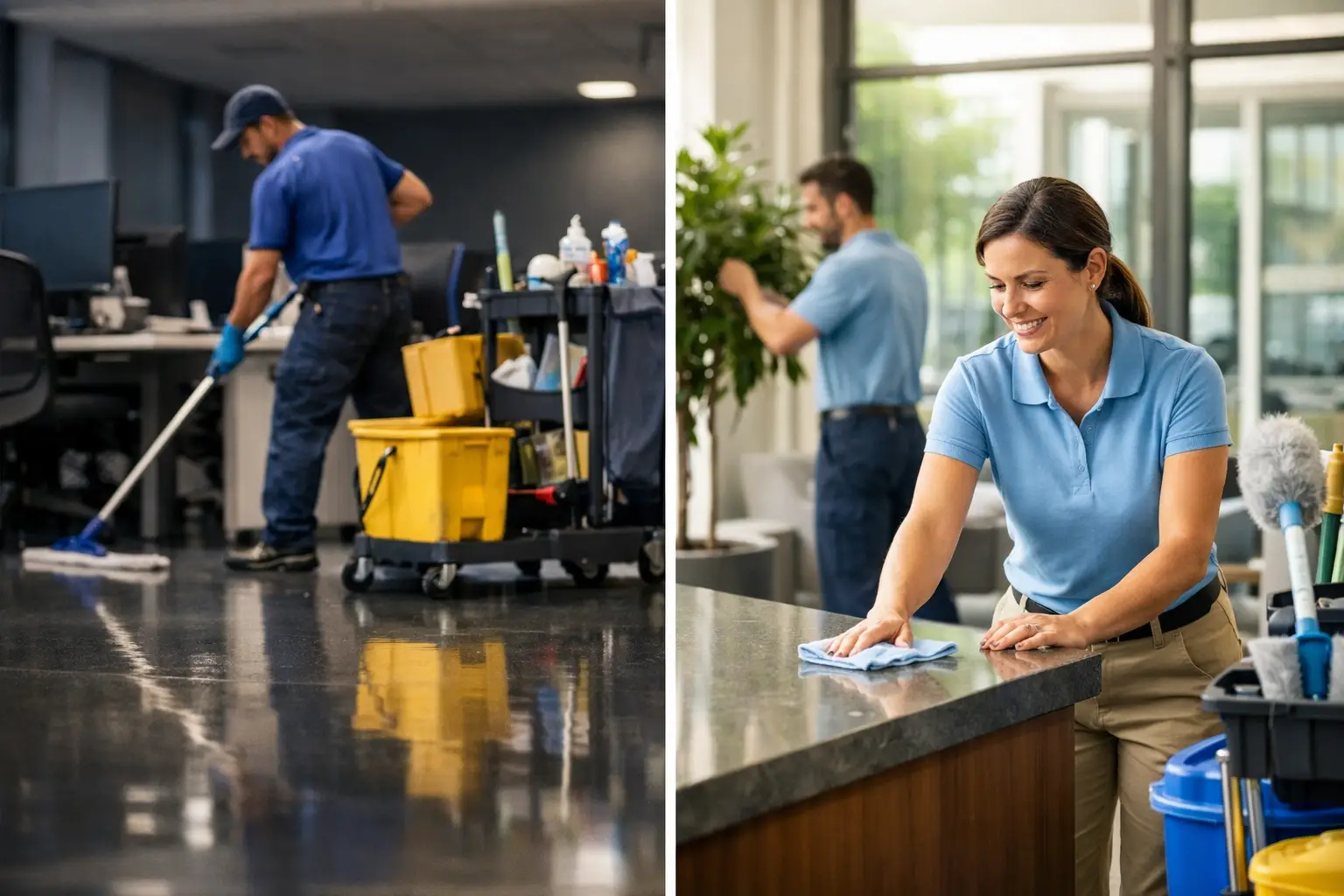
A lobby can look polished at 8 a.m. and noticeably neglected by noon. Trash fills up, fingerprints appear on entry doors, a restroom needs attention, and a spill creates an immediate concern. That difference in timing is at the heart of janitorial versus day porter services. Both support a clean, professional property, but they solve different operational needs.
For office managers, facility managers, and HOA property teams, the right choice is not about selecting the better service. It is about matching the cleaning schedule to how people actually use the space. A well-planned approach protects the appearance of your property while giving tenants, employees, visitors, and residents a more comfortable experience.
What Janitorial Service Is Designed to Handle
Janitorial service is typically scheduled after business hours, before opening, or during another low-traffic period. The purpose is to complete the deeper, routine work that keeps a facility consistently clean from day to day or week to week.
A customized janitorial plan may include restroom cleaning and sanitizing, vacuuming, mopping, dusting, emptying trash, cleaning break rooms, wiping high-touch surfaces, and maintaining common areas. In an office, that often means arriving the next morning to clean floors, refreshed restrooms, and orderly workspaces. In an HOA setting, it may mean maintaining clubhouses, community rooms, shared corridors, and amenity spaces after residents have finished using them.
The biggest advantage is efficiency. When a cleaning team can work without navigating meetings, customers, residents, or active operations, they can give detailed tasks the attention they require. This schedule is also practical for properties that do not need a cleaning presence throughout the day.
Janitorial service works especially well when usage is predictable. A smaller office with standard weekday hours, for example, may only need recurring evening cleaning. Likewise, a community room that hosts occasional events may benefit from scheduled cleaning before and after reservations rather than daily on-site coverage.
What a Day Porter Does During Business Hours
A day porter is a cleaning professional assigned to support a property while it is open and occupied. Instead of focusing only on a full after-hours cleaning, the day porter handles ongoing appearance and light cleaning needs as they arise.
Their work may include checking and refreshing restrooms, removing litter from entrances and common areas, spot-cleaning spills, wiping glass doors, replacing paper products supplied by the property, keeping break areas presentable, and responding to visible issues before they become distractions. At a busy commercial property or an active HOA community, this real-time attention can make a meaningful difference.
Day porter service is about presentation as much as cleaning. Visitors do not judge a workplace or community only after the nightly crew has finished. They judge it when they walk through the front door, use the restroom, enter the elevator, or attend a meeting in a shared room. A porter helps maintain that standard throughout the hours people are present.
That said, a day porter is not automatically a substitute for full janitorial service. The workday may bring constant interruptions and priorities that change by the hour. A porter can address immediate needs, but detailed floor care, thorough restroom cleaning, and full trash removal are often better completed during a scheduled janitorial shift.
Janitorial Versus Day Porter Services: The Key Difference
The simplest distinction is timing and purpose. Janitorial cleaning is planned, comprehensive, and usually completed when the building is quiet. Day porter service is responsive, visible, and performed while the property is in use.
Think of janitorial service as the foundation of your cleaning program. It handles the recurring work that resets the building. Day porter service acts as ongoing support, helping the property stay orderly between those scheduled cleanings.
The choice often comes down to traffic. An office with 15 employees and limited visitors may be well served by evening janitorial cleaning alone. A medical-adjacent office building, a customer-facing business, a large workplace, or a high-use HOA amenity area may need attention throughout the day. Frequent restrooms, shared kitchens, lobbies, and entryways are usually the first places where a daytime presence becomes valuable.
When Janitorial Service Is the Better Fit
Janitorial service is generally the right starting point for properties that need dependable recurring cleaning but do not experience frequent daytime messes. It can be customized around your operating hours and the rooms that require the most attention.
For an office manager, that may mean a nightly plan for work areas, restrooms, conference rooms, and break rooms. For a property manager, it may mean scheduled cleaning of hallways, leasing offices, clubhouses, fitness areas, and community rooms. The goal is a clean reset that is ready for the next day.
It is also a strong choice when budget priorities favor focused cleaning visits rather than an on-site attendant. A service plan can be scaled by frequency, square footage, room type, and the specific tasks your building needs. More frequent service is not always necessary if the space stays clean between visits.
When Day Porter Coverage Makes More Sense
Day porter coverage is most valuable when the condition of the property can change quickly during open hours. This includes facilities with steady foot traffic, frequent guest visits, public-facing entryways, shared restrooms, or multiple daily meetings and events.
For example, an HOA clubhouse may look excellent after a morning cleaning but need touch-ups after pool traffic, resident gatherings, or an afternoon event. A day porter can monitor the space, remove visible trash, address restroom concerns, and restore order before the next group arrives. That responsiveness helps property teams avoid the appearance of being behind on maintenance.
Day porter service can also ease the workload on on-site staff. Instead of asking a receptionist, maintenance coordinator, or community manager to stop what they are doing to handle a spill or restroom issue, the cleaning responsibility has a clear point of support. The value is not just a cleaner space. It is less disruption to the people responsible for running the property.
Why Many Properties Need Both
For high-traffic facilities, the strongest solution is often a combination of daytime porter support and recurring janitorial cleaning. The porter handles immediate needs during the day, while the janitorial crew completes deeper, systematic work after hours.
This approach is especially useful for larger offices, multi-tenant properties, busy common areas, and HOA communities with frequently used amenities. It prevents the common gap where a property receives a thorough evening cleaning but begins to look worn before the afternoon is over.
The scope should be clear from the beginning. Identify which areas need constant attention, which tasks should happen daily, and which can wait for the janitorial schedule. For instance, restroom checks and lobby touch-ups may be daytime priorities, while full floor cleaning and detailed break-room service belong on the evening checklist.
Questions to Ask Before Choosing a Service Plan
Before selecting janitorial, porter, or combined coverage, look closely at how the property functions. Start with traffic patterns. When are your entrances, restrooms, and shared spaces busiest? A building that is quiet most of the day has different needs than one with a constant flow of employees, residents, vendors, and visitors.
Next, consider visibility. Areas such as lobbies, reception desks, elevators, clubhouses, and community rooms shape first impressions quickly. If these spaces must remain polished all day, porter support may be worth adding even when the rest of the building can follow a standard janitorial schedule.
Finally, consider responsiveness. If an issue occurs at 11 a.m., does it need to be handled immediately, or can it wait until evening? Spills, overflowing trash, and restroom supply concerns usually call for a same-day response. Routine dusting and full-floor care can often be scheduled during quieter hours.
A cleaning plan should reflect these answers rather than force every property into the same model. Clear expectations, consistent communication, and a defined task list help ensure the service supports your operation instead of creating another item for your team to manage.
For San Diego County offices, facilities, and managed communities, Call The Helper LLC can help shape a cleaning plan around the spaces people see and use most. Start with the moments that matter at your property: the morning arrival, the midday restroom check, the afternoon meeting, or the community event. When cleaning coverage matches those moments, a well-kept space feels less like an effort and more like the standard.


Comments are closed