



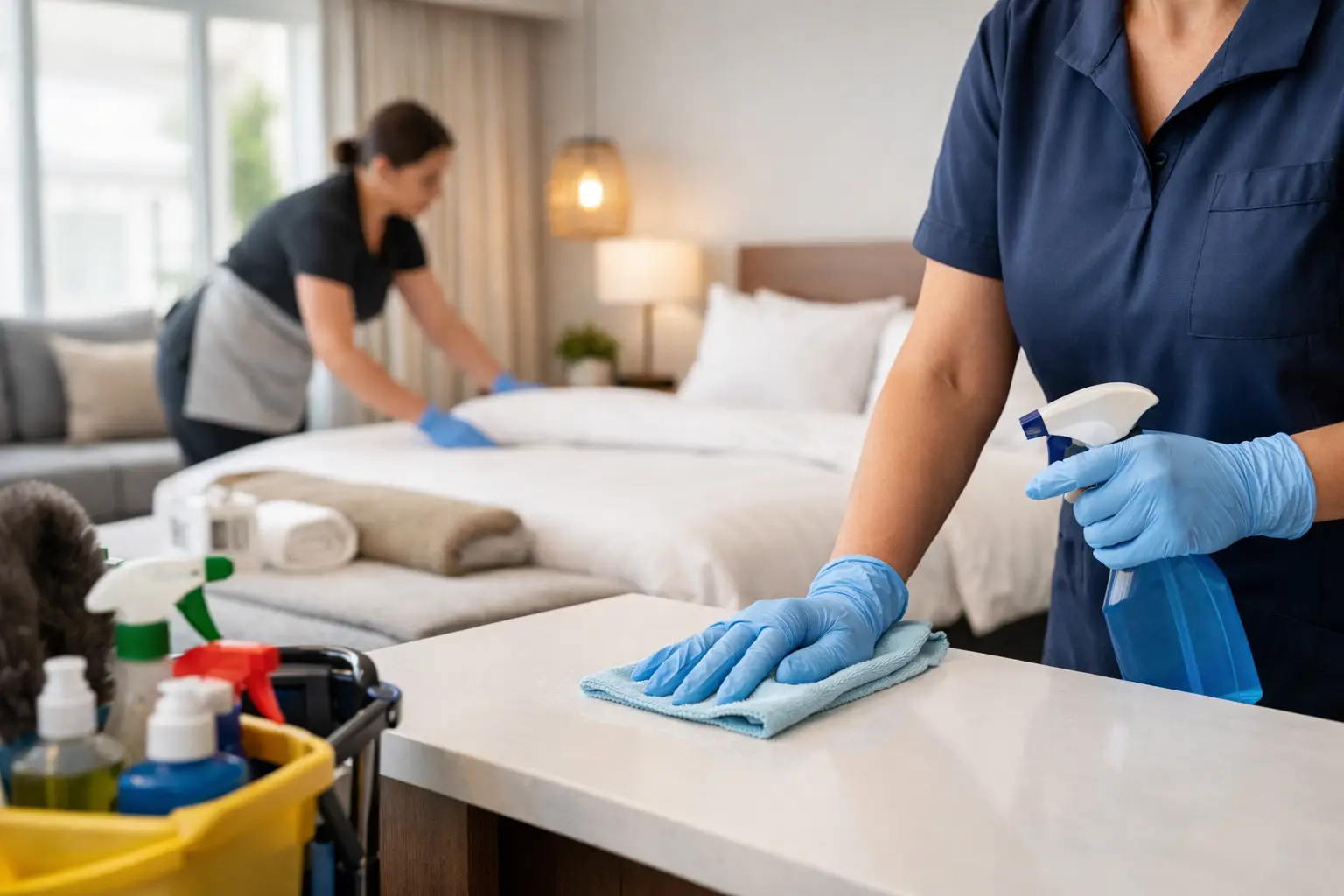
A guest may never see the work that happens between check-out and check-in, but they notice its result within seconds. A streaked mirror, crumbs under a dining chair, or a bathroom that feels only partly reset can shape the entire stay. Short term rental turnover cleaning is not simply a quick tidy-up. It is a detailed reset that protects the condition of the property and gives each incoming guest a clean, cared-for first impression.
For property managers, landlords, and owners balancing multiple responsibilities, the challenge is usually timing. The space has to be ready within a fixed window, often after the previous guest leaves and before the next one arrives. A repeatable cleaning process turns that pressure into a dependable routine.
What Short-Term Rental Turnover Cleaning Should Accomplish
A proper turnover is different from regular house cleaning because the goal is not just to make a home look presentable. It is to return every guest-facing area to a consistent standard. The next guest should walk in feeling as though the property was prepared specifically for them, not as though someone else left only a few hours earlier.
That starts with visible surfaces, but it does not end there. Kitchens need attention to food residue, fingerprints, and appliance exteriors. Bathrooms need a fresh, sanitary appearance around fixtures, handles, mirrors, and floors. Bedrooms and living spaces need to be free of dust, hair, debris, and overlooked items from the prior stay.
A good turnover also includes a condition check. Cleaning staff often spot issues that are easy to miss during a rushed walk-through: a leaking faucet, a damaged blind, scuffed wall, missing remote, or unusual stain. Catching those details before a guest arrives gives the property manager time to respond rather than receiving an unhappy message after check-in.
Start With a Reset, Not a Surface Clean
The most efficient turnover cleaning follows the same sequence every time. Consistency reduces missed areas, especially when the schedule is tight or several units need attention in one day.
Begin by opening the space, turning on lights, and looking through each room before cleaning begins. This first pass makes it easier to identify personal items, damage, excessive messes, or maintenance concerns. Personal property should be set aside according to the manager’s established lost-item process, while damage should be documented and communicated promptly.
Next, remove trash and clear out anything left behind in the refrigerator, cabinets, bathrooms, and outdoor areas. This creates a clean starting point and prevents cleaners from working around clutter. From there, clean high-touch and high-visibility areas first: entry handles, light switches, remotes, tables, counters, appliances, sinks, toilets, and shower fixtures.
Floors should come near the end, after dust and debris have been removed from upper surfaces. A final walk-through then confirms that the property feels orderly from the perspective of someone arriving with luggage, not someone who already knows the space.
The kitchen sets the tone
Guests tend to inspect the kitchen quickly, even when they plan to eat out. It is where crumbs, grease, fingerprints, and odors are most noticeable. Wipe counters, cabinet fronts, appliance exteriors, handles, tables, and chairs carefully. Check the microwave, refrigerator, sink, stovetop, and backsplash rather than treating them as one general area.
The right level of detail depends on how the rental is used. A weekend beach rental with frequent guest turnover may require more frequent attention to sand and refrigerator spills. A longer-stay corporate unit may need closer attention to cabinets, cooking residue, and bathroom buildup. The cleaning plan should reflect the property, not follow a generic checklist blindly.
Bathrooms need a fresh, finished appearance
A bathroom can be clean and still feel unfinished if the mirror is streaked, the faucet has water spots, or hair remains around the base of the toilet. These are small details, but they carry outsized weight for guests.
Focus on the sink, faucet, counter, mirror, toilet, shower or tub, fixtures, door handles, and floor edges. Look from more than one angle. Bright lighting can reveal residue that a quick pass misses, while a careful final check helps the room look dry, polished, and ready to use.
Living areas and bedrooms need visual calm
In bedrooms and common areas, the strongest result is often a sense of order. Dust visible surfaces, clean bedside tables and lamps, straighten furniture, wipe remotes and switches, and inspect behind doors and under furniture for belongings or debris. Check windows, mirrors, glass tables, and other surfaces where smudges show easily.
These spaces also benefit from an arrival mindset. Walk from the entry through the home and notice what a guest will notice first. An overfilled trash can, crooked rug, or smudged front door glass can undermine otherwise careful work.
Build a Turnover Checklist That Matches the Property
A checklist is useful when it reflects real conditions. One that is too broad gets ignored; one that is too short leaves important work to memory. The best checklist separates routine cleaning from exception reporting, so staff know what must be completed every time and what needs to be escalated.
For a short-term rental, the checklist should cover entry areas, kitchens, bathrooms, bedrooms, living spaces, floors, trash removal, and a final property inspection. It should also call out features unique to the unit, such as a patio, balcony, elevator access, pet-friendly entry, shared hallway, or community amenity space.
Property managers overseeing several units may benefit from unit-specific notes. For example, one condo may have delicate surfaces that require particular products, while another may have a difficult-to-reach shower or a high-traffic outdoor area. Clear notes prevent avoidable mistakes and help cleaning teams work efficiently without sacrificing detail.
Timing Is Part of the Service
The best cleaning plan on paper is not helpful if it does not fit the booking calendar. Turnover work requires prompt communication and clear access arrangements. Confirming check-out times, key or code access, parking instructions, unit details, and the next guest’s arrival window helps prevent delays before the cleaner even enters the property.
It is also wise to allow room for exceptions. Some departures leave behind more than normal use, and maintenance issues can appear without warning. A property with very short gaps between guests may need a more streamlined routine, while a home with a longer gap can receive deeper attention in areas that do not require work every visit.
The trade-off is straightforward: speed matters, but rushing can create more work later. A missed spill, neglected shower drain, or forgotten item can result in a guest complaint and an urgent response. A consistent process is usually faster over time because the team knows exactly what to inspect and how to report anything unusual.
When Professional Cleaning Support Makes Sense
Owners who manage one occasional rental may handle turnovers themselves when their schedule allows. But as bookings become more frequent, or when a property manager oversees several homes, coordinating cleaning can become a major operational task. Professional support can provide a defined process, clearer communication, and a dependable standard between guests.
This is especially helpful for property managers who also oversee common areas, move-outs, maintenance coordination, or resident communication. Rather than treating cleaning as one more last-minute task, they can establish a customized plan for recurring turnover needs and periodic deeper cleaning.
For rentals and managed properties in San Diego County, Call The Helper LLC can discuss a cleaning approach built around the property’s layout, turnover schedule, and highest-priority areas. Clear expectations at the start make it easier to maintain a consistent presentation across every visit.
A Final Walk-Through Protects the Guest Experience
Before the door closes, take one last walk through the property with fresh eyes. Look at the entry, kitchen, bathroom, bedding area, floors, windows, and trash. Check for odors, forgotten supplies, lights left on, and anything that looks out of place.
That final few minutes is where a cleaning job becomes a guest-ready reset. It gives the next arrival a space that feels calm, clean, and prepared – and gives the person responsible for the property one less detail to worry about.


Comments are closed