



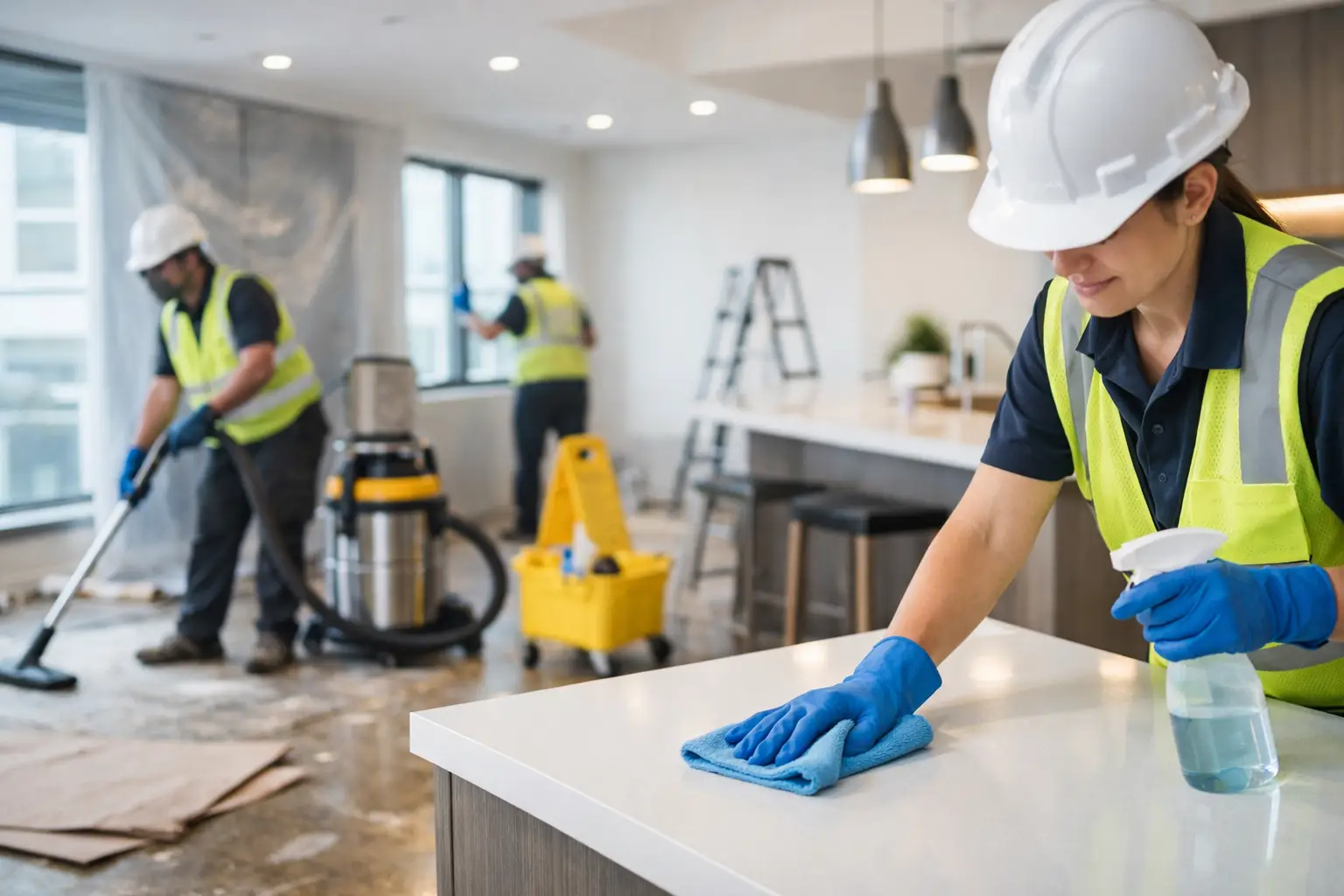
Construction may be finished, but the space is not necessarily ready to use. Fine dust settles on ledges, floors, vents, and inside cabinets. Paint specks, adhesive residue, packaging, and drywall debris can remain in places that are easy to miss during a final walkthrough. A professional post construction cleaning service turns a completed project into a clean, presentable space that feels ready for residents, employees, guests, or prospective tenants.
For homeowners, property managers, office managers, and HOA communities, this final cleaning step protects the impression a newly improved space makes. It also gives the project team a clearer view of the finished surfaces, fixtures, and details.
Why Post-Construction Cleaning Is Different
Routine cleaning maintains a space that is already in use. Post-construction cleaning deals with the aftermath of building, remodeling, repairs, or tenant improvements. The work is more detailed because construction dust travels farther than most people expect, settling beyond the immediate work area and clinging to horizontal surfaces, trim, window tracks, doors, and floors.
The right approach depends on the project. A kitchen renovation may require detailed cleaning of cabinetry, counters, appliances, and nearby living areas. An office build-out may call for attention to workspaces, glass, restrooms, break rooms, entry areas, and flooring. In an HOA setting, a renovated clubhouse or community room may need to look clean and welcoming before residents return.
There is also a timing issue. Cleaning too early can mean dust settles again after the next trade finishes. Waiting too long can allow residue, tape, or overspray to become harder to remove. A cleaning plan should match the construction schedule rather than treat cleanup as an afterthought.
What a Post Construction Cleaning Service Can Include
The scope should be built around the condition of the property and the stage of the project. In many cases, the process happens in more than one visit. An initial cleanup may focus on removing loose debris and obvious dust after major work is complete. A final detailed cleaning prepares the space for occupancy, showings, inspections, or turnover.
Detailed Dust and Surface Cleaning
Fine construction dust is the main concern after drywall work, sanding, cutting, and installation. It can collect on baseboards, window sills, light fixtures, vents, doors, shelving, counters, and inside drawers or cabinets. Thorough cleaning means addressing these areas methodically, not just wiping the most visible surfaces.
Hard floors may need special attention as well. Grit and leftover dust can affect how a floor looks once sunlight hits it, especially on dark tile, polished surfaces, or newly installed flooring. The cleaning method should suit the material. A surface that tolerates mopping may need a more careful approach if it is newly sealed, unfinished, or otherwise sensitive.
Fixture, Glass, and Detail Work
A finished space often has fingerprints on glass, dust on fixtures, labels on new appliances, and residue around hardware. Detail work can include cleaning interior glass, mirrors, sinks, toilets, counters, doors, and trim, along with removing accessible stickers and protective film where appropriate.
Not every mark should be treated the same way. Paint overspray, grout haze, caulk, adhesive, and hard-water spotting can require different products and techniques. If there is uncertainty about a delicate finish, newly installed stone, specialty flooring, or manufacturer care instructions, that should be discussed before work begins. Aggressive cleaning can create a new problem where a cautious method would have been the better choice.
Common Areas and Occupied Spaces
For commercial properties and managed communities, the work may extend beyond the construction zone. Dust can migrate into hallways, elevators, lobbies, restrooms, and nearby offices. A practical scope identifies which areas were affected and which must remain available for daily use.
That distinction matters when a property cannot fully close. A cleaning team may need to work around tenants, residents, employees, deliveries, or scheduled events. Clear access windows and a defined work sequence help minimize disruption while keeping the cleaning focused on the spaces that need it most.
When to Schedule the Cleaning
The best time to book is usually before the project wraps up, not after the final crew has left. Once the completion date becomes reasonably clear, the property owner, contractor, or manager can coordinate a cleaning window and avoid a last-minute scramble before move-in or opening day.
For a final cleaning, the major construction work should be complete. Ideally, painting, sanding, cutting, fixture installation, and flooring work are finished, and large debris has been removed. If more trades are still scheduled, it may make sense to plan a rough cleanup first and a detailed final cleaning afterward.
A short delay between the last dusty task and the final clean can be useful, because airborne particles have time to settle. The right interval depends on the project. A small bathroom remodel is not the same as a multi-room renovation or a commercial tenant improvement. The goal is simple: schedule the detailed cleaning when it will produce a result that lasts through handoff.
How to Set the Right Scope Before Work Begins
A clear scope saves time and helps prevent misunderstandings. Start by identifying the project areas, the surfaces involved, and the reason the space needs to be ready. Is the property preparing for residents to return, a real estate showing, new office staff, or an HOA event? The answer shapes the priorities.
Photos and a walkthrough can help identify conditions that affect the plan, such as heavy drywall dust, floor coverings, interior glass, cabinets, high shelves, or construction residue. It is also helpful to separate cleaning needs from unfinished construction items. A cleaner can remove dust and accessible residue, but a missing fixture, damaged surface, exposed wiring, or incomplete repair should be handled by the appropriate project professional.
For larger properties, ask whether the work will be completed in phases or all at once. A phased plan can make sense when one floor, suite, or amenity area is ready before the rest of the project. A single final clean may be more efficient when the entire space is completed on the same schedule.
What to Do Before the Cleaning Team Arrives
The cleaning appointment runs more smoothly when the work site is safe, accessible, and ready for detailed attention. Construction materials, tools, ladders, and loose debris should be removed or clearly identified before cleaning begins. Utilities should be working if the service includes sinks, restrooms, or floor cleaning.
Make sure the team has access to the correct areas and knows about any building procedures, parking instructions, elevator access, gate codes, or restricted rooms. For offices and community facilities, identify who can answer questions during the appointment if a surface or area needs clarification.
It is also wise to communicate which items should not be touched. That may include contractor materials, staged furniture, specialty equipment, newly delivered products, or surfaces awaiting another trade. A few minutes of coordination can prevent unnecessary delays and keep attention on the finished areas that matter most.
Common Mistakes That Delay a Clean Handoff
One common mistake is treating post-construction cleaning as a quick final sweep. Visible debris may be gone, yet dust remains on high surfaces, in corners, and on details that stand out once the room is occupied. Another is scheduling a detailed cleaning before the last sanding or touch-up work, which can create duplicate labor.
Property managers also benefit from confirming responsibility early. Contractors may remove their own debris, while the owner or manager arranges the detailed cleaning. Those are different tasks, and assuming one party will handle both can leave the space short of ready on handoff day.
Finally, avoid selecting a scope based only on square footage. A small space with new cabinets, glass, fixtures, and fine dust can require more detail than a larger, lightly affected room. The condition of the space and the intended use are better guides than size alone.
A Clean Finish Makes the Project Feel Complete
The final clean is where a remodel, build-out, or property improvement begins to look like the finished space everyone planned for. Call The Helper LLC can tailor post-construction cleaning around the property, schedule, and level of detail needed across San Diego County. When the dust is gone and the surfaces are ready to be seen, the work behind the project can finally speak for itself.


Comments are closed