



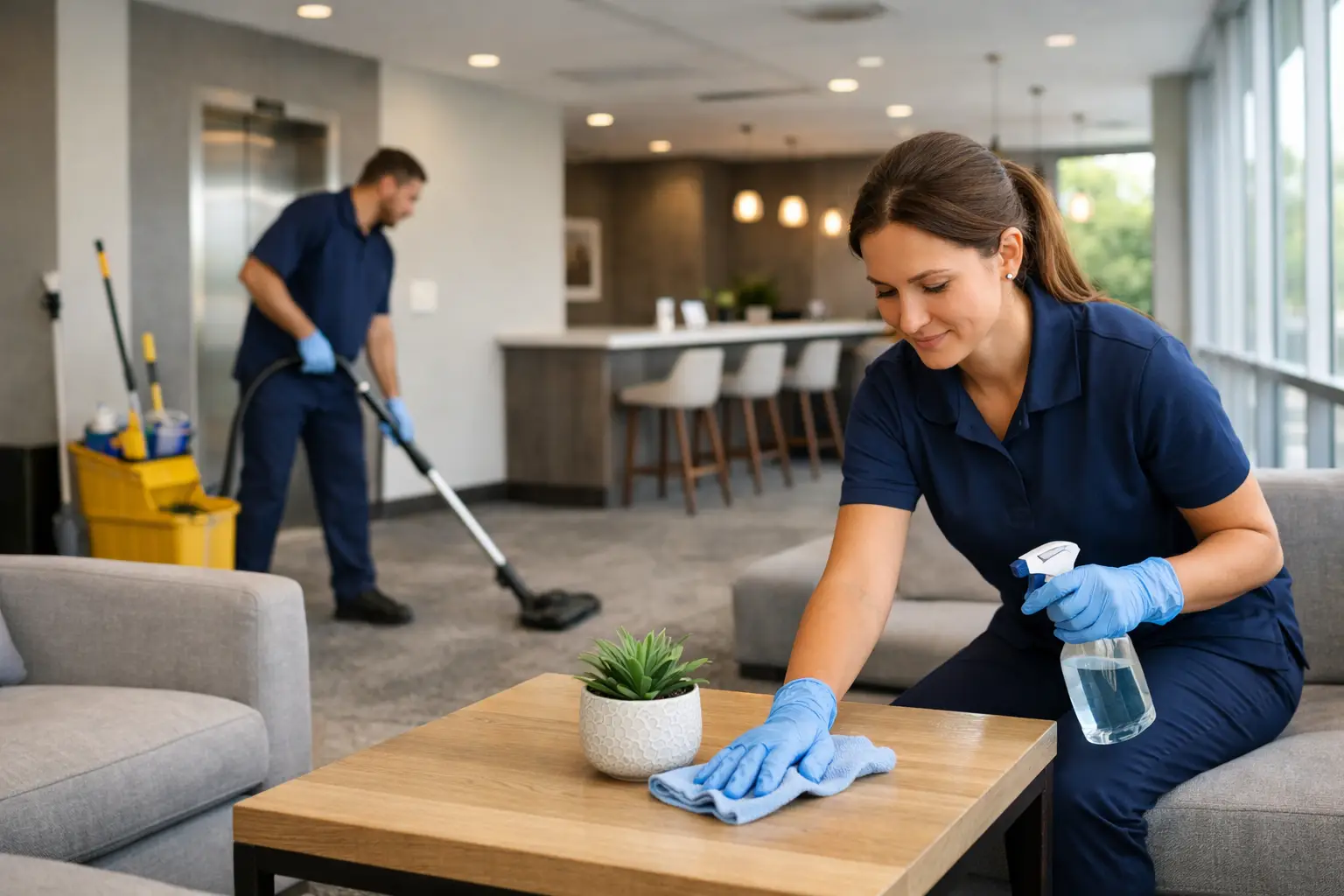
A scuffed entry door, overflowing trash enclosure, or dusty elevator panel can shape a resident’s opinion of an entire property before they reach their apartment. Common area cleaning apartments require is not simply about making shared spaces look better for a few hours. It is about creating a consistent standard that residents, guests, prospective renters, and property staff can see every day.
For apartment communities, the challenge is that common areas never stay clean for long. Foot traffic, pets, packages, weather, move-ins, and everyday use all leave a mark. A practical cleaning plan focuses on the spaces people notice first, the high-touch surfaces that need regular attention, and the details that prevent a well-managed building from looking neglected.
Why Common Area Cleaning in Apartments Sets the Tone
Apartment common areas are shared by dozens or hundreds of people with different schedules and habits. Unlike the inside of an individual unit, these spaces do not have one resident responsible for their appearance. That responsibility falls to the property management team, HOA, or building owner, often with limited time to inspect every hallway, lobby, and amenity space.
Clean common areas make a property feel cared for. Residents may not comment on a freshly cleaned lobby floor, but they will notice tracked-in dirt that remains for days. They may not inspect a polished mailroom counter, but they will notice fingerprints, spills, and discarded flyers. The difference is consistency.
This is especially relevant in active San Diego County communities, where outdoor walkways, pool-adjacent areas, and entryways can collect dust, leaves, sand, and debris quickly. Cleaning needs may change with the season, the layout of the property, and the number of residents using each space.
Start With the Areas Residents Use Every Day
The right cleaning scope depends on the property, but some areas deserve priority because they receive the most traffic and visibility. Entrances, lobbies, hallways, stairwells, elevators, mailrooms, and trash areas are often the first places to show wear.
Entry areas need close attention because they set the first impression. Glass doors, handles, floor mats, walls near doorways, and exterior approach paths can quickly look dull or dirty. Regular attention to these details helps prevent buildup from becoming the normal appearance of the building.
Hallways and stairwells are equally important. Dust along baseboards, marks on walls, debris in corners, and stained carpets can make even a newer community feel poorly maintained. In buildings with elevators, buttons, handrails, mirrors, doors, and floor edges should be included in the regular routine rather than addressed only when someone complains.
Mailrooms and package areas deserve their own plan. They can become crowded quickly, particularly in larger communities. Clearing visible debris, cleaning touchpoints, wiping counters, and keeping floors presentable supports a more organized experience for residents picking up deliveries.
Amenity spaces need cleaning that reflects how they are actually used. A clubhouse, community room, fitness room, laundry-adjacent shared area, or leasing office may need more than a quick floor service. Tables, seating, counters, glass, restrooms, and high-touch surfaces all contribute to whether the space feels ready for residents and visitors.
Build a Schedule Around Traffic, Not Assumptions
There is no single cleaning frequency that works for every apartment property. A small building with a quiet interior hallway may need a different schedule than a large community with multiple elevators, a busy clubhouse, and several outdoor common spaces. The better question is: where does dirt show up first, and how quickly does it affect the resident experience?
Daily attention is often appropriate for high-traffic entryways, elevators, mailrooms, and trash areas. This does not always mean a full deep cleaning every day. It may mean removing litter, spot-cleaning floors, wiping touchpoints, and refreshing visibly used surfaces so the space remains presentable.
Weekly service can cover more detailed work, such as mopping hard floors, vacuuming corridors, wiping ledges and baseboards, cleaning glass, and addressing corners that are easy to miss during a daily walkthrough. Periodic deep cleaning can then focus on floor care, wall marks, high dusting, pressure washing where appropriate, and areas that accumulate grime over time.
The schedule should also reflect the building’s rhythm. If residents use the clubhouse heavily on weekends, cleaning it before and after peak use may be more useful than servicing it midweek only. If trash areas fill up around move-out dates or holidays, those periods may require added attention. A flexible plan is more effective than a rigid checklist that ignores how the community operates.
Define the Scope Before Problems Become Requests
Many cleaning frustrations begin with an unclear scope of work. Property teams may assume a service includes interior glass, elevator tracks, patio furniture, restroom supplies, or trash enclosure cleanup, while the cleaning team may be working from a different expectation. The result is avoidable follow-up and a space that still feels unfinished.
A clear scope identifies each area, the expected tasks, the frequency, and any property-specific priorities. It should distinguish between routine maintenance and occasional specialty work. For example, regular floor mopping is different from periodic carpet cleaning. Wiping exterior furniture is different from pressure washing a courtyard. Both may be valuable, but they should be planned as separate needs.
It also helps to identify exclusions and responsibility boundaries. If maintenance handles damaged fixtures, abandoned furniture, or bulk-item removal, the cleaning plan should make that distinction clear. Cleaning teams can keep spaces orderly, but a property runs more smoothly when staff know where cleaning ends and maintenance or vendor coordination begins.
Focus on Visible Details and High-Touch Surfaces
A thorough apartment common-area service is often defined by the small details. Clean floors matter, but they are only part of the picture. Smudged glass, dusty window sills, neglected corners, full trash receptacles, and dirty door frames can undermine an otherwise clean-looking space.
High-touch surfaces also need consistent attention. Door handles, elevator buttons, handrails, mailroom counters, shared tables, and restroom fixtures are used repeatedly throughout the day. Keeping them clean supports a more polished environment and reduces the sense that shared spaces are overlooked.
For property managers, walkthroughs are useful because they reveal issues that a standard checklist may miss. Walk the resident path from the parking area or sidewalk to the front door, through the lobby, down a hallway, and into any amenity room. Look at the property as a new resident or prospective renter would. The most noticeable issues are often not the largest ones.
Choose a Cleaning Partner That Communicates Clearly
Apartment common-area cleaning requires more coordination than a one-time service. Access instructions, building hours, resident events, security procedures, parking limitations, and weather can all affect the work. A dependable cleaning partner should make communication straightforward and be able to adapt the plan when the property’s needs change.
Ask how service requests, schedule adjustments, and property-specific notes will be handled. A good working relationship gives managers a clear point of contact and helps prevent recurring concerns from being lost between visits. It is also helpful to establish how the team will report issues they observe, such as low supplies, unusual buildup, damaged surfaces, or areas that may need maintenance attention.
Call The Helper LLC works with apartment communities, HOAs, and property-managed spaces to create customized cleaning plans built around the areas residents use most. The goal is simple: let the cleaning support your property operations rather than add another task to the management team’s day.
Keep the Plan Flexible as the Property Changes
A cleaning plan should not stay frozen after the first month. New residents, construction nearby, changing weather, community events, and seasonal use of amenities can all change what the property needs. Reviewing the plan periodically helps ensure the service still matches current traffic patterns and priorities.
When common areas are cared for consistently, residents may not stop to think about the work behind them. They simply enter a building that feels welcoming, organized, and ready for daily life. That quiet confidence is exactly what a well-maintained apartment community should provide.


Comments are closed