




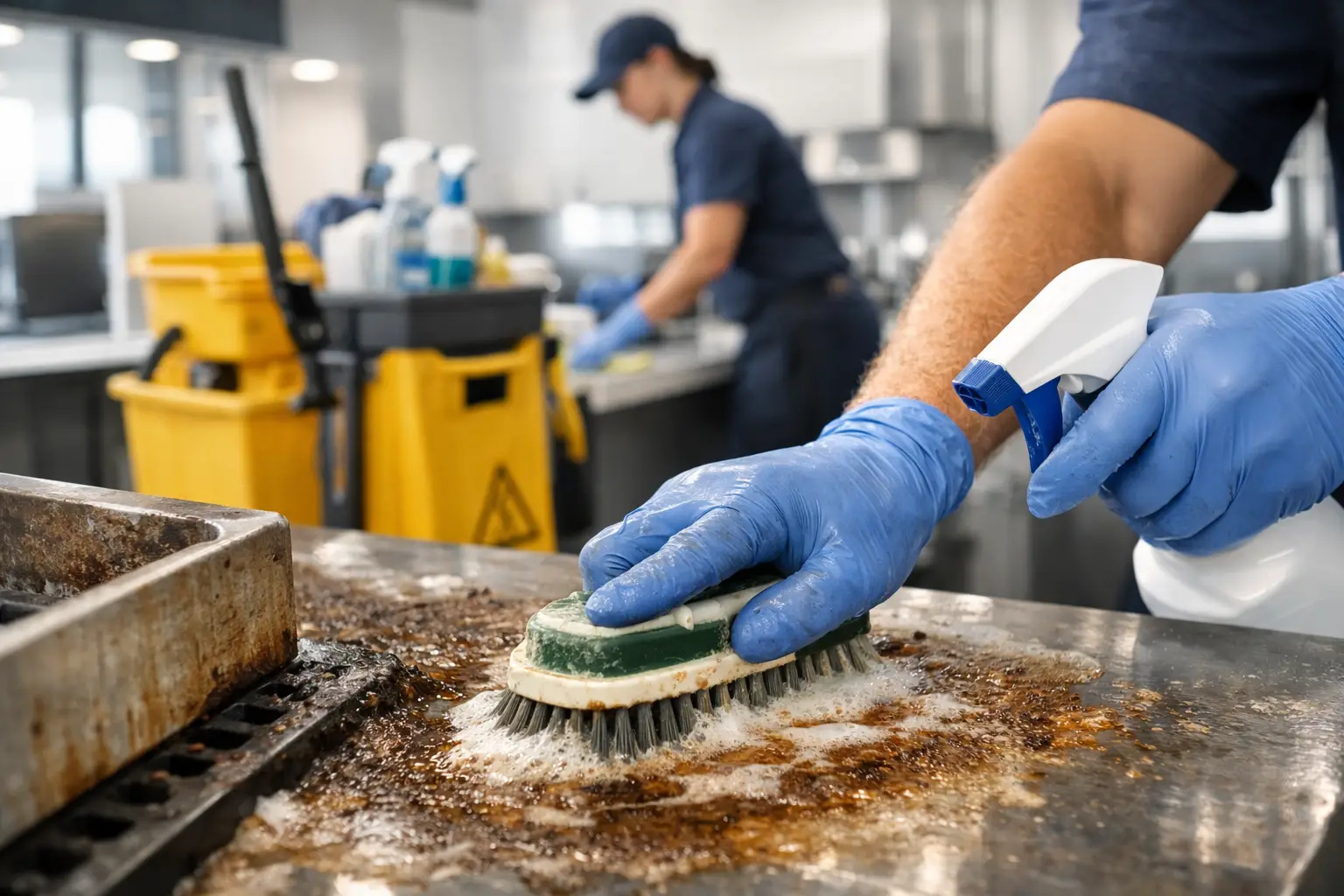
Grime rarely appears all at once. It gathers in the places people touch, splash, walk across, and overlook: the edge of a kitchen backsplash, the base of a toilet, door frames, breakroom floors, elevator buttons, and clubhouse corners. Deep cleaning for grime buildup addresses those accumulated layers so a home, workplace, or shared property looks cared for again – not merely picked up.
Routine cleaning is essential, but it has a different job. It keeps visible dust, crumbs, fingerprints, and everyday mess under control. A deep clean is the more detailed reset that gives attention to the buildup routine service may not need to tackle on every visit.
What Grime Buildup Really Looks Like
Grime is usually a mix of oils, dust, moisture, soap residue, food particles, and tracked-in soil. In busy spaces, it can form quickly. A kitchen may look clean from across the room while cabinet pulls feel sticky, the range hood carries a film, and the floor along the baseboards has darkened from repeated foot traffic.
Bathrooms create a different kind of buildup. Soap scum clings to shower walls and glass, mineral deposits collect around fixtures, and moisture encourages residue in grout lines, corners, and around toilet bases. In offices and community facilities, grime often concentrates around entrances, breakrooms, restrooms, light switches, door handles, and frequently used floors.
The challenge is that grime does not respond well to a quick wipe with one general-purpose product. It often needs the right cleaner for the surface, enough contact time to loosen residue, and careful agitation without scratching finishes. That is why a detailed plan matters more than simply cleaning harder.
When Deep Cleaning for Grime Buildup Is Needed
A deep clean is often the right next step when surfaces still look dull or feel tacky after regular cleaning. It is also useful before a move, after a renovation or construction project, when preparing a property for new tenants, or when a shared facility has had a particularly busy season.
For property managers and HOA boards, the signs may show up as complaints about restrooms, floors that never seem bright, smudged glass doors, or a community room that feels worn despite being cleaned regularly. For office managers, it may be a breakroom with persistent grease around appliances or entry areas that look marked up shortly after service.
There is no fixed calendar for deep cleaning because it depends on foot traffic, how each area is used, the number of occupants, pets, local weather, and the existing cleaning schedule. A lightly used guest bathroom may only need detailed attention occasionally. A busy office restroom or shared clubhouse kitchen may need it much more often.
A Surface-by-Surface Approach Works Best
The best results come from treating each area according to what has built up there. Using one product, one cloth, and one method everywhere can leave residue behind or damage delicate materials.
Kitchens: Grease, Splatter, and Touch Points
Kitchen grime is commonly oil-based, especially around cooktops, backsplashes, cabinet fronts, handles, vents, and appliance exteriors. The goal is to remove the film without soaking wood finishes, dulling stainless steel, or pushing grease into seams.
Detailed kitchen cleaning usually means working from higher surfaces down to lower ones. Cabinet fronts and hardware need close attention because hands transfer cooking oils there over time. Edges around appliances and the space beside or beneath them can hold crumbs and grime that ordinary sweeping does not reach. Floors then need more than a fast pass – especially around the stove, sink, and trash area.
Bathrooms: Soap Film and Mineral Residue
A bathroom can look fresh while still carrying buildup on shower doors, tile, fixtures, and around the toilet. Soap scum is often layered, so rushing the process can leave a cloudy finish behind. Hard-water deposits may require a different approach than body oil or product residue.
Careful cleaning also matters around caulk, grout, chrome, natural stone, and painted surfaces. Abrasive tools may seem effective in the moment, but they can scratch or wear down certain finishes. A professional cleaner should match the process to the material and adjust when a surface needs gentler care.
Floors, Baseboards, and Corners: Where Soil Settles
Floors tell the story of how a space is used. Entryways collect outdoor debris. Kitchen floors collect grease and food particles. Commercial hallways and HOA common areas pick up traffic patterns that ordinary vacuuming or mopping may not fully remove.
Deep floor cleaning starts with dry soil removal, including edges and corners, before addressing adhered residue. Baseboards, thresholds, and the narrow strip of floor along walls deserve attention because they are easy to miss and highly visible once they are clean. The right method depends on the floor type. Tile, vinyl, hardwood, laminate, and sealed concrete do not all tolerate the same amount of moisture or the same cleaning products.
High-Touch Areas: Small Details With a Big Visual Impact
Door handles, light switches, cabinet pulls, railings, and appliance controls collect fingerprints and oils every day. These details may not take long individually, but cleaning them consistently changes how a space feels. In shared properties and workplaces, they also help create a more orderly, well-maintained impression for residents, visitors, employees, and clients.
Why Rushing Can Make Grime Harder to Remove
When a cleaner sprays and immediately wipes, the product may not have time to loosen the residue. When too much product is used, it can leave its own film behind and attract more soil. When the wrong scrubber is used, a glossy surface can become hazy or scratched.
The practical approach is patient and controlled: identify the surface, use an appropriate product, allow it to work as directed, agitate only as needed, remove the loosened soil, and dry or rinse where the surface calls for it. This is particularly important in kitchens, bathrooms, and common areas where different materials sit side by side.
There are also limits to what cleaning can change. Permanent etching, worn finishes, discoloration beneath damaged sealant, and long-standing stains may remain visible even after detailed cleaning. A dependable cleaning provider will focus on making the space as clean as possible while being realistic about damage versus removable buildup.
Keeping the Reset From Disappearing Too Soon
After a deep clean, recurring service makes it easier to protect the result. The best schedule is based on how the property functions, not on a one-size-fits-all checklist. A family home with pets may need more frequent attention in entryways and floors. An office may benefit from regular breakroom and restroom care. An HOA community may need a rotating plan that gives extra attention to high-use amenities and common areas.
Small habits between visits help as well. Wiping cooking splatter before it dries, using entry mats, drying shower surfaces, addressing spills promptly, and emptying bins before overflow can all slow the return of visible grime. These are maintenance steps, not replacements for a detailed cleaning plan.
For landlords and real estate professionals, scheduling a deep clean between occupants can make inspections more straightforward and help present the property at its best. For office and HOA managers, planned detailed cleaning can reduce the scramble that happens when an important meeting, event, or walkthrough is already on the calendar.
Choosing a Cleaning Plan That Fits the Property
A useful cleaning plan begins with an honest look at the space: which rooms receive the most traffic, which surfaces show buildup first, and what outcome matters most. A homeowner may want a kitchen and bathrooms reset before hosting family. A facility manager may need restrooms, breakrooms, and entry floors brought back to a presentable standard. An HOA manager may need targeted care for a clubhouse, community room, or shared corridors.
Call The Helper LLC can customize cleaning support around those priorities for homes, workplaces, and managed communities in San Diego County. Clear communication about problem areas, surface materials, access needs, and timing helps the cleaning team focus where the difference will be most visible.
Grime buildup is easier to manage when it is addressed before it becomes the new normal. A well-planned deep clean restores the details people notice, while ongoing care gives the space a cleaner, more welcoming starting point every day.


Comments are closed