



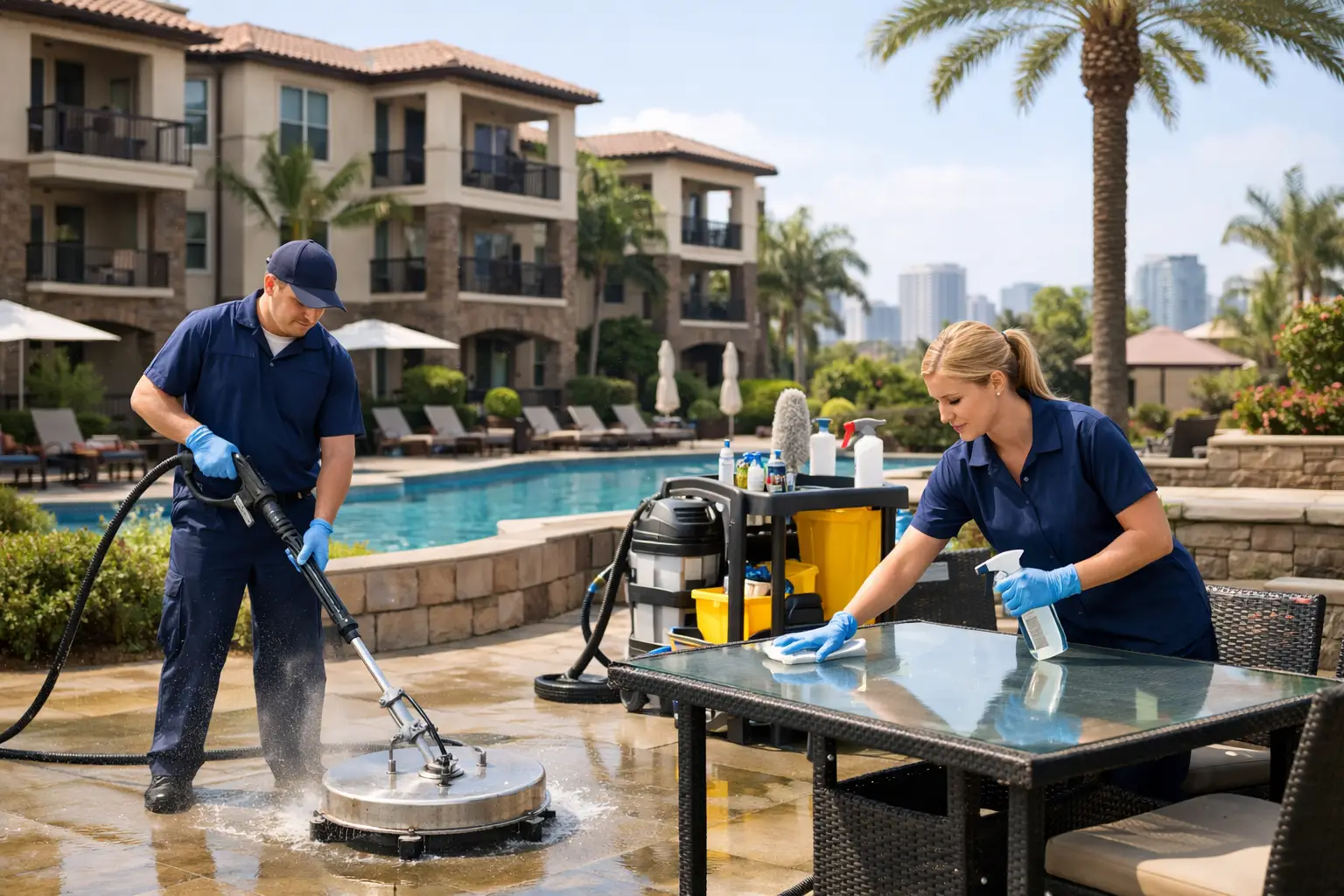
A clubhouse floor that looks neglected before a board meeting, overflowing trash near a pool gate, or fingerprints on the entrance glass can change how residents feel about the entire community. HOA cleaning services San Diego property managers and board members choose should address those visible details consistently, while also supporting the less obvious work that keeps shared spaces usable, welcoming, and ready for daily traffic.
For an HOA, cleaning is not simply another vendor task. It is part of the resident experience and part of the community’s presentation to visitors, prospective buyers, and service providers. The right plan helps the property look cared for without creating unnecessary disruption for residents or adding more follow-up work for management.
What HOA Cleaning Should Cover
Every community has a different layout, resident population, and set of amenities. A condominium building with elevators and interior corridors has different needs than a townhome community with a fitness room, pool deck, clubhouse, and outdoor gathering areas. That is why a useful cleaning plan starts with the spaces people use most and the conditions those spaces face each week.
Common HOA cleaning services may include clubhouse and community room cleaning, lobby and entryway care, shared restroom cleaning, corridor and stairwell cleaning, amenity-area upkeep, and recurring attention to common touchpoints. Depending on the property, carpet and floor cleaning, pressure washing, trash bin cleaning, and post-construction cleanup may also make sense as separate or scheduled services.
The goal is not to clean every area at the same frequency. It is to match service to traffic, weather exposure, events, and resident expectations. An entry used constantly may need frequent attention, while a reservable community room may benefit most from cleaning around scheduled events. A flexible plan prevents both under-servicing and paying for work that is not needed.
Why Consistency Matters in Shared Communities
Residents notice patterns quickly. If an amenity is clean one week and overlooked the next, it can create avoidable complaints and make the board or management team appear unresponsive. Consistency gives everyone a clearer standard: shared spaces are cared for, issues are addressed, and the community is being managed with attention.
It also helps property managers work more efficiently. When a cleaning provider follows a defined scope and schedule, managers spend less time sending reminders, answering routine concerns, or trying to coordinate last-minute service before an event. Clear communication matters just as much as the cleaning itself. If access changes, a room is booked, or a spill needs prompt attention, the provider should be easy to reach and prepared to adjust.
San Diego communities also contend with conditions that affect common areas differently throughout the year. Dust and dry conditions can show quickly on floors and entryways. Coastal moisture can leave marks on glass and outdoor surfaces. Busy weekends can put extra strain on restrooms, clubhouses, and pool-adjacent areas. A local HOA cleaning approach should account for those realities instead of relying on a generic checklist.
Build a Cleaning Scope Around Real Property Use
A detailed walkthrough is the most practical starting point. It allows the board or manager to identify high-traffic areas, surfaces that need special care, access requirements, and the times when cleaning can be completed with minimal interruption. It also creates a useful baseline for evaluating results later.
Start with the resident-facing areas
Prioritize the areas that shape the first impression: entrances, glass doors, lobbies, mailroom-adjacent spaces, hallways, elevators, and community rooms. These locations tend to collect visible dust, smudges, litter, and tracked-in debris. A clean entrance signals care before a resident or guest reaches the amenities.
Then consider restrooms, fitness rooms, clubhouses, and other shared facilities. These spaces require more than a quick visual reset. Floors, fixtures, counters, bins, mirrors, and high-use surfaces all need attention appropriate to their level of use.
Set frequencies based on traffic, not guesswork
Daily, weekly, biweekly, and monthly schedules all have a place in HOA maintenance. The right cadence depends on the property. A heavily used clubhouse may need service before and after regular events, while a quiet meeting room may only need scheduled cleaning and attention following reservations.
Outdoor common areas also require judgment. Pressure washing can improve the look of walkways, patios, and entry areas, but it should be scheduled thoughtfully around resident access, landscaping, weather, and the condition of the surface. More frequent service is not automatically better. The practical choice is the schedule that keeps the property presentable and safe to navigate without causing needless inconvenience.
Define what happens between routine visits
Routine cleaning does not eliminate unexpected needs. Spills, event debris, renovation dust, and seasonal buildup can arise between scheduled visits. A strong service relationship includes a clear process for requesting additional work, reporting concerns, and confirming what is included in the recurring scope versus a separate project.
That clarity helps prevent the common frustration of assuming a task was covered when it was not. It also gives managers a reliable way to respond when residents raise concerns.
Questions to Ask Before Selecting HOA Cleaning Services
Before choosing a provider, HOA boards and management companies should look beyond a general promise to clean. Ask how the team will document the service scope, handle access to shared facilities, communicate schedule changes, and respond when the community’s needs shift.
It is also worth discussing the details that are easy to miss. Will the plan account for event calendars? Which areas receive attention on every visit, and which are periodic? Who should management contact if an issue arises? How will the provider handle a request for floor cleaning, pressure washing, or a one-time cleanup after work is completed in a common area?
The best answers are specific. A customized plan should make it clear what the cleaning team will do, when they will do it, and how the property manager can request adjustments. Vague scopes often lead to mismatched expectations, particularly at larger communities with several shared spaces.
A Better Experience for Boards, Managers, and Residents
A well-maintained community does more than look good in photos or during inspections. It makes daily life easier. Residents can reserve a room with greater confidence, guests enter a cleaner space, and managers have fewer routine issues competing for their attention.
For boards, the value is visibility and accountability. Cleaning work should support the standards the community wants to uphold without requiring board members to become cleaning coordinators. The service plan should be practical enough for daily operations and adaptable enough for special events, seasonal needs, and changes in property use.
Call The Helper LLC works with property-managed communities across San Diego County to create cleaning plans for clubhouses, community rooms, common areas, and shared facilities. The focus is straightforward: reliable scheduling, professional communication, detailed work, and service shaped around how the property actually operates.
Keep the Standard Clear
The strongest HOA cleaning plan is one residents recognize without having to think about it. Shared spaces feel ready to use, entrances stay presentable, and management has a dependable point of contact when needs change. Start with the areas residents see and use most, set a schedule that reflects real traffic, and choose a cleaning partner that treats the details as part of the community’s reputation.


Comments are closed